

Tag: gay

  • Gay sex in times of Corona

    Gay sex in times of Corona

    So is a first date only possible with a mouth-nose cover and promiscuous, gay sex no longer conceivable for the time being because of corona? Gay sex has been severely restricted by coronavirus. The coronavirus distancing rules have limited our options for physical closeness severely restricted. We spoke to three gay men about their experiences and asked the expert Marco Kammholz asked what impact he sees the coronavirus pandemic having on gay sex. Gay men have already developed creative solutions to reconcile their own needs with the protective measures.

    Stefan's His self-diagnosis is clear and unmistakable: "Chronically under-fucked" bangs out to visitors to his dating profile on Planetromeo. Normally, they would read "Looking for sex". Because sex, says Stefan, "is not a leisure activity for me at the weekend, but my daily fun. It's as much a part of it as my morning cup of coffee."

    From the "little slut" to the "chaste nun"

    The fact that his closest friends affectionately call him a "little slut" is no problem for the man in his mid-twenties. Stefan admits that sex is important to him, and preferably with new men all the time.

    Since the end of March, Stefan has been given a new pet name by his friends: "chaste nun". Stefan sighs emphatically and melodramatically and then says very seriously: "I may be a promiscuous slut, but I'm not stupid either. You just have to be realistic: shagging around just isn't possible at the moment."

    Naked man lying alone in bed: gay sex in times of Corona.
    The coronavirus pandemic has brought the sex lives of some gay men to a standstill.
    Symbol photo - Photo: Lichtsucht photocase.com

    The coronavirus pandemic has not only brought Stefan's sex life to a standstill. During the tense weeks from March onwards and the associated contact restrictions and shop closures, life on the scene was also put on hold overnight. Cafés, bars and clubs were closed, and not just places where you could meet up with other LGBTIQ people. Places where men can have sex with men, such as saunas or darkrooms, were also closed.

    At times, corona has turned gay (sex) life upside down.

    Tom was in Argentina when the number of infections began to rise around the world. He had to cancel the internship for which he had travelled to South America. When the opportunity arose for a return flight at short notice, he jumped at the chance. It was not an easy decision, as he had fallen in love with an Argentinian shortly beforehand. The fledgling love did not last over the distance. That's why Tom didn't feel like looking for other sex partners straight away.

    Since then, he has spent a lot of time alone and without dating apps - and has come to terms with himself.

    "It made me realise that a lot of my drive for sexuality came from the need to prove to myself 'I can do it! You desperately try to build up your ego and get self-affirmation by having lots of sex partners. But instead of building up your self-confidence, it only undermines it even more."

    Tom was, as he says, "late with everything". He had his first time at 20, "and I put myself under pressure, as if I had to catch up and compensate for something." Looking back, Tom recognises some decisions that weren't good for him.

    Many gay men feel the same way as Tom.
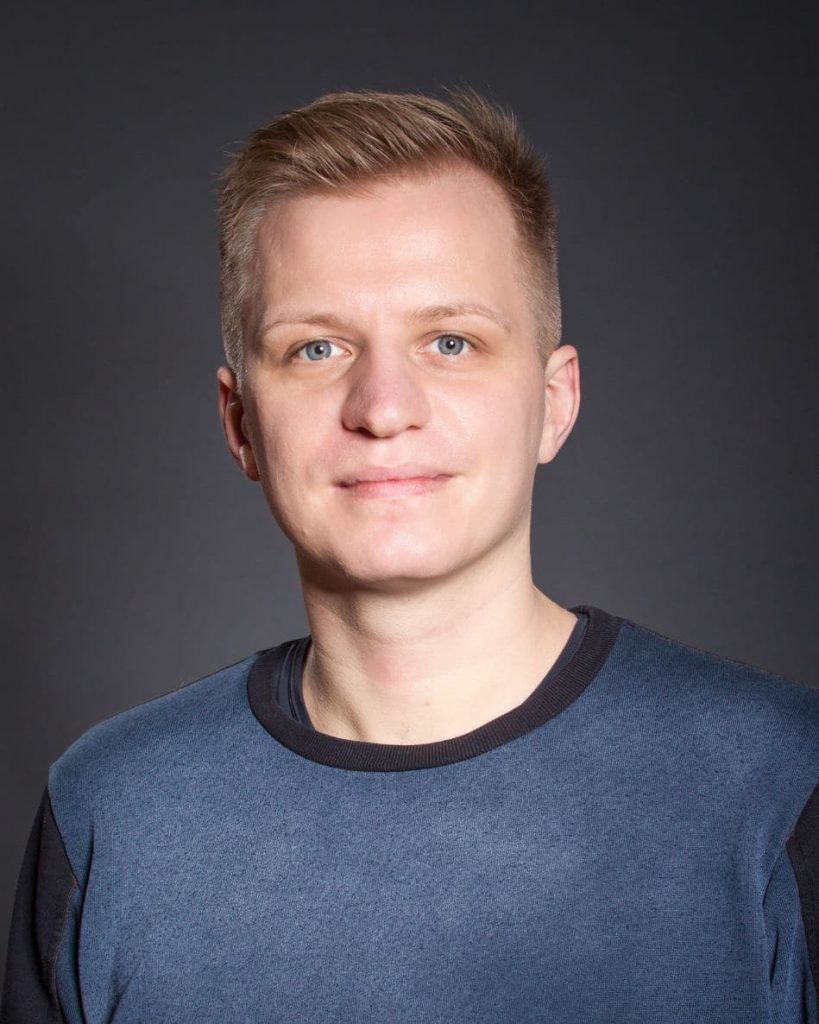
    Tom is not an isolated case in this respect, knows sex educator Marco Kammholz. He has spoken to many gay, bisexual and queer men about the impact of the pandemic on their sexuality at workshops during the summer months. "Corona demands a lot from quite a few gay men, especially when it comes to fulfilling their sexual needs," says Marco Kammholz. "I'm not one of those people who sees an opportunity in every crisis." Nevertheless, he repeatedly observes that participants in his workshops use the current situation to look at how they have organised their sexual life so far with a little distance. "It may then become clearer what function and meaning their own sexuality has. And how important or unimportant frequency, changing partners or a stable relationship are."

    So less may be more, but above all, fewer sex partners - at least in theory - means fewer risks of contracting SARS-CoV-2. Corona has forced people back into relationships with two people. And sex is best with a steady partner - if that person exists in your life. Singles are therefore having a particularly difficult time. And people who live their sexuality promiscuously are accused of being "irresponsible".

    And singles looking for a steady partner are in just as much trouble at the moment. How much closeness in the truest sense of the word can you allow? How romantic or hot can a date with mouth and nose protection or at least 1.50 metres distance be?

    Total isolation is not a solution for Armin either

    "There's no social distancing rule for me," says Armin grinning. "Anyone can get as close to me as they like." However, Armin is by no means as guileless as that might sound. For the first few weeks, the student completely avoided dating. There are people in his family who belong to the risk group. He also had to go into quarantine with his parents for a while.

    After that, however, he quickly met up with friends again so as not to become lonely or even depressed, says Armin. "Reading crisis news every day, dealing with so many problems and just sitting at home alone: That's not good for the psyche." Armin has experienced a case like this in his circle of friends. Armin is certain that the coronavirus pandemic won't be over any time soon, even if there is a vaccine. "That's why it's important to find a way to deal with it. Everyday life has to go on somehow".

    Since the coronavirus measures have been relaxed, Armin is no longer just meeting other boys virtually at dbnathe internet portal for LGBT young people, but also in real life.

    Openly address the desire for precautionary measures

    "However, I avoid closed rooms on dates and prefer to meet outdoors because I want to protect not only myself but also the other person. After all, I care about them."

    Above all, Armin has decided not to play down the coronavirus and the fears and precautions associated with it, but simply to address them openly and honestly.

    "If I don't know someone at all, I ask how they are and whether everything is OK. I try to make them feel like they can talk about anything - whether it's a recent cold or HIV, for example. Then we can discuss what we want to do about it in a relaxed manner." Armin also took this approach before coronavirus and has only had good experiences with it. "And if someone coughs now, I keep my distance, but also explain why I'm doing it. I just don't want to be quarantined again."

    Gay sex has been severely restricted by Corona.

    After dates is Tom He doesn't feel like it at the moment, he's still mourning his broken relationship too much. But when the time comes, Tom wants to take things slowly. So he doesn't go straight to bed with the other person, but first arranges to meet up a few times for coffee and a walk. One of the reasons for this, Tom explains, is to get a feeling from these conversations as to whether the other person is responsible enough to dare to be physically close.

    "Physical closeness and sexuality are basic human needs."

    Marco Kammholz, sex educator

    The weeks and months in which Social or better Physical distancing were the absolute order of the day are fortunately behind us. Human encounters are possible again - albeit still with some restrictions. Be it walks or visits to a café. But how do you satisfy the need for touch and tenderness as well as the desire for sex when there is not (yet) that one - permanent - partner?

    People in this situation can quickly get caught up in a maelstrom of conflicting emotions and thoughts when lust collides with fear of infection and unfulfilled longing and desire lead to anger, sadness and perhaps even despair.

    "Physical closeness and sexuality are basic human needs," says Marco Kammholz. That's why it can't be morally reprehensible in principle if people look for a way to fulfil these needs - especially as this doesn't automatically mean being unreasonable or thoughtless.

    Is a "corona fuckbuddy" the solution?

    Some people have decided on a very pragmatic solution that allows protection and sex to be realised even without a steady relationship: an exclusive "fuckbuddy". In other words, a guy with whom you've had sex a few times and whom you trust. The reciprocal deal: we look after each other in everyday life, adhere to the coronavirus safety regulations and only have sex with each other.

    Marco Kammholz also sees this model of "corona sex partners" as a special opportunity for introspection: "Anyone who reduces the number of their sex partners to fewer or just one due to the pandemic can ask themselves the question: Who actually remains and what characterises these men? In other words: what happens to your own sexual life during the pandemic?"

    Gay sex
    Corona fuckbuddy? Expert Marco Kammholz explains what this means.
    © DAH | Picture: Renata Chueire

    However, Kammholz also sees other aspects of how gay, bisexual and queer men are weighing up their sexual needs against the potential risk of infection in the face of coronavirus. "Just like the weekly shop, for some, sex dates or cruising in the park are on the agenda from time to time. Both are associated with residual risk. Why should you allow yourself to do one less than the other? I think that's a healthy attitude," says the sex educator.

    Progressive sexual culture

    To reduce the residual risk even further, many people skip kissing and cuddling during casual contact and get down to business all the quicker. People get down on their knees or bend over and give the coronavirus less of a chance. But glory holes are also currently experiencing a renaissance and can even be found in some homes recently - sometimes as a cardboard wall or a hole in a curtain.

    "I am quite sure that the stubbornness and creativity of gays will help them to preserve this progressive sexual culture even in this pandemic (...)."

    Marco Kammholz

    "Over the decades, gay men have developed a sexual culture in which it is possible to deal with sex more freely and unhindered," says Marco Kammholz. "That's not so easy to shake. I'm quite sure that the stubbornness and creativity of gay men will help them to deal with the restrictions in this pandemic and at the same time preserve this progressive sexual culture."

    Online sex can also be horny...

    And yes, the boys and blokes are definitely creative. "Little slut" Stefan may have been objectively chaste in recent weeks, but that doesn't mean he was a good boy. "I've had a lot of fun with my friends," says Stefan in conversation - in keeping with the times via Zoom video conference - and laughs. He then holds a cardboard box in front of the camera and presents his impressive collection of dildos. They are also used in front of the camera from time to time. "Why should I have fun with them alone when others can watch me?".

    So when, if not now, is the ideal opportunity to try cam sex or to explore your own erogenous zones and try out new ways to bring yourself to climax.

    [Editor's note: The interviews were conducted in September before the rise in new coronavirus infections in October 2020].
    Gay sex in times of Corona

    The queer scene is also affected by the Coronavirus pandemic affected, whether through possible loneliness or financial difficulties. Do you want to help or are you looking for help? #WeForQueer lists projects that offer help or are looking for support themselves. Click through and find a suitable aid or solidarity campaign!

  • Robi: Fighting together - even with a mask

    Robi: Fighting together - even with a mask

    Trigger warning: At one point in this article, violence against queer people is reported.

    Searching for clues during the shutdown

    Even in a pandemic, it's all about perspective. Robi worked in Mexico City for several years, including on a project for street children. "When the shutdown came, I often thought about my friends there," he says. "Corona is hitting them even harder than us in Germany. Without enough money, you only get the most necessary medical help there, if any at all." But even in cities like Berlin, the anti-corona measures have "really taken their toll", says the 33-year-old. "The clubs are closed and many of my people are very worried about losing their jobs."

    "The corona period was a turning point."

    "I've got it good against that," admits Robi. He works in the social sector for an LGBTIQ organisation. "I have the privilege of not only having a secure income right now, but also having a bit more time for myself thanks to working from home. I was also able to tackle things that I had been putting off until then."

    For Robi, the prescribed corona break was a turning point. A good year after coming out as intersex, he continued his intensive search for clues, requested medical documents from his maternity clinic and contacted the registry office that registered his birth.

    As intersex born as a child, Robi underwent multiple operations without his consent. He wanted his body to conform to what society and medicine considered to be "male". "I used to suppress a lot of that," says Robi, "it was a big thing to realise that and discover that I was intersex."

    Robi laughs
    Robi has found allies in Berlin's gay and trans* communities.

    Queer means: the right to be different!

    Friends and acquaintances who are just as unwilling to be forced into the rigid male-female mould have helped him a lot in his coming out. Robi has received a lot of solidarity and found allies in Berlin's gay and trans* communities. Although the experiences of inter* and trans* people are very different, there are many overlaps, he explains: the diverse physicalities, the gender-changing operations. "For me, however, the operations were forced interventions during my childhood, which meant a violation of my physical integrity and my gender self-determination. I did not decide on these medical interventions for myself".

    Trans* and inter* have "much more in common" than differences.

    Despite these differences to trans*: There are many more similarities! Robi is convinced of this. That's why the Potsdam native also supports the campaign #WeForQueer from I KNOW WHAT I DO. "I am very grateful to the queer community because it criticises heteronormative society. For me, queer means the right not to be physically a man or a woman, but to be intersex."

    "For me, solidarity means understanding what moves other people, looking for common ground - and then fighting together in our differences!" And that's why Robi is currently flying the rainbow flag particularly often, wearing a protective mask and keeping his distance, of course. In March and August, for example, he protested in front of the Polish Institute against the "LGBT-free zones" in our neighbouring country. At the end of June, he was at the "Black Lives Matter" demonstration in Berlin.

    Robi (right, 2nd from top) also takes to the streets in times of corona and fights for the rights of queer people with a rainbow flag.

    Stress test for our democracy

    "Unfortunately, I didn't make it to the Slubice Frankfurt Pride," regrets Robi. [Slubice is the Polish neighbouring city of Frankfurt/Oder. In September 2020, a joint CSD demo took place in both cities for the first time. Editor's note.] But Robi makes it clear: "Unfortunately, trans*, inter* and homophobic attacks also happen in Berlin." He and his friend experienced this first-hand. In May, a man attacked her at the S-Bahn stationshouted: "You gay pig! Get out of Germany!". The man even jumped into the track bed to throw stones at the two of them. "We were physically unharmed, but it was a big shock." A railway employee helped them to flee from the perpetrator. "I've heard stupid comments before, but an attack like this is more blatant," emphasises Robi. "I have the feeling that our social climate is very tense at the moment. A level of hatred is becoming more visible in public that I - at least personally - have never experienced before." Since then, Robi has become increasingly concerned about our democratic institutions: "Corona is also a stress test for democracy, the rule of law and the protection of minorities."

    Robi looks serious
    Robi is increasingly worried about the social climate.

    Be critical, don't be unempathetic!

    Robi does not see our state through rose-tinted spectacles. He finds it important to criticise social norms: "Being queer means questioning normative gender relations." Of course, this also includes viewing government measures with a critical eye - including the pandemic regulations. "On the other hand, I find it frightening that corona is being openly denied. Even a few people in the queer scene are doing that. I find that lacking in empathy!"

    Robi tries to avoid infection with Covid-19 as much as possible. His friend is in the risk group. "If he or I got coronavirus, that would be stupid." Sometimes his friends are surprised when Robi would rather meet up outside than go to a café. He then patiently explains why he is cautious. "We have to have these discussions. That's also part of being queer: Standing up for your own attitudes and values. Of course it's difficult."

    Demonstrate with masks and social distancing rules: E.g. on 26 October 2020 for Intersex Awareness Day!

    And demos also work with masks and social distancing rules. The next one is already in Robi's diary: 26 October is Intersex Awareness Day, the world day of intersex people. "Last year, there was a demonstration in front of the Ministry of Health," Robi reports and laughs. "This year, I've registered a rally in front of the Bundestag from 3 p.m. and am currently organising the event in cooperation with TrIQ e.V. (to the Facebook event). It would be great if all our allies were there too!"

    More information on Intersex Awareness Day on 26 October:

    www.intersexday.org


    The queer scene is also affected by the Coronavirus pandemic affected, whether through possible loneliness or financial difficulties. Do you want to help or are you looking for help? #WeForQueer lists projects that offer help or are looking for support themselves. Click through and find a suitable aid or solidarity campaign!

  • "There's still a lot of shame" - Ben on his sex education lessons in schools

    "There's still a lot of shame" - Ben on his sex education lessons in schools

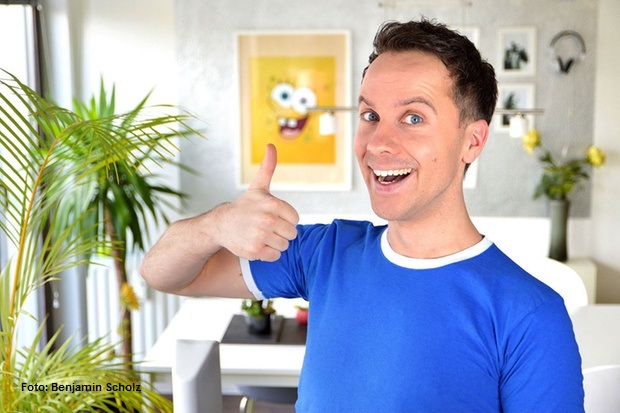
    Ben Scholz visits school classes to talk about sex on a voluntary basis. When the Cologne native realised at some point during his sex education lessons that he was being asked the same questions over and over again by the pupils, he launched his portal in 2014. jungsfragen.de. In specially produced videos there and on his own YouTube channel, Ben answers everything that might interest his core target group, boys aged between 12 and 16.

    Ben, do you notice a sense of shame among boys in schools when it comes to talking about HIV, other STIs and relevant tests at the doctor?
    I can't really confirm that. When I talk about these topics in class, I tend to notice that the pupils are more alert and want to know everything in detail. My impression is that the awareness of the health risks of sex is definitely there or comes to light once you have shaken them up and told them: unfortunately, HIV and AIDS still exist. People often ask me where they can still get a rapid HIV test in the city as soon as I tell them about it.

    Are there also gay boys in the classes who are quite normal about it or do pupils still find it difficult to say to their mates in class: "I'm different from you, I'm gay"?
    It's a shame, but even in 2016 we are still far from being in a situation where you can just come out at school. That's why gay boys are usually less concerned with classic sex topics and more with themselves and their identity, which many are sceptical about. The shame is still pretty great.

    Do you realise this directly in your sex education lessons?
    Yes, over time I've noticed that some boys are really introverted when it comes to homosexuality and do everything they can to avoid making eye contact with me. All this happens out of fear that someone might "find out" after all. Incidentally, the same thing also happens when I talk about foreskin constriction. When one of the boys realises "Oh dear, that's exactly how it is with me", you quickly notice how they mentally leave the lesson. So there are a few topics where the shame is really big. Although, of course, this always has something to do with the class community.

    You're not just in classes, you also run the portal jungsfragen.de. Do many gay boys also seek advice there?
    Yes, a lot of them actually. Gay kids in particular often have one big question: "How can I come out?". It's often a long way before they have sex for the first time. Nevertheless, it is of course important to talk about safer sex and specific sexual practices beforehand. Just as it often happens much more naturally with heterosexuals - even in the school playground.

    Is there also a risk that gay boys will have their first sexual experiences much more "secretly", precisely because they don't dare to talk about it with friends?
    In any case. Unfortunately, unlike their straight mates, they can't usually boast that they were deflowered the night before. Everything happens very differently. This also plays a major role when it comes to the question of a visit to the doctor, for example after a high-risk contact. How do I tell the doctor? How will he react to the gay contact? It often takes more time than with straight people to realise that they are doing the most normal thing in the world.

    Do you have any general tips and tricks for guys who are still at the beginning of their sex life?
    Firstly, I'd like to make it crystal clear: sex is great, sex is fun and it's the best thing in the world. But it's also true that you can catch something during sex. But of course I also reassure people. Fortunately, most things are easily treatable. Even HIV is known to have very good treatment options. My rough rule of thumb is: "If you have a pleasurable sex life with different people, you should have all the usual tests and examinations regularly, about once a year."

    Another tip is to consult a doctor as soon as you have had any risk contact or notice any changes in your own body. Because the quicker the diagnosis, the better and easier the treatment. For example, if a boy writes to me that he has a pimple on his penis but doesn't want to go to the doctor, I sometimes get quite direct and say: 'Yes, well, you'll just have to live with the fact that your willy will fall off. That way they understand directly, because wrapping them in cotton wool doesn't help.

    Last question: How did it come about that you are so relaxed about all these sex topics today and don't feel any shame?
    I just realised at some point that sex is the most normal thing in the world. Everyone does it, everyone masturbates and why shouldn't we talk about something that unites us all so much?

    How the test heroes feel about "shame", you can find out in the test hero clip.

    You can find all the young questions here: www.jungsfragen.de

    Benjamin Scholz blog
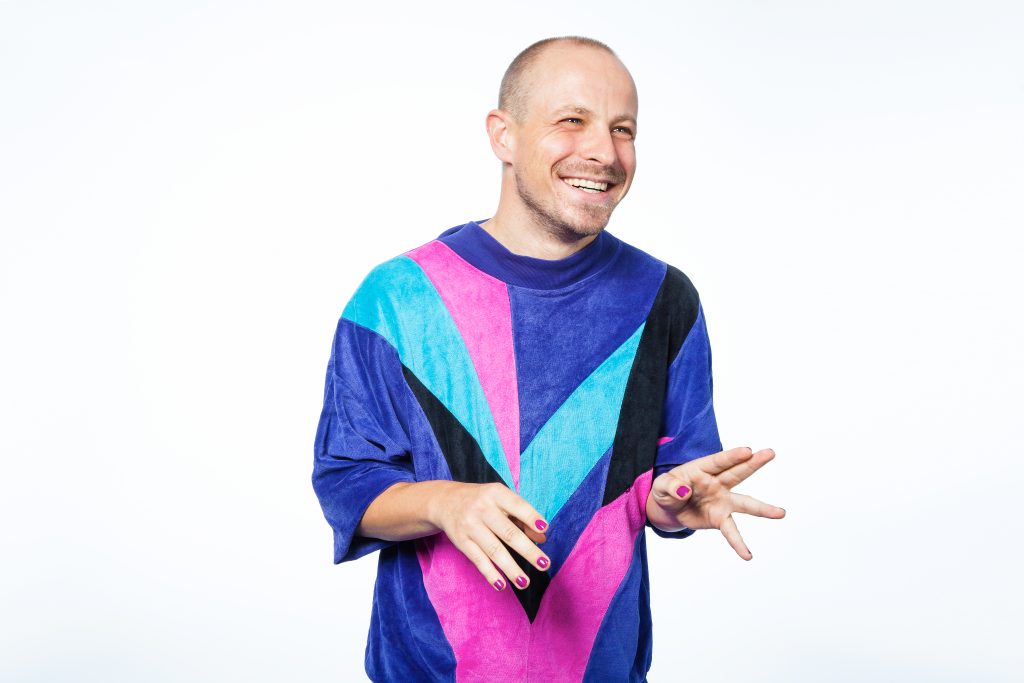
    "Sex is great, sex is fun and it's the best thing in the world," says Ben. But he also knows how important protection is. This is one of the reasons why he goes into school classes and gives sex education lessons.