

Tag: gay

  • Against shame and sin

    Against shame and sin

    The TV series "It's a Sin" shows LOVE IN TIMES OF AIDS

    The counterpart to "Queer as Folk": the TV series "It's a Sin" looks back to London in the 1980s, when the gay scene there was also overrun by AIDS. A masterpiece that not only tells of the past, but also of the here and now.

    (Spoiler warning: This article contains spoilers for the series "It's a Sin")

    You don't need prophetic abilities to predict the future of this series: it will soon be part of the gay community's cultural memory, just like "Pose" or "Queer as Folk". In other words, TV series that also tell queer stories and history in such a way that they themselves create lasting memories.
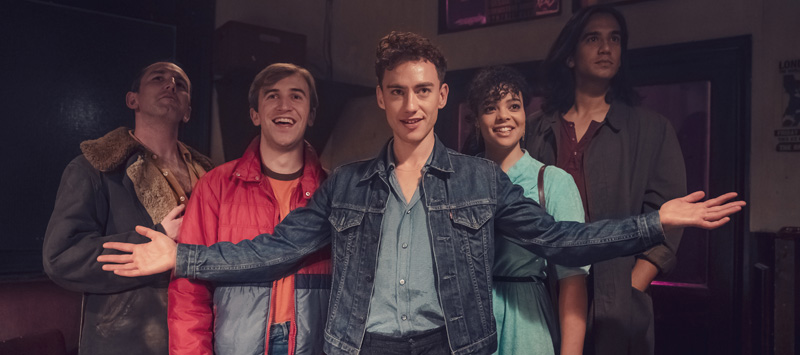
    Scene from episode 2 of the TV series Gregory, Colin, Richie, Jill and Ash (from left to right) (© RED Production Company & All3Media International)
    Scene from Episode 2 Gregory, Colin, Richie, Jill and Ash (from left to right) (© RED Production Company & All3Media International)

    Queer history as a TV series

    Because the characters in "It's a Sin" make you feel the excitement up close. With their departure into the adult world and the euphoria of sexual liberation and self-awareness. You get so close to them in the five episodes! We accompany them so intensively through the highs and lows that you almost inevitably feel part of this queer family of choice.

    And above all, Russel T Davies, the creator of this TV mini-series, repeatedly manages to create scenes and images that literally burn themselves into the viewer's memory and will stay with them for a long time to come.

    Enduring inner contradictions

    Also because the overlapping feelings of rebellion, happiness, despair, incomprehension and hope are often captured in a single image. For example, when the parents of party-loving ticket inspector Gregory build a funeral pyre in the garden after his death. They burn his bed and all of their son's personal belongings there, including his childhood photos and snapshots with his friends in faraway London. As if they could erase his gayness and his AIDS.

    Or Ritchie, who didn't dare to pick up his test result and ignored all the signs. Only now that the disease has broken out does he have the courage to reveal himself - in his very own way - to his closest friends: "I wanted you to be the first to know: I'm going to live!"

    "I wanted you to be the first to know: I will live!"

    Olly Alexander (who many will know as the frontman of the band Years & Years) puts everything his character has to endure in terms of inner contradictions into this short sentence. The relief of finally being able to confide in the most important people, the shame of having lied to them for so long and the fear that his future could be very short. And then there is also the defiance of not wanting to let them get him down and rob him of his zest for life.

    Gay television history for a broad audience

    And because this does not leave the audience untouched, this scene also becomes an unforgettable moment. Russel T Davies not only knows his craft, he also knows how to use it masterfully - and that means writing for a broad audience without compromising on content.

    Consciously not reducing gay life and love to HIV and Aids

    He had already achieved this with series such as "Cucumber", "A Very English Scandal" and "Years and Years" and above all, of course, with "Queer as Folk". With the latter series, the British director and screenwriter wrote gay television history over 20 years ago. It was so successful that an even more internationally successful US remake was made a few years later.

    At the time, Davies had deliberately refrained from addressing HIV and Aids, but instead wanted to gay life and love without defining it by the illness.

    A new world in London in the 80s

    For him, however, it was now time to remember those years and at the same time come to terms with his own story. Davies has obviously packed a lot of his own story into Ritchtie, the smart, good-looking 18-year-old who opens up a new world in the gay scene of London in 1981 and enjoys the sexual opportunities that present themselves to him to the full. And Jill (Lydia West), Ritchie's best friend who, like him, is also studying acting, also has a real-life counterpart.
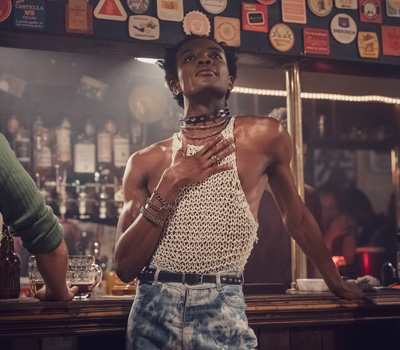
    Scene from episode 2 of the TV series Roscoe © RED Production Company & All3Media International
    Scene from Episode 2 Roscoe © RED Production Company & All3Media International

    Jill becomes a flatmate in the otherwise completely gay shared flat, which everyone affectionately calls the "Pink Palace". It's a small, conspiratorial, colourful bunch. Besides Ritchie, Roscoe (Omar Douglas) is also part of it. He turned his back on his strict religious family from Nigeria when they made plans to "cure" him of his homosexuality.

    Davies shows how to deal with the fear of AIDS, homosexuality and homophobia

    The pale Welshman Collin (Callum Scott Howells) starts an apprenticeship as a men's tailor in London, is considered uptight and shy, but, as time goes on, has experienced more than his friends realise.

    Russel T Davies also brings together a whole host of supporting characters around the clique. Among others, the prominent cast includes Stephen Fry and Neil Patrick Harris ("How I Met Your Mother"). This gives Davies plenty of opportunities to show how people deal with the fear of Aids, an infection, their own homosexuality and the homophobia of others - as well as their reactions to it.

    More than just a historical panorama of the AIDS era

    This TV series may seem far too short for that - after all, there are "only" five episodes of 45 minutes each - but Russel T Davies uses this time to create an incredibly broad panorama that is by no means limited to contemporary history. Because "It's a Sin" (named after the Pet Shop Boys' hit) does not focus exclusively on the devastating impact of the AIDS pandemic in London between 1981 and 1991.

    "I didn't want to write a drama about deathbeds"

    "I didn't want to write a drama about deathbeds," Davies explained in an interview, "but I wanted to recapture that era for myself and remember those lives with joy."

    For example, "It's a Sin" is about the justified fear of being ostracised - even by colleagues and family or the fear of dying. However, the series also tells the story of how homophobia functions and works on many different levels. But also how people can unite and strengthen each other. It shows what it takes to accept and live one's own sexuality in a positive way. And the value of friendship and humanity. And all this with plenty of empathy and humour.
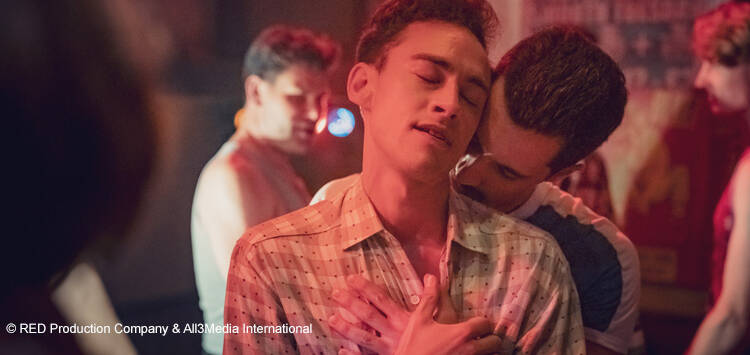
    Scene from episode 1 of the TV series "It's a Sin"
    Scene from episode 1 of the TV series "Richie"

    TV series brings topics such as coming out, HIV and PrEP to the media

    And so "It's a Sin" is a series set in a decade long past. But because it deals with timeless themes, the series can still dock into the here and now. This is helped by the fact that the series makers have refrained from placing typical everyday objects from that era in an obtrusive and overly obvious way.

    Great success among young viewers

    Wide shoulder pads, new wave outfits and walkmans are almost nowhere to be found here. This also makes it easier for today's young audience to identify with their peers from the 80s and 90s.

    In the UK, the series was an enormous success, especially among young viewers. And it had a side effect that should not be underestimated: topics such as Coming out, HIVThe film, today's treatment options and PrEP were widely discussed in the media - and the HIV test figures rose by more than 400 per cent after the broadcast.

    Incidentally, Davies has saved one of the most impressive and unforgettable scenes in the entire TV series for the end. Jill meets up with Ritchie's mother on a harbour promenade on the Isle of Wight. The friends had previously been denied the chance to see their friend again.

    Life-affirming celebration of queer self-confidence

    Now Jill learns that Ritchie has already died - lonely and isolated in the bosom of the family. Russel T Davies has written a monologue for Jill that packs a punch. It is tantamount to a general reckoning. Above all, however, it formulates one of the central messages that Davies wants to convey with this TV series. It is a plea against shame and at the same time an indictment of all those who make people feel ashamed of their sexuality or HIV infection.

    A plea against shame

    Because only "shame makes you feel like you deserve it", says Jill. Without the shame, a freer approach to sexual identity and infection would be possible. However, shame may even be compounded by guilt because you may have passed the virus on to others.

    This makes "It's a Sin" an equal counterpart to "Queer as Folk". But "It's a Sin" is also an incredibly life-affirming celebration of self-empowerment and queer self-confidence.


    "It's a Sin" (Starzplay), video-on-demand on Amazon Prime Video

    You can find everything you need to know about living with HIV at iwwit.de/living-with-hiv!

  • Queer life after a year of the pandemic: "We are systemically relevant"

    Queer life after a year of the pandemic: "We are systemically relevant"

    Covid-19 has been shaping our everyday lives for more than a year now and is changing subcultural spaces and safer spaces. What does queer life look like during the pandemic in Germany? An interim assessment.

    Nothing has preoccupied us as much since last year as the coronavirus pandemic and the subsequent restrictions. Whether lockdown light, breakwater lockdown or hard lockdown, it is clear that public facilities have since been considered a health risk, including safe spaces for queer people. The operators of darkrooms, bars and clubs have been virtually banned from working since then, with a brief interruption, and employees are on short-time work or without orders. 

    During the crisis, many aid organisations are also restricting their services or are now only offering counselling sessions online or by telephone. The Specialist centre for queer refugees of the Gay counselling Berlin takes a different approach. Hans Kalben is a social pedagogue and has been team leader of the specialist centre since 2015. "The hurdles for digital appointments are often too high for our target group," says Kalben. Although Kalben now works from home more often, a large proportion of counselling sessions still take place on site: "Many refugees don't have a device or Wi-Fi or simply don't have any privacy in the shared accommodation."

    Many aid organisations are restricting their services during the crisis.

    Before the outbreak of the pandemic, a meeting was held every Tuesday and Friday at Café Kuchus in Berlin-Kreuzberg, for which nobody had to register. Although the advice centre is currently communicating that the meetings are cancelled due to the coronavirus, staff are always unofficially available for counselling sessions: "We have found that many people who need help still come." Since last March, there has been an increased need for counselling sessions, even though fewer people are arriving in Germany than before the outbreak of the crisis. "People who have been living in the country illegally for some time and who are otherwise keeping their heads above water with sex work or other precarious employment have increasingly sought help," says Kalben. Due to the lockdown, an asylum procedure is the last chance for many of these people. 

    Negative asylum decisions and deportations despite corona

    What Kalben and his team have repeatedly found difficult over the past year is communicating the coronavirus protection measures correctly. "Refugees in shared accommodation don't have the opportunity to protect themselves or comply with all coronavirus hygiene measures," he says. The fear of infecting refugees with Covid-19 during counselling sessions is also a burden. To prevent this, the advice centre works with spit protection partitions, aerosol devices, masks and social distancing rules: "It's a daily challenge to provide the best possible advice and avoid health risks." 

    Deportations continue to take place even though the situation in many of the refugees' countries of origin has deteriorated dramatically.

    Despite the lockdown and crisis situation, work is continuing at the authorities and the Federal Office for Migration and Refugees. According to Kalben, refugees are still receiving negative asylum decisions despite the pandemic without the deadlines being adapted to the special situation. Even deportations continue to take place, even though the situation in many of the refugees' countries of origin has deteriorated dramatically. "An asylum procedure is always difficult, but the pandemic makes it even more complicated to meet all deadlines on time," says Kalben.

    Due to the global health emergency, hospitals were repeatedly instructed to postpone scheduled operations. This also affected gender reassignment surgery on trans people, which was not considered medically necessary unless it was for the treatment of complications. Hospitals have been working at their limits for more than a year, which is why rallies and Pride parades are now being organised online instead of on the streets. DJ sets at queer clubs are currently only taking place as live streams. 

    Digital queer life

    The Pornfilmfestival Berlinwhich actually requires close physical contact, only took place in front of a small number of guests last year. "It was sometimes frustrating to work on a festival that can't and shouldn't be the way you want it to be," says curator Paulita Pappel. The few tickets that were available were sold out after a short time. "But that wasn't difficult given the reduced number of cinema seats," says Paulita Pappel. In addition to her work for the festival, she also has the Online platform "Lusterywhich features privately filmed videos of couples. While many porn productions were halted due to the lockdown, the platform turned out to be a pandemic-proof model: "We received more submissions during the crisis and had a larger number of viewers." 

    With the loss of many events, the pandemic has meant that the visibility of queer life in German cities has been severely restricted for more than a year. The inauguration ceremony of a project in Mainz fell victim to the pandemic. The opening of the queer housing project Queer in the quatierwhich opened last February in Mainz's Neustadt district, coincided with the start of the first lockdown in Germany. Joachim Schulte, 67, had been planning the housing project for the past few years and had to organise the inauguration party on Zoom. Shortly before the pandemic, 32 queer people of different ages moved into 21 flats in Mainz. However, the housing project, which was intended as a safe space, only functioned to a very limited extent during the crisis. "We would all have liked to have got to know each other better during the initial phase of the project," says Schulte.

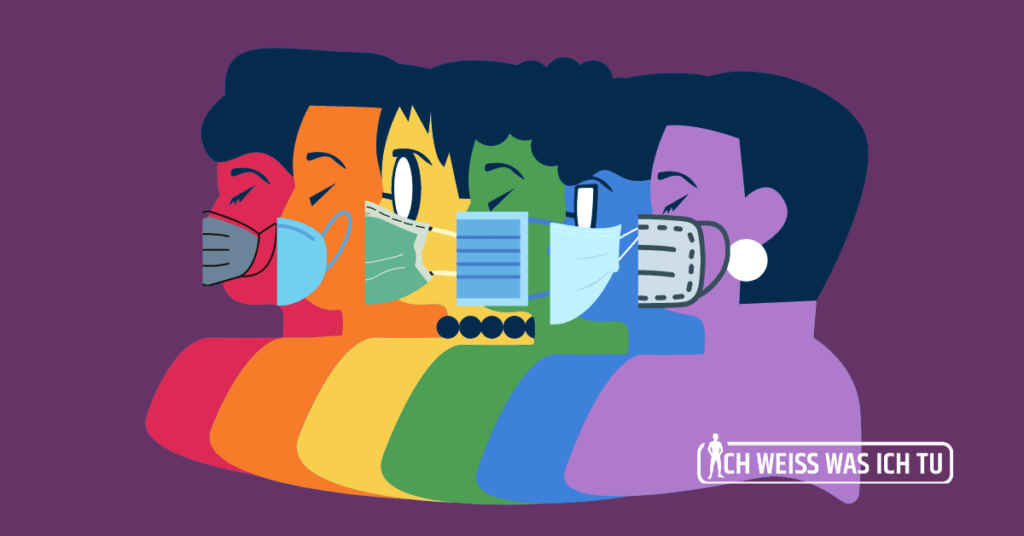
    Graphic of 6 people wearing a corona mask, each person coloured in one of the colours of the rainbow flag.

    Likes and a "Yaas" instead of hugs and kisses

    At the moment, people usually meet at the rubbish bin or when someone comes in from the shops. The centrepiece of the housing project cannot currently be used due to the hygiene measures in place: "The communal flat, which we wanted to use as a meeting place for everyone, is empty." As many residents belong to the risk group, they are particularly careful: "In the summer, we met in the park at a distance, but we couldn't really get to know each other." Apart from the Zoom conferences, the group is planning smaller coronavirus-compliant activities. For example, some residents bake cakes, put them in the communal flat and let everyone know that they can pick up a slice one by one. They want to make up for all the time they missed together after the crisis. "There is great disappointment that we can only enjoy the community to a limited extent."

    In the coronavirus year 2020, there were few opportunities to come together and be visible as a queer community. Drag queen Pansy from Berlin now works at the vaccination centre and takes her drag shows online. Hugs and kisses turned into likes and a "Yaas" in the comment columns. Although small demonstrations such as the Dyke March in Berlin took to the streets, everyone was advised to keep a safe distance and wear face masks whenever possible. Even the second year of the pandemic seems to be dominated by lockdowns, with major events still a long way off. 

    Away from private living spaces

    Since the outbreak of the crisis, there have been few opportunities to meet in queer organisations outside of private homes. Although a lot of economic aid has already been cancelled, many businesses and people who visit them are suffering from the consequences of the crisis after a year of pandemic and permanent lockdown. With brief interruptions last summer, venues with darkrooms have been closed across Germany. Thomas Pfizenmaier, who Fetish and cruising bar New Action in Berlin-Schöneberg and another fetish bar in Hamburg, found another way to generate revenue for his business between lockdowns. Immediately after his bar was allowed to reopen after the first lockdown, Pfizenmaier applied for a licence for outdoor catering. 

    Coffee and cake instead of fetish and sex

    "My partner then got into the kitchen and baked cakes," he says. He didn't want to rely on donations, so in the meantime he served coffee and cake in his pop-up café "Corinna" during the day, although the fetish bar was usually only open at night. An interim solution for the summer, but one that no longer has much to do with fetish, darkrooms or sex. As the coronavirus aid applied for can only be used for operating costs, he has been living off his savings as a bar operator since March: "I've been using up my pension savings for almost a year now." However, he is not yet thinking about giving up, even though the losses are increasing and his landlords do not seem to be accommodating: "In Hamburg, there was even a rent increase during the crisis." 

    "I've been using up my pension savings for almost a year now."

    Pfizenmaier thinks that many gay men are seeking shelter in private during the pandemic. However, unlike in New Action, no names, registration addresses or arrival and departure times are recorded there. "If tens of men meet up at home via online platforms and something happens, this potential infection can neither be controlled nor tracked."

    "We are systemically relevant for the preservation of gay culture, lifestyles and alternative family relationships."

    At least for now, Pfizenmaier assumes that New Action will reopen for its customers after the crisis. "I hope that once the pandemic is over, the gay community will remember who has supported them throughout the year," he says. His bar is not just a catering business, but, like all other queer venues, serves as an important shelter for gay subcultures: "We are essential for the preservation of gay culture, lifestyles and alternative family relationships."

    A disposable heart-shaped mask on a red background. Next to it are 6 people, each depicted in a colour of the rainbow.

    IWWIT is here for you! 

    The queer scene has also been affected by the coronavirus pandemic, whether through possible loneliness in isolation or financial difficulties.

    But we won't leave you hanging! That's why we have launched our #WirFürQueer campaign: You are not alone! We help each other! Together we can make it through these tough times! You can find more information at iwwit.de/we-for-queer.

    On gayhealthchat.com we also offer advice every day between 5 and 8 p.m. - quickly, confidentially and free of charge.

  • "Are you naked during sex?" - Experiences of a gay cis man with a trans* partner

    "Are you naked during sex?" - Experiences of a gay cis man with a trans* partner

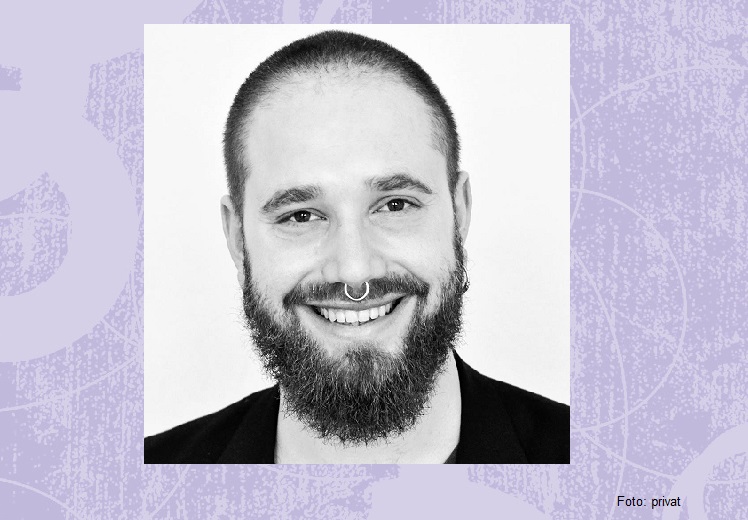
    How two men lead a partnership and have sex is seemingly clear. But when one is trans*, the other sometimes has a lot of questions. Till (32) knows what many gay cis men think when it comes to trans* men. Two of his ex-boyfriends are trans*. Here, the Hamburg resident by choice tells us how his friends reacted and what he took away from the relationships.

    Till, two of your ex-boyfriends are trans*. Has your self-image as a gay man changed as a result of these relationships?
    No. Why? We are men who have desired and loved each other. It doesn't get any gayer than that.

    Did you sometimes get any nasty reactions when you were out and about?
    Never on the street, actually. As we were both read as men without a break, we only got homophobic remarks - if at all. Just like other gay couples get.

    How did your friends react to your partner coming out?
    First of all, it's important to know: Not all of my friends knew that my partner was trans*. Even some of my very good friends still don't know to this day. Others only realised months later.

    Why?
    Because my ex-boyfriends decide for themselves who they want to share their transition story with - and when. This sometimes led to the friends who knew about it reacting with incomprehension. They would have liked my ex-boyfriends to be as open as they were. With straight friends, I could easily counter and say "You didn't tell me how long your boyfriend's cock is either! " It wasn't so easy with my gay friends, where the conversation is very open (laughs). When I said: "That's not your business!" I just had to put up with being the stupid bourgeois. It's not my favourite role, but it was important to me - out of respect for my lover.

    Would you say that there are differences between a gay and a trans* coming out?
    Yes, I had to realise that first: being gay usually refers to sexuality and being trans* always refers to gender. So we're talking about different aspects. It was important to my partners and me to be "out and proud" as gay men. Both of my partners had also come out as gay and were open about their sexuality. Unfortunately, I have sometimes experienced gay men who have come out as trans* and then had to learn that their gender and therefore their gay identity were called into question.

    Can you explain that in more detail?
    When my partner at the time came out as trans*, his masculinity was often questioned - by the same people who previously perceived him simply as a man. What was previously unambiguous and clear then led to stupid questions like "Do you really feel like a gay couple?" or "What does it look like down there?"

    How did you deal with such questions as a partner?
    It all depended on the situation. If I had the feeling that the question was meant to embarrass my friend, I usually asked an equally intimate and invasive counter-question. In response to the other person's horrified reaction, I could growl "See, that's none of your business!" However, if the questions were asked respectfully and there was genuine interest behind them, I made it clear that their questions were very intimate and that I wouldn't tell them anything so personal about my boyfriend. But I offered to talk about trans* people in general and tried to clarify their questions in this way. Sometimes, when I was too annoyed by the same questions over and over again, I would say flippantly: "Just Google it!"

    Where do you think the stupid questions came from?
    First of all, many people still believe that they have to and can determine who is a man between their legs - and who is not. Yet everyone knows that there is so much that goes into being a complete man! For many gay men, their sexual desire is also focussed on their partner's cock. The idea that this could be different to what they are used to makes some people feel insecure. I realised this with a very good friend of mine who found my ex incredibly hot. At some point, he was so irritated that he once asked me seriously: "Tell me, when you have sex, are you naked?" That's when I realised what kind of mental cinema he was playing.

    What was his problem?
    Many gay men probably feel threatened in their comfort zone when they believe that their "classic" idea of gay sex no longer applies. But sex can be so hot if you keep getting involved with the other person! This applies to all gay men, whether cis or trans*. In my experience, it's at its hottest when we both find out together and carefully what makes us hot and happy at any given moment.

    What was your first time with a trans* man like? Did you negotiate what would happen beforehand?
    For me, it was more about sensing, feeling and doing than talking. The situation was also so good that I didn't have time to get my head round it. We fucked for four days straight and only stopped briefly to eat.

    We are talking about your very personal experiences here. What do you take away from the two relationships?
    Oh, lots of things! Above all, to be grateful for many wonderful experiences, just like with all my ex-boyfriends, and for a lot of very personal things ... My sexuality is no longer so genital-fixated. So much is possible! I don't just have my mouth, cock and arsehole, but also my arms, legs and the backs of my knees. The whole body is something very sexual. It's crucial that the people involved get involved with each other. Since I realised that the long doesn't always have to go round and round, I've also had better sex with cis men. (laughs)

    Till-Cis partnership
    Two of Till's ex-partners are trans* men. Here he talks about his experiences.
  • Gay men in the corona pandemic: "There is great uncertainty"

    Gay men in the corona pandemic: "There is great uncertainty"

    The coronavirus crisis has dominated our everyday lives for more than a year. Hygiene measures, contact restrictions and the closure of safe spaces can be particularly stressful for gay men. Stefan Meier, who works as a counsellor at gay checkpoints Man-O-Meter works in Berlin-Schöneberg. We had a chat with him.

    IWWIT: Stefan, you conduct an average of 150 counselling sessions a year. What concerns do the men who come to you have?

    Stefan Meier: We are one of the few facilities that are explicitly aimed at gay men. The reasons for visiting us are as varied as gay life itself. Some men come to us with questions about coming out, dealing with anxiety and depression, or anything else that has to do with gay life. sexual health turns. We see ourselves as a kind of first aid centre for those seeking advice. They often come to us two or three times. If their issue cannot be resolved during this time, we refer them to counselling centres or therapists. However, mothers also come to us from time to time whose children are in the Coming out are located.

    Sexual health means more than the absence of illness.

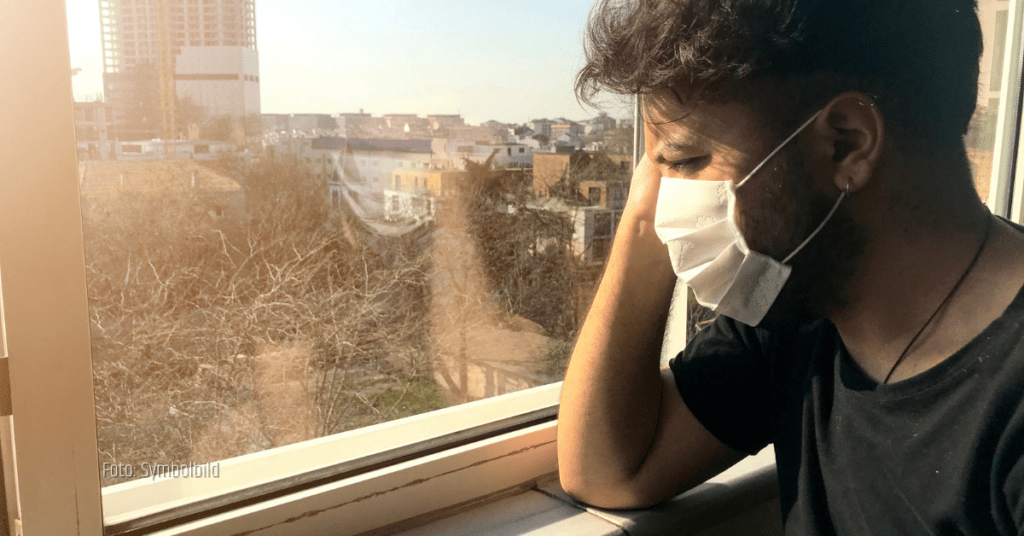
    A man stands by the window in his flat during the coronavirus pandemic. He wears a mask and looks longingly outside.

    What do you mean by sexual health?

    This is getting almost philosophical now. For me, sexual health definitely means more than the absence of illness in the sense of viral or bacterial infections. Being sexually healthy also means that I enjoy my sexuality, know myself and my body and know what gives me pleasure and what does not. It also means that you can take the opportunity to live out your fetishes in a self-determined way.

    What do you mean by "self-determined living"?

    By that I mean exactly that: making it clear what I like and what I don't like, but also knowing what makes my sex partner horny and what I can or want to give them. If someone engages in a sexual practice like fisting, they should know whether they really want it and find it hot. It often happens that we do things because we are afraid of rejection and don't know how the other person would react to a rejection. If someone doesn't like anal sex, that's perfectly OK. The same applies to the use of substances during sex.

    It often happens that we do things because we are afraid of rejection and don't know how the other person would react to a rejection.

    Have you noticed a change within the community since the first coronavirus lockdown?

    There is a great deal of insecurity, which manifests itself in very different ways. People who are depressed and are always told that they should be in contact with other people, and have also learnt that this helps them, perceive the restrictions as very oppressive. They miss the closeness and interaction with others. Anxious people are unsettled by the flood of news about corona. Many gay men are currently being thrown back on themselves as they lack a connection to a family environment - the closure of bars, clubs, saunas and other queer facilities means that places that are important for their mental health are no longer available.

    The closure of bars, clubs, saunas and other queer facilities means the loss of places that are important for the mental health of gay men.

    Why are these places so important, especially for gay men?

    A young gay man, who still lives at home with a family that does not accept his gayness, now has to spend more time with his homophobic family. Conflicts are inevitable because he lacks support and a safe space where he can be who he is. The so-called "scene" is often criticised for being commercialised. At the moment, however, we are realising how important its social function is.

    What advice do you give your clients who feel lonely due to the crisis to get through this difficult time well?

    First of all, it is important to recognise that these are difficult times. It also helps to internalise that many people are in a bad way at the moment and that many feel lonely. I also advise my clients to realise that there is little they can do to change the situation. They can't do much more than keep their distance, wear a mask and wash their hands. It is currently more helpful to focus your attention on things that you can control and change.  

    Are there any tips other than thinking positively?

    If my friends are important to me and I can't see them, I just invite them round for a cocktail via Zoom. If I enjoy wellness, then it might be nice to take a bath more often and I can perhaps pimp my bathroom a little and create my own wellness oasis. It often helps to consciously create routines that help to structure everyday life. 

    It often helps to consciously create routines that help to structure everyday life.

    Are couples doing better than singles at the moment?

    Yes and no. Couples are currently facing the challenge that they may be spending more time together than before. If they are both working from home and the flat becomes an office, this can also be difficult and lead to conflict.

    How can couples cope with this situation?

    One option is to see how I can support my partner - professionally or in other stressful situations. Another option is to rediscover each other as a couple and see what you can do together. However, it is also important to give each other space and allow each other to retreat. It can also be helpful to try to be a little more generous with your partner and not put every word on the gold scale. Sometimes you should also try to keep reminding yourself that behind accusations often lies the communication of needs.

    What is your tip for people who are spending the next lockdown as singles?

    Singles should think about what is good for them and do it more often. It is still possible to meet up with a friend, go for a walk or arrange to cook a meal at home. Or, if a man wants to, he can find a Fuckbuddywith whom you can have sex and thus satisfy your need for sex and closeness. The corona test programme is now also being expanded in German cities and can be used for this purpose.

    A man stands by the window in his flat during the coronavirus pandemic. He wears a mask and looks longingly outside.

    IWWIT is here for you! The queer scene has also been affected by the coronavirus pandemic, whether through possible loneliness in isolation or financial difficulties.

    But we won't leave you hanging! That's why we have launched our #WirFürQueer campaign: You are not alone! We help each other! Together we can make it through these tough times! You can find more information at iwwit.de/we-for-queer.

    On gayhealthchat.com we also offer advice every day between 5 and 8 p.m. - quickly, confidentially and free of charge.

  • trans* coming-out experiences: Three reports from different perspectives

    trans* coming-out experiences: Three reports from different perspectives

    Coming out is also an important experience for trans* people. As diverse as trans* biographies are, so too are the associated coming-out experiences. With the following three short reports, we want to present the different perspectives.

    "I could never name this 'different' ..."

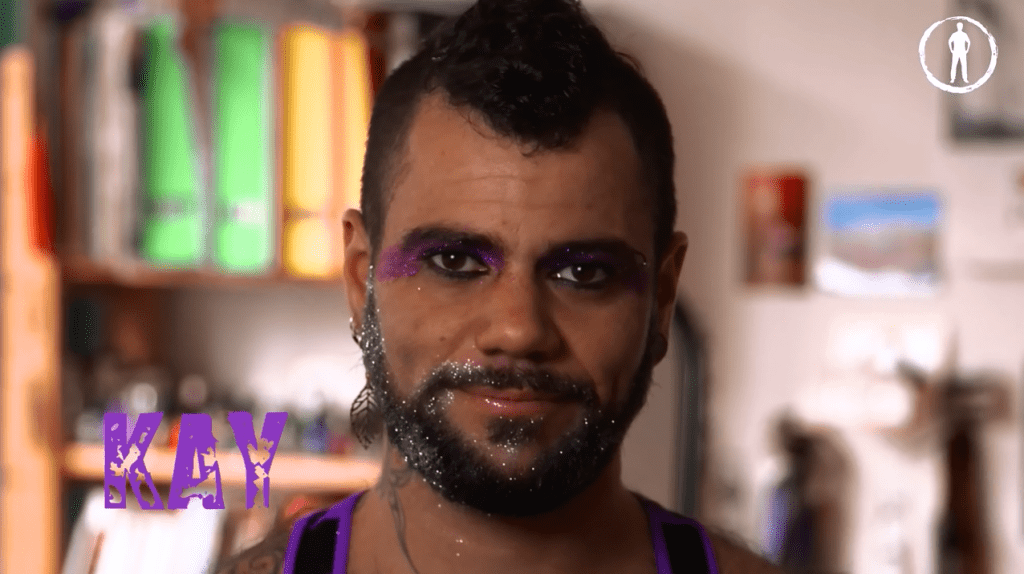
    Inner trans* coming-out by KAy

    If you are gay, the coming out options are more varied: you can come out completely, partially or not at all. As a trans* person, it's a bit more complicated. I've always known that I'm different. But I was never able to name this "different", as I only knew "man" and "woman" back then.

    Of course I had heard of trans*, but what I could find was: "I was born in the wrong body". But I had no problem with my genitals. I finally found my identity when I was 30. I had previously lived as a lesbian. I had already come out. Now I "just" had to have another one! After nine months of testosterone, I already looked like a young guy. I no longer had a choice as to whether I wanted to come out as trans* or not. What's more, my sexuality had expanded. Until then, I'd only had sex with women. Now it developed more and more in the direction of gay sex, even though I see myself as pansexual.

    Once again, I had the choice to come out or not. So far, my family only knows that I'm trans*. But my circle of friends know. They heard about it as part of the transition package. But if I have a male partner at some point, I will also tell my family. I'm curious to see how they will react...!

    Till
    Till: 'I really like directness and because I thought the guy was hot, we soon ended up at his house.

    "Fancy a snog?"

    How cis man Till experiences a trans* coming out

    Rounding off an exhausting day with a beer - that was the plan after a symposium in Berlin. I was sitting in a bar with a participant I had met at the event. Suddenly, a very attractive, very angry man burst into our conversation - obviously an acquaintance of the person I was talking to. He was terribly upset about the date he had just come from. "The idiot kicked me out because I'm trans*," he ranted. "But it's clearly stated in my dating profile."

    The situation quickly calmed down, we got on well and when my conversation partner went for a smoke, the sexy stranger turned to me and asked: "Fancy a snog?" I'm all about directness and as I thought the guy was hot, we soon ended up at his place. We spent four days shagging, chatting, eating and shagging again. And then we were a couple for three quarters of a year.

    The term "cis" is used when a person identifies with the gender assigned at birth.

    At first, my boyfriend was really surprised that I didn't need a familiarisation phase at all. In his experience, gay cis men have well-practised sex practices that don't always translate one-to-one with trans* men. But that's exactly what made it so enjoyable: we didn't have scripted sex, we got involved with each other. Everything was new, everything was hot. We haven't been together for a long time, but we still get on brilliantly.

    "After coming out, his eyes lit up ... "

    trans* coming-out experiences of Alexander

    Many trans* people are perplexed when they come out to people close to them. In my case, it was a broad smile, shining eyes and gratitude. And it happened like this: In May 2012, I went to the Rainbowflash in Hamburg city centre with a friend. There are many homosexual and trans* people in our colourful circle of acquaintances who we wanted to support at this event. As we were talking about trans identity again, I thought the moment had come. I told my friend that I felt like a man and wanted to be called Alexander in future, including the male pronoun. He beamed at me and thanked me for being one of the first people I had told about my trans identity.

    Quote

    Perhaps I unconsciously chose someone who would definitely react emphatically and openly. Or maybe my trans* coming out went so smoothly because my father, mother or siblings weren't the first people I told about my trans identity. In any case, my friends quickly got used to the new situation.

    Colleagues completely overwhelmed
    My coming out at work was less smooth. My colleagues were clever and understanding people, mostly engineers. But none of them had to deal with realities of life that were so different from their own. They were all sympathetic. My boss also assured me of his support. In reality, however, my colleagues were completely overwhelmed. My boss couldn't even manage to address me as a man. In several conversations, I explained to him how important it is for trans* people to be taken seriously in their identity. But there was no way in. I no longer work at the company.

    A birthday, so to speak
    For some time now, it has been easier for other people to see me as the gender I identify with. Testosterone and my operations play a certain role in this. I had my first injection almost exactly three years ago. Last Saturday was basically my third birthday. In 2015, I had a breast lift and my uterus removed. My voice is deeper than that of many other men and my features are becoming more angular. So anyone who doesn't know me yet will automatically get to know me as Alexander. Even employees in public authorities or clothes salespeople no longer react in a tense manner. The only annoying thing is that many trans* men look ten years younger than they are after coming out. I often don't feel like I'm being treated like a 30-year-old, but like a first-year student.

    Great reaction
    While I no longer have to explain myself in everyday situations, the opposite applies to flirting. I have to ask myself the question every time: Do I tell him and wait to see how he reacts? And when do I say it? The reaction of a man I met in a bar in Munich was really great. We kept making eye contact and I would have resented not speaking to him. So I went there and we got on really well. I told him that I had attended a trans conference. I didn't talk about my own trans identity at first. Only when we got closer did I let him in on it. He replied that he had already suspected that - and we picked up where we had left off.

    Irritations
    Sometimes I simply missed the right moment. It always destroys a bit of the atmosphere when you interrupt and say: 'By the way, I'm trans. Once, a guy I found incredibly attractive got down to business so quickly that I didn't have time to come out. He was visibly irritated after grabbing my crotch. We exchanged a few more sentences, then he "went for a smoke". I thought that was a shame, but I had to accept it.

    KAy: 'I finally found my identity at 30.
  • Crystal meth & sex dates against bad thoughts

    Crystal meth & sex dates against bad thoughts

    Who dares to open up about their sex and love life on stage in front of an audience - from their first wet dream in their cot to bad experiences with crystal meth? Ben Strothmann has done it - and the world can currently watch him do it online. In his one-man show "Coming Clean", the 42-year-old talks about his life, first as a gay teenager in Milwaukee, then as a drug-addicted escort in New York.

    [Editor's note: This article contains discussions about alcohol and drug use, as well as sexual transgressions].

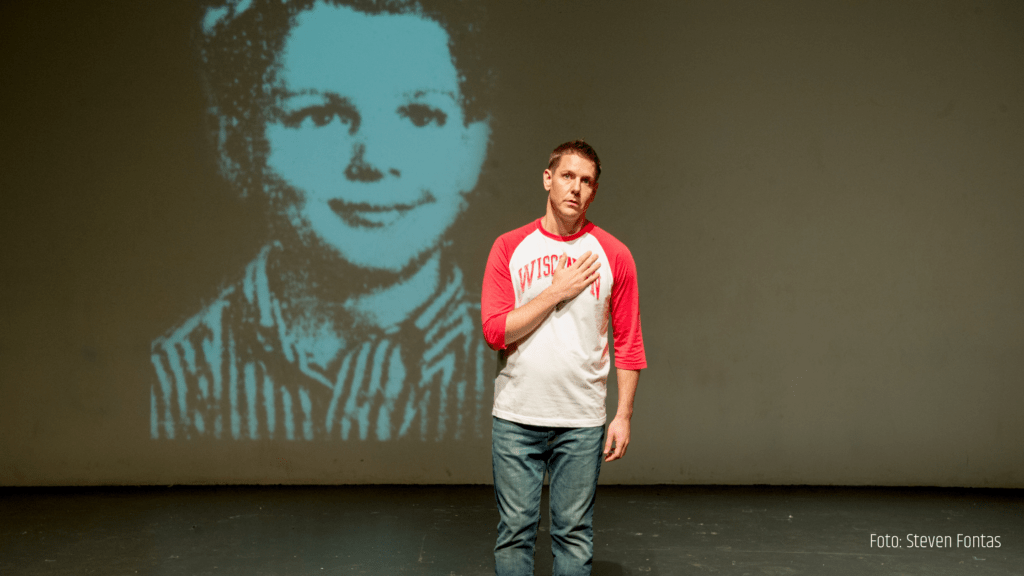
    Ben clutches his heart with his right hand as he speaks. A photo of Ben as a little boy is projected onto the wall in the background.

    It's funny at first: his first great love for a cartoon rooster, his artistic contortions to blow himself - and his gay rebirth as an actor in New York. But suddenly his play becomes more serious. The audience still has plenty to laugh about, but Ben talks about how his previous life has gradually worn him down. Out of curiosity and a need for money, he starts working as an escort. He talks about how he exploited his clients and how they dumped him in return. Drugs increasingly dominated his life. The title hints at it: "Coming Clean" ends on a conciliatory note. Ben has overcome his addiction because he has made peace with himself. A conversation about drugs, sex and loving yourself.

    Ben, in "Coming Clean" you talk openly about your life, including sex work and drug use. Were you sometimes afraid of shocking your friends while writing?

    Ben Strothmann: Very often, in fact! In my show, I even say to the audience once: "Listen, not everyone knows about this. Please don't tell anyone what you're hearing here tonight." At first I thought that I would only perform the play once and then never talk about it again. The funny thing is that this first performance was in a church, the Judson Memorial Church in New York. The church sees artists as messengers of God. That's why they are allowed to perform there. They don't tell you what you can or can't do there. Their only rule is: please refrain from hate speech!

    At the beginning, your play seems like comedy. Everything is hilarious. Then it gets more serious and drastic. For example, you describe how you, as an escort, blow one of your clients and burst into tears. Even back then, you thought: "Some time this will sound funny like a scene from 'Showgirls'." (Editor's note: "At some point, this will sound as funny as a scene from 'Showgirls'.")

    When I went on stage with the show for the first time, I had no idea it was comedy. I spoke to the audience, people laughed and I thought to myself: "Oh, this is obviously funny..." I realised from the first draft of "Coming Clean" that it was going to be a play about radical self-love. Accept yourself as you are - come what may! For no reason at all. Because: what else can you do with your life? I wanted to show people how I did it.

    I realised from the first draft of "Coming Clean" that it would be a piece about radical self-love.

    In some stark scenes, you interrupt your play and speak to "little Ben", the child inside you. A photo of you as a child then appears on a screen.

    The idea of talking to my inner child and saying "I love you, Ben!" came about organically. For example, I remember a person I dated twelve years ago. I was going through withdrawal for the first time at the time. I told him on the phone that I had started talking to my inner child. As if I was his father. That's when I realised that he was crying on the other end of the line. That's when I realised: Oh! I've discovered something that helps others learn to love themselves.

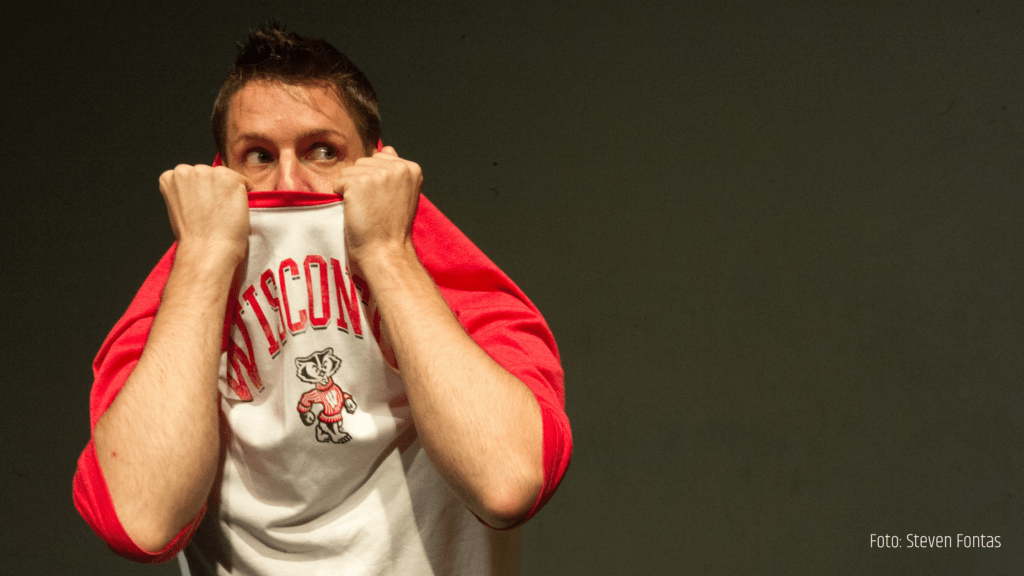
    Ben pulls his T-shirt over his mouth and nose and looks anxiously to the left in his theatre play about crystal meth consumption.

    Did you find it difficult to love yourself in the past?

    Yes, very much. When I wrote the play, I was very interested in how people come up with the idea: "If anyone knew what I was really like, he or she could never love me". Why do people become like that? And how can you help someone who has got caught up in these thoughts? That's why I open up like this in the play, to say to people: "Listen! I'm standing here on stage talking about how I wet the bed and do other things I'm ashamed of. But I'm certainly not the only one in this room who has experienced something like that. The only difference is that I'm prepared to talk about it." I want everyone to know that you can be open and honest with the world - and still be loveable! I want to show people step by step: this is how I learnt to love myself. For example, because I can tell really good stories.

    One of these stories is your first time - with crystal meth and "Rich, the dealer". Not only did he supply you with drugs, you also had great sex. Why do you remember this encounter so well?

    I'm certainly not going to proclaim here: "Sex on drugs is so much better!" (laughs) But the good thing about this experience was that I managed to switch off the bad thoughts that usually buzz around in my head. Before that, I had never looked in the mirror and felt attractive. I describe this special moment in my piece: I go into the bathroom, look in the mirror and am amazed at what I see! I just think: "There's this hot guy next door who I'm about to go to bed with - and he gets all this. Namely me! What a lucky guy!" Although the feeling was artificial, it liberated me. I could enjoy the sex and felt physically and spiritually connected to Rich - without the stupid feeling that I wasn't good enough. That's how crystal meth works. A doctor once explained to me, "On crystal meth, you could have sex with a horse and think it's great fun." It removes the ability to feel bad. But only up to the point when you come down again. Then suddenly everything is terrible and terrifying.

    Crystal meth removes the ability to feel bad. But only up to the point when you come down again. Then suddenly everything is terrible and terrifying.

    It took you several attempts to be able to live without crystal meth again. The "Twelve Steps" helped you with this. You also abstained from sex for a year. How did that come about?

    There is no one right way to get clean. And the "Twelve Steps" don't say: "You mustn't have sex!" But I had an experienced "sponsor", a mentor at my side. He was a Californian surfer dude with a huge beard. One of his first pieces of advice was: "No dating and no sex for a year." I said to him at the time: "Eh...? You don't know me at all. What makes you think I even need that?" And he said: "You'll be very busy with your relationship with yourself. You can't concentrate on it if you're distracted by other relationships."

    Did you go through with it in the end?

    Yes, because I realised at some point during my withdrawal attempts: Sex dates are the only thing I could replace alcohol and other drugs with. There were nights when I was just about to go to bed and thought: "Hm. I could actually ask someone out quickly." So I arranged a date, the guy came round, we had sex and he left. Afterwards, I thought again: "Hm. If I'm going to bed straight away anyway, I can quickly ask someone else out." So sometimes I had three men in a row. I don't want to complain about it, but I gradually realised: Just like alcohol and drugs, I was using another person as an escape to avoid being alone with my thoughts.

    I treat my sexual partners much more sensitively these days.

    What did you take away from your sexual fasting period?

    I think I treat my sex partners much more sensitively these days. After the "#MeToo" debate, I hate to admit it, but I only invited many of my sex partners over to use them. That's how my brain was conditioned back then after seven years of pills, alcohol and trying to run away from myself. In the end, I realised: I have no right to do this to a person! Everyone exists for their own sake, everyone has their own needs. That's why I actually took some time off sexually to change my relationship with sex and intimacy.

    A useful experience for surviving the corona lockdown...

    Yeah, it seems like I've been training for the pandemic, doesn't it? Let's add another 14 months! (laughs) But seriously, the past year in lockdown has been a great opportunity for me to realise that I can actually enjoy being alone. It feels like having a good friend of mine over. But it's been hard work getting to this point.

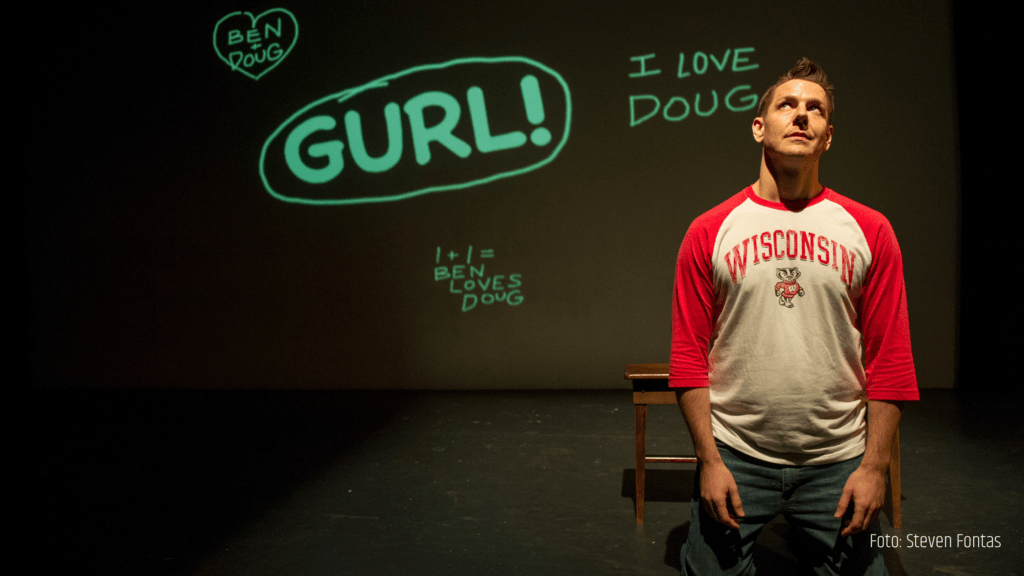
    Ben is kneeling and looking up to the right. Behind him on a virtual blackboard are various scribbles, such as "BEN + DOUG" in a heart, "I LOVE DOUG", "1 + 1 = BEN LOVES DOUG", or "GURL!" in a circle.

    What helps you to feel okay?

    Just one example. I used to think that my circle of friends was constantly changing. That's why I literally made myself a spreadsheet so I wouldn't forget my best friends. It reminds me that gives People who love me and have always loved me! Sometimes I still feel lonely, but no longer in a sad way. I now appreciate my own company.

    Your play is still online. But can we see you live in Germany?

    Well... it's hard to say. I actually wanted to go to the CSD in Constance and before that at the "Animal Pride", a festival for animal rights. After that, I wanted to tour Germany. I've already had my first dose of the vaccine, but of course I know that I could still pass on the coronavirus, even if I don't fall ill myself. It would be irresponsible to start travelling around. Animal Pride is on 3 July and it's already March... I'm afraid our immunisation won't work that quickly.


    Ben Strothmann (42) lives in New York and works as a theatre photographer, actor and drag queen. As Honey LaBronx, he hosts the podcast "Big Fat Vegan Radio" and in his "Vegan Drag Queen Cooking Show" on YouTube, he cooks good food without animal ingredients. A recording of his theatre piece "Coming Clean" is currently available online (ticket: 18 dollars):

    www.vegandragqueen.com/coming-clean-a-play-by-ben-strothmann


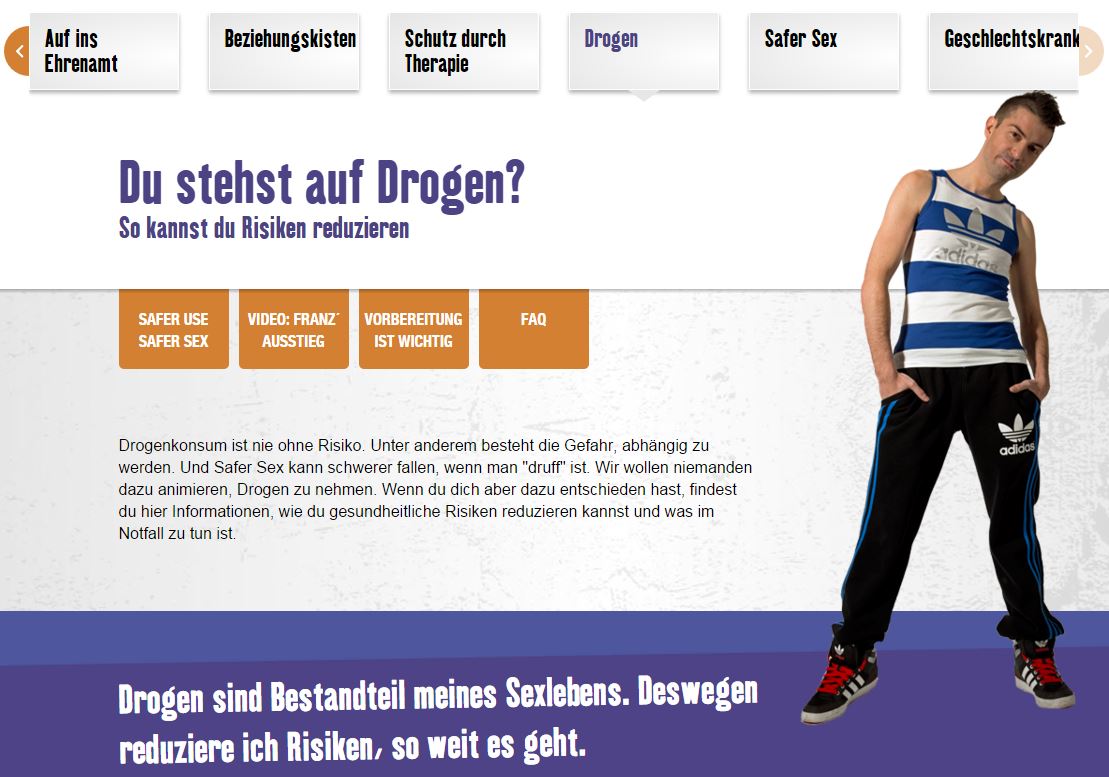
    You can find information on drugs and chemsex at IWWIT at iwwit.de/drugs. In the Gay Health Chat we will also answer all your questions live and anonymously.

    Do you use crystal meth or other chems for sex? If you're happy and everything is going well, we don't want to talk you into it! If things aren't going well, you're no longer horny and you want to change something, we are here for you! Simply click on aidshilfe.de/chemsex-support-quapsss

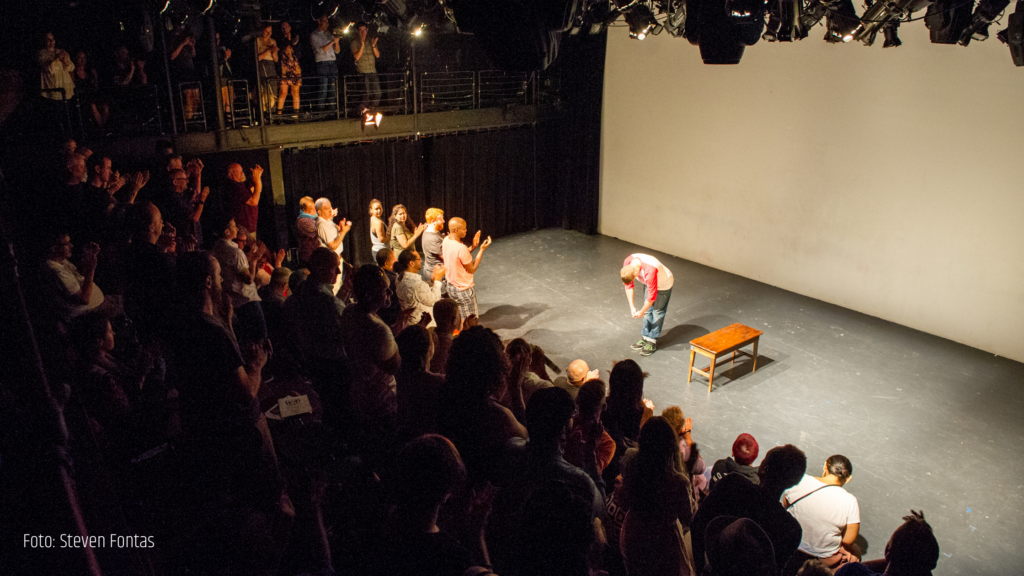
    Ben takes a bow on stage in his theatre play about crystal meth use in front of an audience that gives him a standing ovation.

  • "Crystal almost broke me"

    "Crystal almost broke me"

    Florian, 37, has been reporting on his drug experiences on ICH WEISS WAS ICH TU for four years. He wants to help other drug users to reduce their risks. To mark the current debate, we spoke to him about crystal meth.

    Florian, do you have any experience with Crystal?

    Yes, I did. I nearly broke it.

    You don't reject drug use in principle, but give tips on how to control your consumption and reduce risks. That obviously didn't work with crystal?

    No, not at all. Drug use is never without risk, and in principle you can become addicted to any drug. But with crystal, the threshold is crossed so quickly that I can only advise you to stay away from it.

    You were addicted?

    Yes, the feelings on this drug are just so good that you want them back. And then you're powerless. The trap snaps shut damn quickly.

    What did you experience at Crystal?

    An unprecedented feeling of happiness. The reality with all its problems is immediately completely faded out. All fear simply disappears. Performance and sexual sensation are increased explosively.

    That sounds dangerously attractive.

    Unfortunately, it is. And that's exactly why you very quickly can no longer imagine living your life without this drug. And then the negative effects set in very quickly.

    What are they?

    I had severe depression and delusions. I thought there were people in the room and I felt extremely persecuted. Many consumers experience something like that. A friend of mine smashed the walls open in his paranoia because he thought there were cameras behind them. Suicidal thoughts are also common.

    And yet you still find it difficult to stop?

    Yes, because you know that you can't have the feelings you have on crystal without the drug. You have to be honest, that's the way it is. Nevertheless, crystal does not make you happy. At sex parties where crystal is consumed, everyone usually ends up sitting around on their mobile phones looking for the next date.

    So the feelings of happiness you experience at the beginning don't last?

    No, you're not getting the deep fulfilment you're looking for. On the contrary, you search more and more frantically and desperately. In the end, the drug makes you quite lonely.

    What made you decide to quit?

    At some point, I just couldn't take it anymore. It starts with you not being able to go to work on Monday because you're still totally high. Then the drug gradually wears you down. You lose friends, you lose touch with your life. I ended up sitting at home alone and I just felt like shit.

    And how did you get out of it?

    I was very motivated to regain control of my life, partly because I was in the public eye when it came to drugs. Therapy and a strong circle of friends helped me. I realised that I had lost control and was able to admit this to others. The psychologist was initially unsure whether it would work without inpatient detox, but I was spared that.

    And today?

    I am more aware of the dangers than ever before. I now get my kicks and my lust for life in other ways.

    You can find more information on the topic of drugs and safer sex here.
    If you can no longer cope with your drug use, let yourself advise!

    I KNOW WHAT I DO_Florian_Crystal Meth
    I KNOW WHAT I DO Florian about crystal meth
  • Conversion therapies: "Nobody should have to experience this!"

    Conversion therapies: "Nobody should have to experience this!"

    Klemens Ketelhut is fighting for a complete ban on conversion therapies that supposedly "cure" gays. The 45-year-old knows from his own experience that this does not work. As a teenager, he fell in with Christian fundamentalists who wanted to free him from his "demon". A true story without a happy ending.

    With the dating show "Prince Charming", gay life has arrived in the mainstream. But the self-confident (and handsome) TV homos obscure the view of real life. And not every coming-out story ends with a happy couple in their dream villa.

    Klemens Ketelhut, for example, is not particularly happy - and doubts that he is the only one who has "not arrived well in the gay world". "There are many coming-out stories like mine - not all of them end well." That's why the Leipzig native has decided to tell his story here, with all its contradictions and a chapter that still burdens him to this day. As a fairy tale, it would begin like this:

    Once upon a time in the 1990s, when most people didn't have the internet and a Bavarian Minister of the Interior announced that gay marriage was no more a topic of discussion than "devil worship". Back then, Klemens was a teenager in the Swabian Forest and searching for the meaning of life. His family were believers, or at least more religious than most. Klemens and his two brothers went to the children's service every week, later became involved in the youth group and spent their holidays on Christian youth camps.

    Religion as rebellion

    Klemens sought God even more intensely than the rest of his family. He learnt about free-church Christianity through the school Bible study group. He immersed himself in the Holy Scriptures and attended worship services. At these services, people sing and pray so intensely that they feel they are filled with the Holy Spirit. "I went against my parents and their Protestant church," recalls the now 45-year-old. "If you're a young person looking for your own approach to the world, charismatic faith is always more attractive than a small church in the Swabian Forest."

    Klemens travelled with friends from this fundamentalist environment to a youth camp on an island in the North Sea for a fortnight. The volunteer counselling team came from an evangelical-charismatic church - and followed an evil plan. "They had obviously colluded," says Klemens looking back. Shortly after arriving, the group leader took Klemens aside for the first time and told the 15-year-old that he was possessed by a demon. He had already looked "lustfully" at another boy on the bus. "They kept telling me that I had to be cured. Otherwise I would go to hell." Until then, Klemens had only spoken to one person about his sexual orientation, very carefully. Now the charismatic clique forced him to come to terms with his sexuality - even before his own coming out.

    Demon on the North Sea island?

    On one of the following days, the boy is the only one who has to stay at the holiday home while everyone else goes on an excursion. "There was a kind of decision that I wanted to exorcise the demons with their help," admits Klemens. But what freedom of choice does a teenager have who is being pressured by adult carers? Travelling without his brothers for the first time, on a remote island? "You no longer have a choice, especially if you believe in it."

    So Klemens submits to the treatment. He doesn't want to reveal any details because the event still upsets him three decades later. "I don't have a complete memory of it either." Klemens can only reconstruct this much: He was locked up for a whole day, always surrounded by five to seven adults. "At certain times, I didn't know whether I would get out of that room alive."

    "It wasn't therapy, but psychological, physical and sexual violence."

    After Klemens had survived the day of horror, he was euphoric: the demon had been banished and he was part of the group again. It was only after a few weeks that he began to have doubts. He still finds boys more exciting than girls. But he doesn't confide in anyone. His panicked thought: what would happen if his parents complained to the travel organisation? "I was so afraid of coming into contact with the group leader again. He was a threatening person. Today I just hope that the old man died miserably."

    Every coming out is a good experience

    Klemens rarely puts it so harshly. As a university lecturer, he is practised at giving lectures. He also usually speaks objectively about the abuse he had to endure. His conclusion: "Back then, I wanted to belong. Today I say: it wasn't therapy, but psychological, physical and sexual violence. It's crass to isolate a 15-year-old and make him believe he's a danger to everyone. That's evil!"

    As a teenager, however, Klemens did not yet recognise evil as clearly as he does today. He continued to be involved in his church: "It wasn't a break, but a process of detachment. But today I would say that the abuse was the beginning of the end of my charismatic career."

    Encouraged by the example set by his superior, Klemens came out at his job at the time.

    After Klemens moved to a larger city for his training, he gradually made peace with his sexual orientation. If his life story were a fairy tale, a fairy godmother would have come into play: his first supervisor. He not only trained him in curative education, but also set an example that you can be openly gay and happy at the same time. "We were in a staff theatre group together and did music and cabaret," Klemens remembers. "That was just great. He took me by the hand a bit." Encouraged by his role model, Klemens came out at his job at the time. Many more coming-outs followed, with family and friends, and they all went well: "I never had the experience of people rejecting me afterwards."

    Activism against prejudice

    As committed as he was as a teenager in the church community, Klemens is now committed to the queer community. In his early 20s, he organised summer camps with the Lambda youth network. The big difference: young people are not manipulated there, but encouraged to respect themselves and others.

    Later, after moving to Leipzig, Klemens worked with the "Rosa Linde" association, particularly on the educational project "Love shows its colours". It helps young people to overcome prejudices against queer people, especially through personal encounters with people of the same age who are already out.

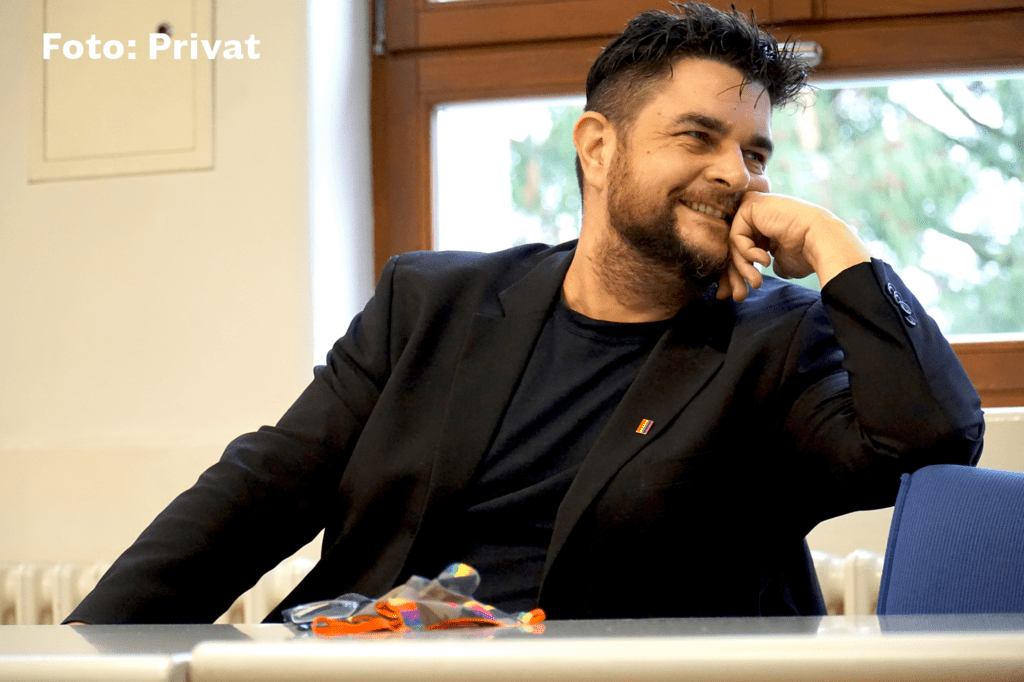
    Klemens Ketelhut smiles, wearing a jacket with a rainbow pin. He is campaigning against conversion therapies.

    Today, the doctor of educational science researches gender and queer studies, among other things. Together with the Magnus Hirschfeld Federal Foundation Klemens is developing a counselling service for other "survivors" of conversion therapies that are supposed to "cure" queer young people. "Many want to make their homosexuality go away when they are young and don't yet know any positive role models," surmises Klemens. "Our aim is to provide a prevention programme that helps anyone who wants to leave a total community - whether that's evangelicals, Salafists or Nazis."

    Bundestag bans "polarity reversals"

    Just recently, Klemens' story took another fairytale turn. His personal commitment - and that of his many allies - led to an important victory in the fight against fundamentalism: in May 2020, the Bundestag banned conversion therapies and made it clear that such "polarity reversals" cause severe suffering, both physically and mentally. The new law is intended to better protect minors in future from what happened to Klemens when he was 15. "This partial ban would probably have helped me back then," Klemens surmises. "Queer children and young people today shouldn't have to experience something like that! That's why I'm getting involved."

    Klemens Ketelhut smiles against a forest backdrop. He is campaigning against conversion therapies.

    After this political success at the latest, Klemens' life story is suitable as a template for a streaming series. The plot: a teenager is abused by evil adults. But after coming out, he fights with the help of his queer community until a law prohibits such behaviour. In the meantime, he falls in love with a fellow campaigner, the two get married, and if they haven't died...

    Creating a better world

    But Klemens wouldn't recognise himself in such a modern fairy tale: "I haven't found a friend to support me," he explains. "I've been single for 17 years and have to help myself out of everything." It can't be due to a lack of contacts that Klemens can't find a man for life. "I get to know a lot of people through my commitment," reports Klemens, "but when it comes to flirting or having sex, I often don't feel safe enough. For me, the gay community remains a dangerous place." The abuse still characterises his life today, although the evangelical exorcism was only a short chapter.

    "We also have to look after those who are not happy after coming out",

    demands Klemens Ketelhut.

    "Such experiences are like landmines in the psyche," explains Klemens, "they can explode decades later." Klemens was diagnosed with post-traumatic stress disorder two years ago. He is now undergoing specialised psychotherapy - and is talking about his experiences for the first time in interviews. His not at all fairytale life story is intended to encourage everyone who is in a similar situation to him. "We also have to look after those who are not happy after coming out," Klemens demands. Even their difficult stories are part of reality in a free Europe.

    For Klemens, his latest coming out is also an appeal to all gay men to be more lenient with each other: "It would be nice if we stopped putting each other down just because someone doesn't shave their bum," says Klemens. "Instead, we could think together about how we can make the world a better place for our younger brothers and sisters." Klemens has to laugh because it sounds so pathetic. But every good story needs a moral - a happy ending, on the other hand, is unnecessary.

    Philip Eicker

    Klemens Ketelhut gazing thoughtfully against a forest backdrop. He is campaigning against conversion therapies.

    More information about Klemens' story

    Continue listening: In the Podcast "Y-collective" in the ARD Audiothek, Klemens and others talk about how they were cured of their homosexuality.


    Background to the ban on conversion treatments in Germany and worldwide

    In Germany, there has been a legal ban on conversion treatments for people under the age of 18 since 2020. The law "applies to all treatments carried out on humans that are aimed at changing or suppressing sexual orientation or self-perceived gender identity" (§1, para. 1, Law to protect against conversion treatments).
    It is not only prohibited to carry out such treatments, but also to advertise, offer and broker such services. In addition, a Special counselling service under the umbrella of the Federal Centre for Health Education are created.
    In particular, the restriction of the ban to under-18s is also criticised in this country.

    This makes Germany only the fourth country in the world - after Brazil, Ecquador and Malta - to ban conversion treatments nationwide. Other countries have such a ban, at least in certain regions.
    You can find an overview of the current status worldwide at ILGA World (Information in English and Spanish).

  • "From day one, we had an open relationship - which was always very close."

    "From day one, we had an open relationship - which was always very close."


    Pleasing others is okay, but it must not become the compass for our own actions. We already have enough flags in the wind, says Björn, who has given his thoughts on the topic of "open relationships".

    Most men like to have sex, and in my experience, gay men are no different. A survey from the UK came to the conclusion that 41 per cent of around 1,000 gay men surveyed are in, or have been in, an open relationship. 75 per cent of them think this form of relationship is "great". Even if the results are not completely transferable to Germany, there are certainly a lot of people here who see things similarly. For example, I also live in an open relationship, and I know very few truly monogamous gay men. On the Facebook page of I KNOW WHAT I'M DOING recently appeared under a post on the subject of "open relationships" a lively discussion in which I then took part.

    I was quite surprised at how much opinions differed and shocked at how harshly those who live in open relationships were criticised and attacked. "Why do gay people only ever think about sex?" "You don't have to change partners like underwear!", or "Then you don't need a relationship; that completely confirms the stereotype about gay people" I could read.

    It annoys me that some gay people argue just as homophobically as some straight people.
    What struck me was that there is a fear of fulfilling the clichés. It seems that there are quite a few gay men who would rather conform than explore their own needs and live authentically. Studies show around 57 per cent of men and 47 per cent of women cheat. So you can work out the probability of "real fidelity" among gay men (including in so-called monogamous relationships, where they cheat behind the other person's back). What I would really like to see, however, is the number of commentators who criticise me and others but don't act any differently to me ... Nobody has the right to judge other people's relationships!

    I met my husband almost five years ago and it all happened very quickly: we were engaged after a year and married a year later. From day one, we had an open relationship - which was always very close. We are open and honest with each other about everything. That's exactly what I think is crucial: not having to hide anything from your partner. We both really value this honesty, even if it's not easy sometimes.

    The word "open" also refers to our communication.
    From my point of view, the sexual needs of both partners don't necessarily coincide, nor do they have to. It doesn't bother me if my husband does things with others that I don't like - on the contrary. In open relationships, this is always discussed and that's an important step. If you don't dare to talk about something, that's a problem. "Open" also refers to our communication.

    However, I was really surprised by the sharpness of the criticism. I had the feeling that I was being blamed for the "bad image" of gays in society. Apparently I hit a sore spot. My husband and I don't hide ourselves and our needs, we live them out and are happy with it!

    In my opinion, not doing something because others judge it is the wrong way to go. Pleasing others is okay, but it must not become the compass for our own actions. We already have enough flags in the wind. It is important for me to emphasise once again that I am not judging others. Anyone who has decided to live monogamously should do so. Everyone should follow the path that suits their own needs. Compromising just to avoid being single or to fulfil other people's moral standards: No thanks!

    Planetromeo open relationship
    (Almost) everyone knows this: you can also set your relationship status on dating portals. (symbolic image)