

Tag: Safer sex

  • Sex work in Berlin: Out of the shadows

    Sex work in Berlin: Out of the shadows

    What is the idea behind SMART Berlin - Who do you advise and how does counselling usually work? 

    SMART Berlin is a counselling centre and information project for (cis and trans) male, non-binary and trans female sex workers. Our aim is to offer sex workers a wide range of support - whether they are starting out, exiting, reorienting or professionalising. We offer counselling and information on all kinds of topics related to this work: sexual health, rights, laws, dealing with clients and colleagues, resources needed, etc. Sex workers can come to our regular weekly counselling sessions. Or they can contact us via email, phone or social media.

    What is the life situation of the people who come to you? 

    The people who come to us are often at different points in their careers, but all have the desire to somehow make their work more professional, more successful and also less precarious. Some are just starting out, others have been with us for a long time. People often have a specific need, such as an STI test, or are looking for certain resources. Or they are unsure how to deal with a certain law that affects their work. As the lives of sex workers change frequently, many are often only visiting Berlin and we see them again when they are back in the city.

    You can find Smart Berlin at www.smart-berlin.org

    What questions frequently arise?  

    Frequently asked questions concern, for example, sexual health, which we address with information and the opportunity to visit a doctor who works with us. There are also often uncertainties about the so-called Prostitute Protection Actwhich, for example, provides for the compulsory registration of sex workers. Here, too, we try to provide as much information as possible about the risks and rights. Apart from that, of course, everyday working life plays a major role, dealing with customers, advertising your own services, etc. It is not uncommon for people to also have very personal needs to explore how they can deal with other life factors, such as migration or trans identity, in relation to their work.

    Unfortunately, people in sex work live and work in the shadows, sometimes leading downright double lives. This is due to the persistent social stigmatisation, institutional discrimination and legal disadvantages.

    Sex work is certainly less taboo than it used to be - but people still work in an area that is socially little or not recognised at all. How does this affect the escorts you speak to? 

    Unfortunately, people in sex work live and work in the shadows, sometimes leading downright double lives. This is due to the persistent social stigmatisation (e.g. lack of acceptance by family and friends, lack of appreciation of the work and generally widespread prejudices), institutional discrimination (e.g. in the housing and labour market or in banking), as well as legal discrimination (e.g. through the obligation to register or the overlap with migration requirements).

    For many, this naturally leads to insecurities and (existential) fears. Some internalise feelings of shame, while others are very proud of themselves and their work and demand the rights and recognition to which they are entitled. The reactions to these complex problems are therefore very different, but everyone agrees that they deserve better treatment from society, but also from the state and politicians. 

    At this point, we also see a social responsibility: in discussions, terms such as (forced) prostitution, human trafficking and sex work are repeatedly mixed up, which ultimately harms all those affected and does not offer them the necessary support. We should listen to the people affected and avert coercion in the causes, as well as meet the needs of sex workers and support them in their life situations.

    In discussions, terms such as (forced) prostitution, human trafficking and sex work are repeatedly mixed up, which ultimately harms all those affected.

    Now we've had two to three years of the pandemic, how has that changed sex work overall?  

    During the pandemic, the problems that already existed increased significantly. Income went down the drain, homelessness increased. Many had to continue working somehow but wanted to stay healthy at the same time. At times, there was a ban on sex work, which was one of the last COVID measures to be relaxed - at a time when clubs, restaurants and massage parlours had long since reopened. The already difficult situation was exploited to make calls for a ban on sex work more acceptable, and sex workers were sometimes chalked up as a health risk in the old fashioned way. Of course, trust is also lost among those affected when such discriminatory statements are made. We have noticed that the climate against sex workers has become harsher and more aggressive in some cases, both politically and on the street.

    At the same time, the work of counselling centres like ours has of course also been affected by COVID, which is why we have not been able to offer the level of support we would have liked or needed. We have noticed that mental health, social isolation, loss of contact and drug use have become more prevalent issues since the pandemic.

    However, sex workers have an incredible amount of patience and finesse to adapt to changing conditions and find their own way of dealing with them. Access to resources and dialogue with colleagues are crucial criteria for making a difference.

    We are living in difficult economic times, do you think this also affects sex work? Can sex workers still make a living from their work?

    Of course, the difficult economic situation also affects sex workers. Not only is less money being spent on sexual services and therefore less income is available, but the cost of living has also risen and more money is being spent on rent, food, clothing, etc. As in all self-employed professions, it is often unclear how much money you will actually earn. Sometimes there is a good month that allows you to build up reserves, sometimes there is a bad month where you have to rely on your own savings. Planning for the future is therefore much more difficult. Many sex workers therefore often work in other jobs or use their skills for other professions, thus providing a kind of basic security. Nonetheless, many people value sex work as a relatively flexible and independent way of earning an income. The economic circumstances are very different for all sex workers and are individually characterised. There are people who want to escape poverty through sex work and still live and work precariously, and there are also people who offer sexual services very successfully and do so as a full-time job and sole source of income. In both cases, the activity must be understood and respected as work and the focus should be on how people can work and live in a better, safer and more self-determined way. What makes the difference and influences experiences are often intersecting forms of discrimination or privilege: language skills, migration status, gender, different access to resources or communities etc. Unfortunately, all of this also makes a difference to earnings and everyday working life.

    PrEP is a big topic in the scene. How do you deal with it, what advice do you have? Also with regard to sexually transmitted diseases and sexual health in general? 

    Our health counselling naturally also includes the topic of PrEP and we advise the use of PrEP and mediate with organisations to obtain them. At the same time, we also clarify that PrEP only protects against HIV, but not against other, sometimes even more common sexually transmitted diseases. We therefore recommend using condoms at the same time - especially as the use of condoms is also prescribed in the so-called Prostitutes Protection Act. [Editor's note: Condoms protect against HIV transmission. They also reduce the risk of contracting other sexually transmitted diseases. However, they do not offer complete protection against sexually transmitted diseases. That's why regular tests are important. More information at www.iwwit.de/kondome.] Many sex workers are interested in not contracting sexually transmitted diseases, after all, their own body is also a work tool somewhere and there would be no paid sick leave in the event of a breakdown. We therefore encounter interest and initiative in this topic and realise that many sex workers already have at least some basic knowledge on the subject and would like to find out more.

    Caspar is a sex worker. And he is trans*male. Caspar likes his job. For him, sex work is a job like any other, which he sometimes finds great, sometimes shitty. Caspar takes PrEP to protect himself from HIV.

    Sex under the influence of drugs or substances is also a topic that occupies the scene. What advice would you give to people who come to you?  

    Our approach is that of "harm reduction", i.e. the reduction of dangers. We provide information on the safer use of drugs or, if necessary, refer people to medical staff and addiction support centres. In terms of work, we believe that it is best to work sober, also in order to be better able to deal with potentially dangerous situations. However, the demand for chemsex from clients is sometimes high. We therefore also appeal to customers to act fairly and responsibly when booking sexual services.

    Currently, the so-called "Prostitutes Protection Act" is perceived more as harassment, discrimination and (partial) criminalisation than as protection. What is really needed is equal treatment by law and the establishment of actual (labour) rights - with the participation and consultation of sex workers themselves.

    You are not an activist alliance, but nevertheless the question: Have you Demands on politicians, such as the Senate, on what needs to change when it comes to sex work should? What do the escorts want? 

    As a funded advice centre, we are in contact with the Senate and try to contribute our expertise to various working groups. We see ourselves clearly on the side of sex workers and try to improve their situation wherever possible. As sex work is a deeply politicised and regulated professional field, we naturally also have perspectives on politics that are influenced by contact with our clientele. In Berlin, we participated in the "Sex work round table" with the Senate, authorities, operators and sex workers. Very good recommendations for action were developed, but these have not yet been sufficiently implemented. We would like to see these ideas implemented faster and better. At the same time, projects that support sex workers or are even led by sex workers themselves must be further promoted and expanded.

    What we often hear from sex workers is that they would like to see a revision of the current legal situation. At the moment, the so-called "Prostitutes Protection Act" is perceived more as harassment, discrimination and (partial) criminalisation than as protection. What is really needed is equal treatment by law and the establishment of actual (labour) rights - with the participation and consultation of the sex workers themselves. Such a legal text would also be an important prerequisite for countering the ongoing stigmatisation and discrimination of sex workers. On the one hand, we need to provide better education in society, but we also need to enshrine equal treatment and an improvement in living conditions in law. If sex work is currently subject to heaps of special regulations, is portrayed as immoral or a health risk, then it is not surprising that discrimination against sex workers continues and even causes existential problems for institutions, for example if someone cannot apply for a flat because they cannot declare their job or if a bank once again blocks the account of a person in sex work. We therefore hope that our work and the important work of other colleagues will be continued and promoted, that those affected will receive more support, that their needs will be met through legal rights and that the many forms of discrimination and stigmatisation will be countered through education and equal treatment.


    HIV protection in sex work? Trans* man Caspar favours PrEP! Watch the video here: https://www.youtube.com/watch?v=Vxwz_OHgwEU
  • 5 questions for the Gay Health Chat

    5 questions for the Gay Health Chat

    Hello Klaus! Congratulations on five years Gay Health Chat! What exactly is the Gay Health Chat and who is it aimed at?

    Thank you very much!

    The Gay Health Chat is an internet counselling service. It works without registration and is free of charge. It is aimed at gay men and all men who have sex with men. This also includes trans* men, as well as non-binary and gender non-conforming people who feel they belong to the gay community.

    Why was the Gay Health Chat created?

    Small counselling centres and AIDS service organisations simply don't always have the money or resources to set up an online chat. With Gay Health Chat, Deutsche Aidshilfe provides the technology and ensures good quality. The counsellors then join in from 46 counselling centres: from Austria, Germany and Switzerland.

    Who advises at the Gay Health Chat and how are the counsellors trained?

    Everyone who works for us has been trained as an HIV/STI counsellor by Deutsche Aidshilfe. And we regularly train everyone in online communication, because it is much more difficult to assess how the other person is doing when typing and without visual contact. This year, we are also adding additional training to become first aiders for mental health problems. Our counsellors are all gay or queer themselves and work, for example, at gay checkpoints, in the IWWIT team or at AIDS service organisations - a very colourful mix.

    What kind of questions do people come to the Gay Health Chat with?

    Most of the questions have to do with sex. We're the AIDS service organisation and we know our way around that particularly well. But since corona, more and more people have been chatting to us because they feel like shit, are lonely and can't cope. We can help them too.

    Which topics are people perhaps not yet so aware of, but which you can still advise on?

    We talk a lot and have learnt a lot about drugs during sex in recent years: why is it particularly hot and what steps are necessary when it's no longer fun - we can now offer good help. In addition, every counsellor has experienced coming out as a gay man and can therefore understand everyone else who is currently dealing with this issue. How can I become a self-confident, courageous person in this world? That is our goal.

    Klaus, thank you very much for the interview!

    You can reach the Gay Health Chat at gayhealthchat.com.
    You can find everything about gay life at iwwit.de/gay-life!
  • Federal Government Commissioner for Queer Issues: "I take a clear stance on incitement to violence!"

    Federal Government Commissioner for Queer Issues: "I take a clear stance on incitement to violence!"

    Mr Lehmann, in 2021 you were directly elected to the Bundestag by more than 70,000 Cologne residents. Since November, you have been Parliamentary State Secretary in the Ministry of Family Affairs and since January, you have also been the Federal Government's Queer Commissioner. With all these successes: Do you personally still experience disadvantages or discrimination because you are gay?

    In the 20 years that I have been gay, I have of course also been discriminated against from time to time. For example, my husband and I have been verbally abused on the street because we were walking hand in hand or attacked on the internet. Nevertheless, I have certainly experienced less everyday discrimination than other people because I am in a privileged role as a politician. My party has always fought for the rights of LGBTIQ* and other minorities. I am naturally surrounded by a very safe and open environment.

    You recently reported a hate preacher from Görlitz who agitated against queer people in a video and wished them dead. How do you generally deal with homophobic attacks? When do you defend yourself - and when do you ignore them so as not to attract additional attention to extremists?

    When it comes to calls for violence or a call for murder, as in the case of this hate preacher, I take a clear stance. I call in the state security services and press charges. In my political work, I unfortunately have to live with hate comments online, which have increased massively now that I am even more in the public eye due to my new position as Queer Representative. I ignore a lot of it, but here too I report comments and block the authors when boundaries are crossed.

    Discrimination within the LGBTIQ* community: Even within the queer community, trans* people and non-binary people often encounter reservations. How inclusive do you find the queer scene?

    The LGBTIQ* community is very diverse - and just as diverse are the demands that the different groups place on politics. As queer commissioner, I am the point of contact for everyone. I try to listen and incorporate the needs of the community into government work. Despite all the differences within the community, I also see a lot of potential for alliances. And I am convinced that if we want to achieve something in terms of queer politics in this legislature, we need mutual solidarity. We need to stand up together for the rights of the LGBTIQ* community - for example, currently with the planned self-determination law, which is intended to replace the so-called "Transsexuals Act". There is a lot of headwind at the moment and we will still have to have many a discussion and do a lot of persuasive work until the law is finalised. Support from within the community is therefore important.

    As a queer representative, do you also feel responsible for more tolerance within the community - and how could we promote it?

    In any case, I see this as one of my tasks. I think the most important thing is to stay in dialogue with each other and to realise that we can only achieve the ambitious goals that we have set out in the coalition agreement if the community gets involved and acts in solidarity. Then we can make a real start for diversity, self-determination and equal rights for LGBTIQ* people in this legislative period. This summer, for example, I want to give the go-ahead for the first nationwide action plan for diversity and against queer hostility.

    The associations and initiatives of the queer community are making a very important contribution to this action plan - we are starting a dialogue process about what is important to them and where further support is needed. Family law should also finally be updated and adapted to social realities. After all, families are diverse and do not always consist of just a mother, father and child. We therefore want to reform parentage law and provide legal protection for multiple parenthoods. There are various interests within the community on all of these topics, which are expressed and also heard.

    "Medically, HIV is now well manageable. Discrimination, on the other hand, makes people ill."

    Today, people with HIV can live with the virus almost without any problems - and HIV is not transmissible under therapy. A major problem for them, however, is the Stigmatisation of HIV. Almost 80 per cent find it risky to talk about their infection because they are often confronted with prejudices - on a date, for example. In your role, how do you want to contribute to further reducing the stigmatisation of people with HIV?

    HIV is now well manageable medically. Discrimination, on the other hand, makes people ill. For many people with HIV, the fear of rejection and marginalisation outweighs the health consequences. I am therefore in favour of ensuring that the action plan for diversity and against queer hostility also includes measures such as strengthening educational work on HIV. I will ask the Federal Ministry of Health and the Federal Centre for Health Education to play an active role here in order to make doctors more aware of current treatment and prevention options and to prevent stigmatisation. Because nobody with HIV should have to hide.

    According to surveys only one fifth of Germans know that HIV therapy reliably prevents the transmission of HIV. What is it like in your circle of friends? Do they all already know about protection through therapy?

    In my queer circle of acquaintances, largely yes. But I recently explained at length to a heterosexual friend who has a lot of fears about HIV and Aids what PrEP is and that HIV treatment can prevent the transmission of the virus. She didn't know any of this and was relieved and grateful for the information afterwards.

    "PrEP has proven to be highly effective protection in recent years (...). Now it's a matter of ensuring supply in rural areas too."

    For more than two years, the PrEP as a health insurance benefit, including for gay men. What is your assessment after two years of PrEP on prescription?

    Nowadays there are three good and effective methods of prevention: condoms, PrEP and therapy. PrEP has proven to be highly effective protection in recent years - as shown by research conducted by the RKI to accompany and evaluate the introduction of PrEP. According to this, it is estimated that up to 21,600 people in Germany were already using PrEP in 2020, almost predominantly men. We also know that there are very large regional differences in PrEP use - use is particularly widespread in large cities such as Berlin. Now it's all about that, to ensure supply in rural areas as well and in regions where there are fewer doctors who prescribe PrEP - and at the same time to disseminate information about PrEP even further into the community.

    How much has PrEP changed gay (sex) life?

    I think almost every gay man knows the feeling of waiting for the results of an HIV test at regular intervals and hoping that the test is negative. This constant fear of infection can be demoralising and has often been a burden at the back of your mind - even though sexuality should actually be liberating and free of fear. PrEP has given gay men additional security - for many, PrEP is a liberation, even if it does not protect against other STIs.

    "This constant fear of infection can be demoralising and was often a burden in the back of our minds - even though sexuality should actually be liberating and free of fear."

    Your partner Arndt Klocke has already been outed as a PrEP user in an interview and also showed his face on social media with ICH WEISS WAS ICH TU in favour of PrEP. Now, of course, we are very interested: Which of the three safer sex methods to protect against HIV do you use and why?

    I've stuck with the good old condom so far. (laughs)

    Arndt Klocke and you have been a couple for 20 years. So to finish, please give us a relationship tip: how do you manage to have a happy relationship - despite a career and a lot of commuting between NRW and Berlin?

    My husband and I make sure that we have time together - our private lives are sacred to both of us. We spend the weekends together as often as possible, either in Cologne or Berlin. We go to the cinema a lot, we're interested in culture, sport and travelling. And somehow the commute is exhausting, but it's also good for the relationship because we always look forward to seeing each other again.

    You and Mr Klocke were recently on the podcast Queer stuff as a guest. There you also talked about sex outside of a relationship. You said that you would "grant and wish for open relationships for straight people too." Why would you recommend an open relationship?

    I would not like to recommend any particular Relationship model. Because how relationships are lived, what makes you happy and what fulfilling sexuality means is something that everyone has to decide for themselves and negotiate with other people. What I would definitely recommend, however, is openness - both within partnerships and externally. Because that frees you up and also creates new spaces for other people to dare to do the same. Self-determined sexuality with changing partners, committed monogamous partnerships and all variations in between: Being able to decide for yourself without stigma is at the heart of a liberal society. And this also includes a sex-positive policy.

  • Prejudices make you ill. HIV under therapy does not.

    Prejudices make you ill. HIV under therapy does not.

    The "positive voices 2.0" study has shown: The majority of people with HIV surveyed can now live well with the infection. But at the same time, many experience discrimination and marginalisation on a daily basis!

    All of this has a significant negative impact on health, well-being and sexual satisfaction. Added to this are feelings of shame and guilt.

    The study also shows that more than 50% of respondents have been rejected at least once during sex in the past 12 months. And this despite the fact that there is protection through therapy.

    Watch our video now:

    The good news is that since Protection through therapy 40 per cent of those surveyed experience less discrimination. The HIV medication suppresses the multiplication of HIV in the body. HIV can then no longer be transmitted during sex.

    So if you have already asked yourself what you can do to combat discrimination against people with HIV, then this would be the first step. Pass it on: HIV is not transmissible under therapy. Tell your friends, family or work colleagues.

    And there's more you can do. Show solidarity wherever people with HIV are marginalised or discriminated against! And find out more at iwwit.de! Here you will find lots more information about living with HIV. And you will find information on how you or others can defend yourself against discrimination and marginalisation.

    We also show in our Campaign authentic images of people with HIV, because they are an indispensable part of our community.

    You want more? Then get in touch with IWWIT - and tell us what you think! Or tell us about your ideas or wishes on the topic of living with HIV: On Facebook, Instagram or classically by e-mail. We look forward to seeing you!

  • Three men, three methods - safer sex 3.0

    Three men, three methods - safer sex 3.0

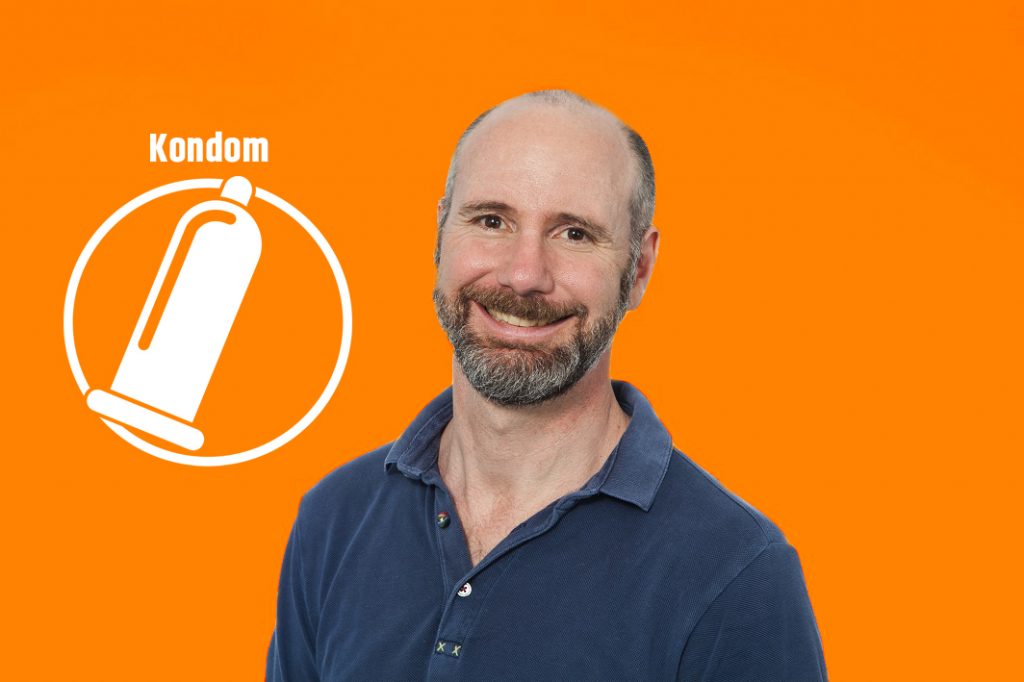
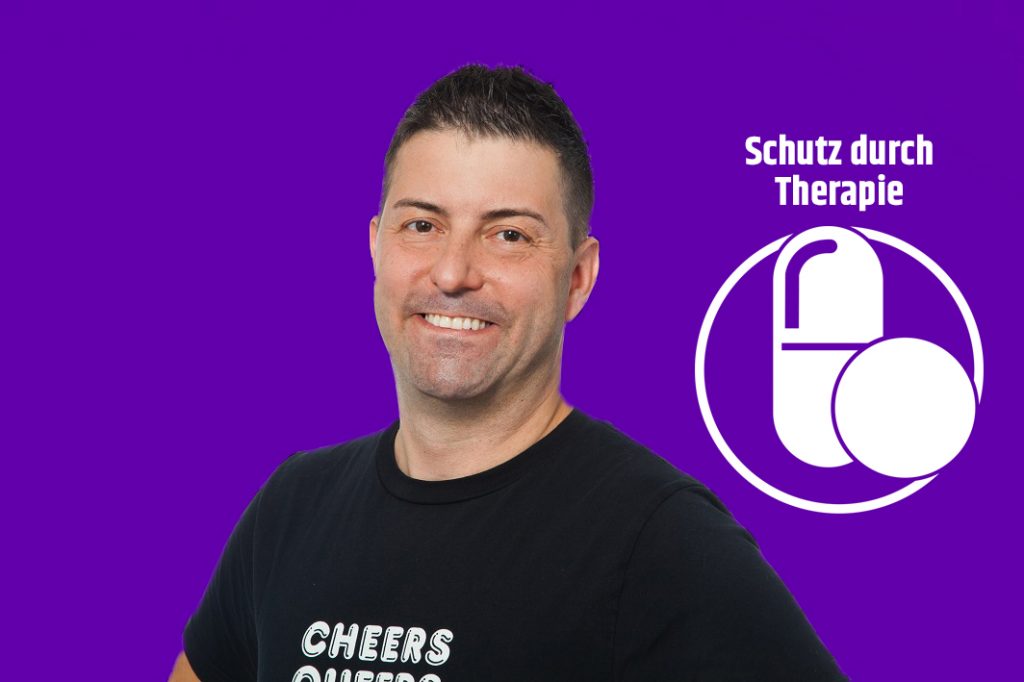
    Flo, aged 40, is HIV-positive and has been taking medication for more than 15 years. The treatment also protects his sexual partners: HIV cannot be transmitted during sex.
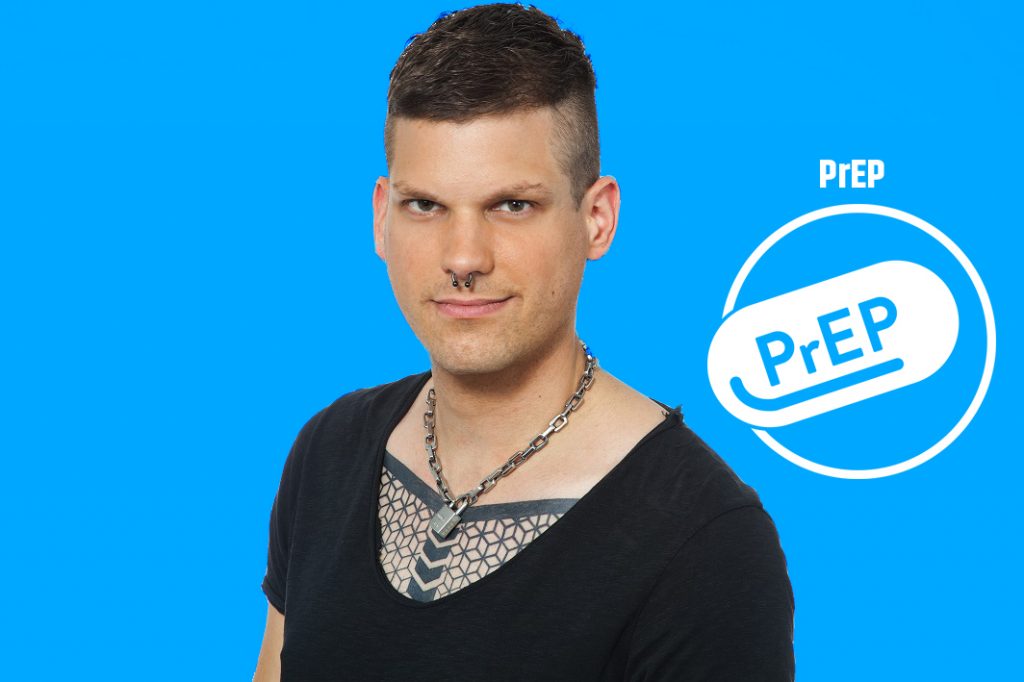
    PrEP had barely become available in Germany when Alex prescribe this method of protection against HIV. Even after a year and a half, the 32-year-old still swears by this solution to protect himself from infection.
    Florian likes the protection that the condom offers him - against HIV and other STIs. The 45-year-old even sees the condom as an enrichment during sex.

    What does your safer sex method mean to you?

    Alex (PrEP)Many men use PrEP because they want to do without condoms. For me, that is not the main reason. Rather, PrEP gives me security in situations that would be risky without it. Before I was prescribed the tablets, I was on the verge of fucking unprotected more than once. One beer too many and I really had to pull myself together. Now the protection is in my hands: with PrEP, HIV infection is ruled out even if my sex partner doesn't wear a condom. Thanks to PrEP, I can enjoy sex in a much more relaxed way.

    Flo (protection through therapy)Ten years ago, I mostly went to parties for HIV-positive people when I wanted to have sex. Only in a safe space did it seem possible for me to skip the condom without coming under pressure to justify myself. The gay scene as a whole was pretty divided: we positives here, the negatives there. That has now changed. More and more gay men are informed about the newer safer sex methods. They know: Positives can't infect other people if they take their tablets regularly. I can go to the Lab or Kitty in Berlin and have fun with men who now live out their sexuality naturally and without fear. It feels like a liberation for me.

    Florian (condom)I continue to use a condom, even though others may see it as a kind of "icon of discomfort". This safer sex method is as safe as it is simple for me: I use it exactly when I'm having sex. On the other hand, I would have to take tablets every day, even if I don't have sex for weeks. I don't need a prescription for condoms and I don't have to get regular confirmation that my kidneys can still tolerate PrEP.
    I'm not one of those men who are bothered by condoms during sex. On the contrary. I find it a stimulating part of foreplay to put on the condom. Then it's clear to both of you that the fun is about to begin.

    Florian uses a condom. He explains what this means for him here.

    How do you deal with users of other methods?

    Florian (condom)Everyone has the right to choose the method that suits them. I also understand that many PrEP users and HIV-positive people on treatment want to have sex without a condom. For example, a number of HIV-positive people have told me that they feel liberated from old shackles now that the protective effect of the therapy has been proven. Flo feels the same way. I, on the other hand, see it as freedom to be able to do without tablets. That's why the condom is still my first choice. If someone tells me "I take tablets. We can also fuck without a condom", then I kindly decline. A person's personal need for protection generally takes precedence over the other person's desire to experience sexual pleasure.

    Alex (PrEP): I don't mind the condom. I usually leave it up to the other person whether they put one on or not.

    Flo (protection through therapy): I only use condoms if the other person insists and looks too hot to send him away. Otherwise you wish each other a pleasant evening and flirt with another guy.

    Alex uses PrEP. You can find out what this method means for him here.

    What questions arise in connection with your protection method?

    Alex (PrEP): As I travel a lot, I notice regional differences in the use of PrEP. It is well established in Berlin, Hamburg and Cologne. Many gay men are just as open about it as I am. In smaller cities, on the other hand, few people dare to talk about PrEP or mention it in an app. The protection method also requires more explanation there. When we were recently in Kassel with "I KNOW WHAT I DO", younger gay men were virtually bombarding me with their questions. Unfortunately, there are still not enough specialised doctors everywhere.

    Flo (protection through therapy)It has long been proven that HIV therapy prevents the transmission of HIV. In my view, however, the new serenity towards us positives is mainly due to PrEP. Only this new method has brought the alternatives to condoms to the centre of attention. The many negative people who see condoms as torture are now finding out more. They are happy to take on board the message that condoms are no longer the only method of choice and are spreading the word. The media are also more interested in PrEP than in protection through treatment. I think that's fine. The target group is simply larger: HIV-negative people who take a tablet every day and thus block the virus' access.

    Florian (condom): A few times I have encountered a lack of understanding. In other situations, I've received explicit encouragement for using condoms. It all balances out.

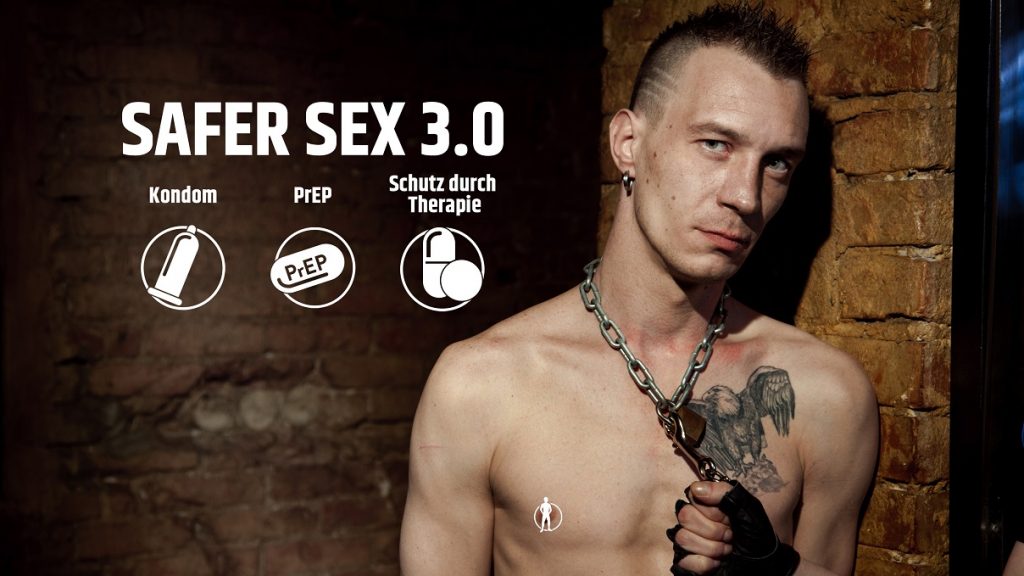
    Flo: Safer Sex 3.0
    Flo uses protection through therapy. He explains how he does this here.

    Does your protection method occasionally trigger conflicts?

    Alex (PrEP)Facebook and the like are sometimes the scene of fierce arguments between some condom supporters and PrEP activists. I find aggressive proselytising immature and intolerant. At the end of the day, it's up to every adult to decide for themselves how they want to live out their sexuality.

    Florian (condom): I rarely experience more than disappointed looks in the real world when I put on a condom. But I can confirm what Alex says about the Facebook discussions. It's disgraceful what goes on there sometimes.

    Flo (protection through therapy): Conflicts only arise in smaller towns because of my attitude. There I sometimes feel looked at the wrong way when I want sex without a condom. But nobody has ever insulted me in real life.

    What does online dating actually look like?

    Flo (protection through therapy): In the relevant apps, I state that my sex partners are protected by my therapy. Strangers take this as an opportunity to doubt my honesty. No one could be sure that I was really taking tablets. One person even once wrote that I should stop spreading my 'AIDS'. I don't get involved in discussions at such a low level. I like to educate people about HIV risks when I'm out and about for the AIDS service organisation. But I don't use dating platforms to fill other people's knowledge gaps. I simply reply that everyone is free to refrain from having sex with me. But let's be honest: it's in my own best interest that my therapy is successful. The idea of stopping the tablets wouldn't even cross my mind.

    Alex (PrEP)I thought it was right and important that the AIDS service organisations and other organisations persistently put pressure on the gay dating apps. Until recently, condoms were the only safe sex method used by these companies. Now the three methods are on an equal footing. This sends a clear message, especially to younger gay men, that they should inform themselves and then decide. I myself truthfully state in dating apps that I take PrEP. So potential sexual partners know where they stand from the outset. No one has ever mocked me for it. On the contrary. Some tops get in touch straight away to ask if we can fuck without a condom. I think that's ok. I'd rather be direct than beat around the bush.

    Florian (condom): In dating apps, conversations generally end quickly if the other person doesn't like certain details. Many people probably have a kind of mental cinema going on in the chat, and anyone who doesn't stick to the other person's script is out. This can affect all sorts of things, including my safer sex method. "No rubber" is a request that I often come across on the internet.

    Safer Sex 3.0
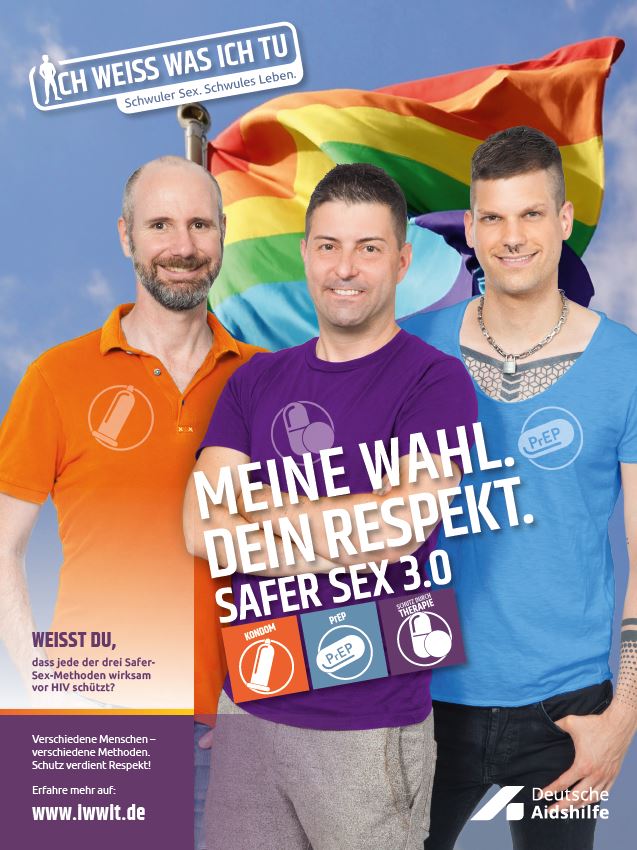
    In August 2019, Florian, Flo and Alex advertised for Safer Sex 3.0 in the major gay magazines in Germany.

    How do you feel about other sexually transmitted diseases such as syphilis, chlamydia or gonorrhoea?

    Alex (PrEP): It cannot be denied that the risk to the individual increases. I myself, for example, have had to take antibiotics twice while on PrEP. However, it is just as true that PrEP users are obliged to undergo regular examinations. Four annual routine tests for sexually transmitted diseases - nothing goes undetected.

    Flo (protection through therapy)Men who fuck without a condom are statistically more likely to catch syphilis or chlamydia than condom users. However, I believe that everyone should deal with risks according to their own personality. For example, as part of my HIV treatment, I get tested every three months for everything that can be contracted during sex. Because timely treatment protects me from the consequences of the infection and my sex partners from infection.

    Florian (condom)Of course there is medication against syphilis or chlamydia. But why should I put my body through chemicals when I can reduce the risk by using a condom? As far as the tests are concerned, it's a cliché that condom users are test-hungry. I myself complete the full programme of four routine tests a year, just like Alex and Flo. But I also realise that many people get tested much less often. That's why I think it's right that the AIDS service organisation focuses its prevention work on testing. And that they organise regular tests regardless of the Safer sex methods recommends.

    Florian (condom), Flo (protection through therapy and Alex (PrEP)
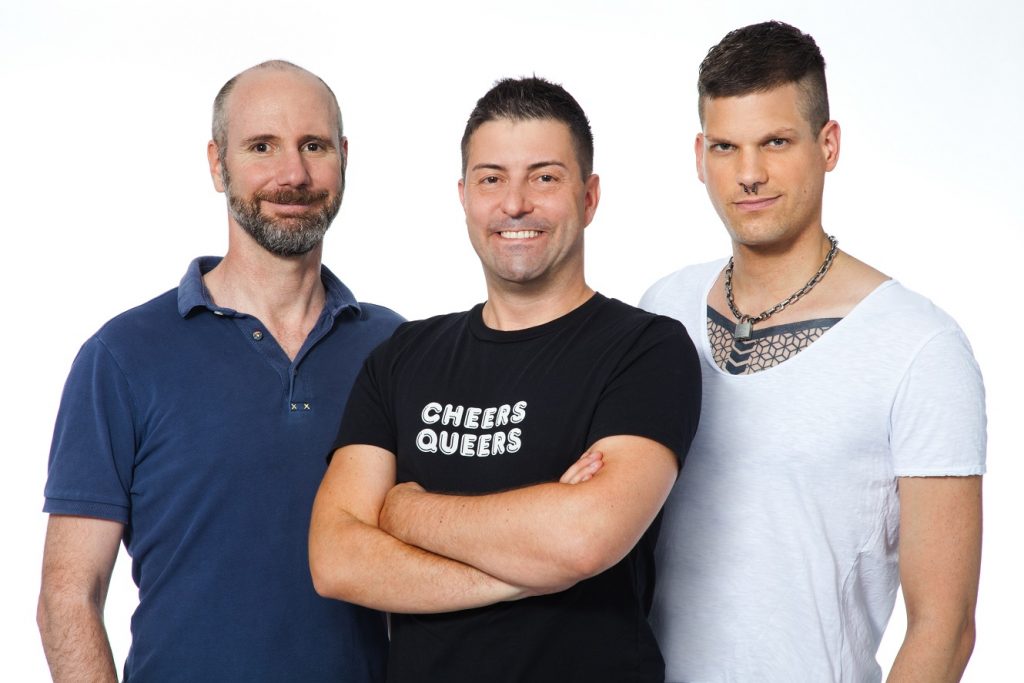
    3 men, 3 methods (from left): Florian (condom), Flo (protection through therapy) and Alex (PrEP)
  • Stay cool when things get hot. - A survey on safe sex in cruising clubs

    Stay cool when things get hot. - A survey on safe sex in cruising clubs

    Safer sex in the club
    Symbol image

    Hardly anyone goes to Lab.Oratory just to chat and drink beer. The Berlin gay sex club is all about one thing above all else, and that's why you drop your clothes as soon as you enter, for example at the naked parties. Anyone who spends the evening here wants to get down to business. And what role does safe sex play in this? Or rather: what form of safe sex do the visitors prefer? After all, alongside the Condom meanwhile also the PrEP and Protection through therapyto prevent HIV transmission.

    ICH WEISS WAS ICH TU captured a number of different voices among the guests on the subject of safer sex, without any claim to representativeness.


    Dennis* (24) from Saxony:

    "I've only been to the lab once. Friends had told me about it and that made me really curious and horny. But I couldn't really imagine what it would be like. I was afraid that it might overwhelm me, that it would be far too intense for me. And yes, I was also scared of going home with some kind of illness afterwards. You keep hearing how wild the scene is, especially in Berlin.

    "It didn't make me feel uncool or anything, just because I use condoms."

    I was a little more reassured when I read on the website what the "Naked Party" was like. ("Leave your clothes at the cloakroom, put the rubbers and lubricant in your socks and off you go.", d. R.) I did see some people having sex without a condom, but it was the exception rather than the rule. That reassured me and I didn't feel uncool or anything just because I use condoms."


    Marc (38) is a regular visitor to the club:

    "Unlike on Grindr or something like that, you don't have to check each other out for a long time."

    "I've been coming here regularly for a few years now because I know exactly what to expect and that I can have fun here. I've been to almost all the different theme parties by now, except for the really extreme ones. What is noticeable, however, is that you see more and more people having sex without a rubber. That has already changed. Especially in the last few months, the prepsters (Users of PrEP, i.e.) have increased. Especially a lot of people you meet here all the time. I have no problem with fucking or being fucked with a condom. But I do without a condom. Unlike on Grindr or something like that, you don't check out for a long time first. So if someone signals to me that they want to fuck without a condom, it irritates me. It's just the way it is. I don't know whether they're really taking PrEP or just talking rubbish without really checking what they're saying."


    Ricardo, 31, has lived in Berlin for a year:

    You "are not always a good, well-behaved boy. "

    "For a while, I only took PrEP at the weekend or so because the pills were so expensive and it was so complicated to get hold of them. I found it very inconvenient. Now that the pills have become cheaper, I can afford to take them every day. I used to always make sure I took rubbers. But that's the way it is: you party, you take the odd pill - and you're not always a good boy. Apart from the clap, I've been lucky. Since I started taking PrEP, I've almost only had sex without a condom. I was surprised how quickly that became a matter of course for me. In the meantime, condoms seem a bit oldfashioned and annoying, although of course that's not true at all. I think it's okay if others continue to use condoms. The main thing is that they think about safer sex at all before they give up the arse."


    Thomas, 35, has always lived in Berlin and got his positive test result 7 years ago:

    "...although I personally prefer "with". Especially if you have sex in darkrooms or something like that."

    "For me, the news that I was below the detection limit was at least as drastic as the test result at the time. As a result, I almost only had sex with other positive people, mainly because I didn't have to explain anything. With many of them without a condom, although I personally prefer "with". Especially when you have sex in darkrooms or something like that. I once had syphilis and my doctor at the time, as well as two friends, really talked me into taking better care of myself. In other words, to avoid contracting sexually transmitted diseases unnecessarily. I try to do that as much as possible. It doesn't always work, of course. But if I go somewhere specific, like the lab, then I'm equipped accordingly."


    Chris, 27, has been single again for two years and has been visiting darkroom clubs and sex parties regularly ever since:

    "My motto is still: 'If you want to fuck, you have to be friendly. "

    "It's happened to me a few times recently - not just here, but also at other sex parties - that guys just left me standing there when I took out my rubber. I'm not sure how I should feel about that. You're used to not getting laid sometimes, but that's ¢ne kind of frustrating. On the other hand, maybe it's better that I'm not having sex with guys like that right now. My motto is still: 'If you want to fuck, you have to be friendly'. And anyone who behaves like that definitely isn't. They don't know what they've missed out on and who knows what I've saved myself. Fortunately, I'm old and self-confident enough and there are enough men for everyone. But if I was a few years younger now, I have no idea how I would have behaved."

    * the names have been changed by the editors


    More information is available at www.iwwit.de!

    Directly more to Safer Sex 3.0

    More about
    - Protection through therapy
    - Condoms
    - PrEP (pre-exposure prophylaxis)

  • Is lube for your arse?

    Is lube for your arse?

    A topsy-turvy world: anal intercourse with personal lubricant increases the risk of contracting HIV, according to recent reports in some online media. The story of a false report. And the facts. 

    The conclusion is that after taking into account factors such as age, gender, origin and sexual orientation, the use of certain lubricants during unprotected anal intercourse MAY increase the LIKELIHOOD of contracting a sexually transmitted disease caused by bacteria or viruses. It is POSSIBLE that the ingredients of the lubricants kill the cells of the upper intestinal protective layer and thus facilitate infection. In any case, similar substances IN THE LABORATORY had killed such cells. IF all this is the case, the risk of infection during UNPROTECTED anal intercourse with lubricant is about three times higher than without lubricant. 

    The scientists even qualified the results themselves: The number of study participants was too small to generalise, their backgrounds were not diverse enough, the number of lubricants tested was too small and the observations were not long-term enough. However, there is a trend that would more than justify further studies. Many analyses of studies end with a sentence like this. 

    False reports

    Nevertheless, some internet media soon reported that the use of personal lubricants significantly increases the risk of infection during anal intercourse. Due to a misunderstanding and translation error, the German media also spoke of a 20 times higher risk. However, the first sentence of the press release only stated that the risk of infection was 20 times higher with unprotected anal intercourse than with unprotected vaginal intercourse. 

    As is the case in the age of the internet: the false reports multiplied and soon there was a heated debate in the scene as to whether spit and a prayer in the evening was not better protection than lube after all. 

    Lubricant is part of anal sex with a condom! 

    In short: No, definitely not. The vast majority of anal intercourse between men takes place with a condom. Lubricant is essential because the rubber breaks much more easily without it. Firstly, shreds of rubber on the cock never look good, and secondly, they damage the partner's intestines much more than any lubricant - and thus increase the risk of infection. Apart from the fact that the condom then of course no longer has any protective effect. That's why the following still applies: when having anal sex with a condom, lube is a must! 

    Anal intercourse without a condom carries a high risk anyway if you don't know your partner's HIV status. The question of lubricant is of secondary importance. 

    A study by Stiftung Warentest, which tested most of the personal lubricants available in Germany for skin and mucous membrane compatibility in 2007, can also be read as an all-clear. Almost all of them scored "very good" or "good". 

    Ficki Ficki, Ouch Ouch

    Incidentally, heterosexual women have the most unprotected anal sex: In industrialised nations, 15 percent of all women between the ages of 15 and 55 also like to let their visitors in the back. They are obviously also familiar with the summer hit by Berlin's drag superstar Nina Queer with the beautiful title "Ficki Ficki, Aua Aua" and therefore use a lubricant. However, in less than ten per cent of cases in combination with a condom.               

    And an interesting side note: Most of the personal lubricants bought in German pharmacies, drugstores and sex shops are bought by women over 50, but this has little to do with anal intercourse, even if they have interested partners or gay sons. The ladies simply want it to keep going even after the menopause. 

    (Paul Schulz) 

    The press release of the "International Microbicides Conference" 

    Image source men's buttocks: www.pixelio.de

  • Safer sex 3.0: "PrEP frees you from always having to think about HIV"

    For more than six months, Milan has been one of more than 5,000 gay men taking part in the international PrEP study DISCOVER to participate. The aim is to test whether the combination drug Descovy is just as suitable for HIV pre-exposure prophylaxis ("pills to protect against HIV") as its predecessor Truvada and the Truvada generics. We accompany the 26-year-olds with interviews over the three years of the study.

    As part of "Safer Sex 3.0", various gay men on the IWWIT blog talk about how they protect themselves against HIV, whether with condoms, PrEP or protection through therapy. We encourage everyone who wants to protect themselves against HIV to choose the best safer sex method for them.

    ___________________________

    Question: When we met talked for the first time about your experiences as a participant in the DISCOVER studythe accompanying tests had revealed an irregularity in your blood count. Was the excitement justified?

    Milan: No, that was ultimately a false alarm, the doctor in charge thought she had detected an unusual value, but it turned out to be completely harmless.

    I had waited so long for PrEP that I was actually a bit paranoid and worried that I would now have to stop PrEP. But this worry was completely unjustified.

    How have you tolerated the PrEP medication so far? You don't know whether you are receiving Truvada or the follow-up preparation Descovy.

    I tolerate the pills very well and have had no side effects so far.

    You have now been taking the pills every day for several months. Do you still have to remember to take them every morning?

    For the first five or six months, I automatically thought about it every day. In the meantime, however, I had a lot on my mind and therefore forgot to take the tablets twice. That annoyed me a bit - even though it doesn't affect HIV protection if you forget to take the medication once. That's how the doctor explained it to me.

    I now have a tablet box with a compartment for each day of the week. It's right in front of me at my desk, so I can't miss it under any circumstances.

    "PrEP has now become something completely normal for me"

    Are you still thinking about taking PrEP? Is it still something special?

    No, it's now something completely normal for me and has become a part of my life. The initial excitement has subsided. It would also be unrealistic to expect this feeling of excitement to last for the entire three years that I am expected to take part in the study.

    When you started PrEP, you had good reason to feel part of a group with very special freedoms.

    That has changed at the latest, since PrEP from 50 euros is available to everyone in the pharmacy! This means that PrEP is now theoretically available to everyone. That's great.

    However, it's not just about sexual freedom, it also means a lot to be protected from HIV. PrEP also frees you from always having to think about HIV and the fact that this virus could mark your body with this "positive" label for the rest of your life - even though the medical possibilities now enable people with HIV to lead a fairly normal life.

    Of course, there are some benefits as a study participant, such as the regular comprehensive health checks and free medication. I'm grateful for that. But that's about it. I'm very happy that PrEP has now made it into pharmacies on a regular basis and that many more people can benefit from it. It's right and important that it's available to everyone.

    Have you also got used to the sexual freedom that PrEP gives you?

    "The fact that I don't always have to think about condoms is still very liberating for me today."

    The fact that I couldn't always keep myself in check was the reason why I wanted PrEP. It's not that I don't have sex with a condom, but that happens quite rarely in comparison.

    The fact that I don't always have to think about condoms is still very liberating for me today. I don't want to imagine what it would be like again without PrEP.

    However, I don't see PrEP as a lifelong solution either, if only because of the possible effects of the medication on the body [Editor's note: Most people tolerate PrEP well]. After all, researching these side effects is also the reason for this study. When it is over, I will look at the results and then possibly decide to continue with PrEP.

    Are you concerned about possible unexpected long-term effects?

    Developments in medicine, and especially in pharmacy, are moving at breakneck speed. That's why I'm sure that over the years there will also be PrEP drugs that place even less or no strain on the body.

    Today, we may be made aware of the possible risks of taking certain medications for years that will no longer exist in the foreseeable future. That's why I'm not really worried about long-term side effects and enjoy the opportunities I have. Because I'm young now, not later.

    Do you have more sex with more partners with PrEP than before?

    "If I go to a sex club today, ..."

    Much more! When I go to a sex club nowadays, I sometimes actually have sex all night long, again and again and with different people. Before, without PrEP, I went there too, but I usually only had sex with someone once.

    This was a not entirely rational barrier to protect me from possible infection risks. At the same time, however, it drove me completely crazy. You can see all the others - the ones below the detection limit [Editor's note: With successful HIV therapy, HIV is not transmitted even during sex without a condom - undetectable = not transmissible] or are on PrEP - how they let off steam there without restraint. Only you yourself have very limited fun.

    When you go to clubs like this today, do you tell the other men that you want to have sex without a condom?

    I always make it clear to the guys straight away that I prefer bareback sex, and usually also that I'm on PrEP. But normally people don't talk about it at all. When locals go to places like this to have sex, the condom is usually no longer part of it. At least that's my experience, that's the scene here. I don't know of any other place in the world that is as sexually free as Berlin.

    By "free" do you also mean the freedom offered by the protection provided by therapy and PrEP?

    "Conversations like that can really ruin the erotic tension."

    Exactly, you don't have to talk about these things as foreplay: whether with or without a condom, or why it works without one. Such conversations can really ruin the erotic tension.

    This happens, for example, when you encounter a tourist (laughs). You're so used to having sex without a condom in places like this that I'm completely surprised when someone suddenly pulls out a rubber while making out.

    How do you react then?

    Should I be honest? For me, that's usually the end of it. If the chemistry is really good, I can of course have sex with a condom, but it just doesn't make me really horny and I don't enjoy it that much.

    But then I'm also not in the mood to have an educational discussion about PrEP. It's not the place, it's not the time and it's not my job.

    I've tried that a few times, but it just doesn't work in a situation like that and, frankly, I don't feel like it either. After all, I came there to have sex and not to have to explain my way of having sex. I'm not alone in this experience, by the way.

    That sounds a bit arrogant.

    "I quickly photographed my box of medication and sent it to him, so he was reassured."

    I am aware of that. Of course, I know that we are much more advanced in these matters here and therefore also privileged. Someone for whom sex automatically means sex with a condom is naturally overwhelmed by the situation.

    They may have never heard of PrEP, or only heard a little, and understandably harbour doubts about its effectiveness. But I doubt that I am the right person in this place, in this context, to communicate these medical facts in a trustworthy manner (laughs).

    "I could well understand why he was so panicked. "

    So I can't convince him of the effectiveness of PrEP, nor do I want to persuade him to have sex without a condom. It won't lead to anything and will only ruin the evening for both of us.

    Once someone was unsure, but he ended up having sex with me. The next day, he wrote to me on Facebook: "Are you really on PrEP?" I could well understand why he was so panicked.

    If you simply don't know much about PrEP, a situation like this is naturally upsetting. I then have to think about how I freaked out in the days before PrEP when I did have sex without a condom. So I quickly photographed my box of medication and sent it to him, and he was reassured.

    More sex with a higher number of partners mathematically increases the risk of contracting sexually transmitted infections (STIs). What is your balance sheet like now?

    Very manageable, I think - in relation to how much sex I've had since I've been on PrEP.

    And what does that mean in figures?

    "The infections were diagnosed at a very early stage and then treated immediately."

    In the very first month Chlamydia and three months ago I had gonorrhoea in my throat. Both times the infections were detected during the quarterly STI examinations that are part of the study.

    The infections were diagnosed at a very early stage and then treated immediately. But talking about STIs in connection with PrEP is actually irrelevant here, because gonorrhoea and chlamydia, for example, can also be transmitted during licking and blowing, regardless of whether you are on PrEP or using a condom. I could also have got the infections during sex with a condom.

    But when we talk about PrEP, we are talking about HIV protection. And as far as HIV protection is concerned, PrEP is at least as safe as a condom, if not more so. It therefore makes no sense to use the risk of infection from other STIs as an argument for rejecting PrEP.

    How frequent are the visits to the doctor as part of the study?

    Every three months.

    What exactly is happening?

    In the waiting room, I first have to fill out a questionnaire. The questions are always the same: How many people you've had sex with without condoms since your last examination. How many times you have been active or passive during anal intercourse. Whether you have taken the tablets every day or how often you have skipped taking them and why.

    During the blood test, we are also asked in person whether there were any side effects. And we are always offered condoms, which we can take with us free of charge if we want to.

    Is there anything about these quarterly check-ups that is not going quite so smoothly?

    "You're going to laugh now..."

    There really is such a thing, and you're going to laugh now: it's the urine samples. But if I go to my appointment in the morning, of course I've already had a wee, and then I can't go to the surgery. I feel most sorry for the people who only have their appointment in the afternoon. They must be completely hungry! We're not supposed to have eaten for five to six hours beforehand.

    Another study participant told me that he sometimes felt uncomfortable being asked detailed questions about his sex life by female doctors during check-ups.

    I have no problem with that. These doctors are experienced and there will be nothing that could surprise them (laughs). I think someone who has a lot of sex shouldn't be so uptight if they have to have their bum looked at by a doctor twice a year for the sake of their health.

    There was only one situation that seemed a bit strange to me, namely when a doctor did an anal swab on me. She then asked me if I would like to do it myself in future. They showed me how to do it, and it really isn't an art.

    "I hadn't expected such vehement comments"

    After our first interview was published, there were quite a few heated comments on Facebook. How did you perceive it yourself?

    I was prepared for the fact that there would be negative comments from people who are fundamentally critical of or opposed to PrEP. But I hadn't expected that some of them would be so vehement.

    I was therefore pleased that people got involved in the discussion and supported my position. However, I then also tried to look at the interview from a distance and was unsure whether one or two sentences might come across as naive or irresponsible as a written interview, even though that wasn't the intention. However, it was important to me during our interview to answer as honestly and clearly as possible.

    I was particularly struck by the fact that the highly critical commentators themselves often lacked key information about PrEP.

    "I was particularly struck by the fact that the highly critical commentators themselves often lacked key information about PrEP."

    And I have the impression that some men react so emotionally and angrily because - perhaps without realising it - they are secretly jealous and angry that PrEP was not available when they themselves were young. That's why factual arguments and information don't get you much further in the discussion.

    Does that annoy you?

    I can even understand this behaviour to a certain extent. As you get older, it becomes more difficult to go along with or accept new developments, especially if they call into question or change things that were previously a fixed, fundamental part of your life.

    This applies not only to medical advances such as PrEP, but also, for example, to technical innovations that people are not familiar with and therefore ridicule or reject as unnecessary. I have already realised this myself. For example, I don't understand how young people today can spend so much time on Instagram. For me, that's complete rubbish. It's an important social medium for them.

    So in a way, it is completely normal for us to defend the fixed coordinates of our own lives. For many gay men, this also includes the ingrained understanding of safer sex as sex with a condom.

    But that doesn't change the fact that the younger generation, like me, will take new developments like PrEP for granted as a natural form of safer sex.

    And just because I or others want to take advantage of advances in the pharmaceutical industry that allow us to experience sex more intensely - i.e. without a condom and without the risk of HIV - does not make us irresponsible people. Taking PrEP proves exactly the opposite.

    The first interview with Milan about his experiences with PrEP and as a participant in the DISCOVER study was published in August 2017: "PrEP is just a tool and you have to learn how to use it"

    PrEP - Post-exposure prophylaxis
    PrEP

    More information is available at www.iwwit.de!

    Directly more to Safer Sex 3.0

    More about Condoms, PrEP (pre-exposure prophylaxis) or Protection through therapy

  • Condoms are out today? Nonsense! (Enrico)

    Condoms are out today? Nonsense! (Enrico)

    Safer Sex 3.0: Condoms are probably the best-known safer sex method to protect yourself from HIV. Many gay men still successfully use the rubber today. One of them is Enrico, 36, from Leipzig. Here he tells us how he deals with the topic of safer sex and why he still prefers to use the rubber. Condom back.

    As part of "Safer Sex 3.0", various gay men on the IWWIT blog talk about how they protect themselves against HIV, whether with condoms, PrEP or protection through therapy. We encourage everyone who wants to protect themselves against HIV to choose the best safer sex method for them.

    "I had my first gay sex when I was 17, when I met my boyfriend through a box number ad and we didn't think about safe sex at all. I only learnt about HIV and the risk of infection when I moved from the provinces to Erfurt a few months later. I then took an HIV test with my boyfriend at the time. We were both negative and decided not to use condoms in the relationship. We were young, blinded by love and believed in absolute fidelity. Apart from that, we didn't know anyone who was HIV-positive.

    Loyalty as protection? Enrico sees it differently today

    The virus was a completely abstract danger back then. The relationship lasted just under a year and in the end I realised that my partner had cheated on me and caught various sexually transmitted diseases. That really shook me up, because the naive trust that nothing could happen to you in a relationship was shattered.

    "When I'm driving, I wear my seatbelt without giving it much thought. It's the same for me with the condom."

    This made it clear to me that I would always use condoms from then on. For me, condoms have simply been a part of sex ever since. I grew up with it, if you like, and have internalised it. It's like driving a car. You put your seatbelt on without giving it much thought. You just do it.

    In a relationship: a better feeling without a condom

    The exception is my relationship. I've been back in a relationship for five years and we actually don't use condoms. We keep hearing that sex without a condom is like a liberation and that you feel completely different without it. Within the partnership, sex without a condom actually gives you a more intense feeling of closeness - but less on a physical level than on a psychological level.

    However, if we get someone to join us or we have sex with others outside of the relationship, condoms are a matter of course for us. I always have condoms at home and ready to hand, and if they are needed, it's just a practised hand movement or two. As a result, there are no unpleasant interruptions and the sexual tension and atmosphere is therefore not disturbed at that moment. In case of doubt, my passive partner, who may already be completely relaxed in front of me, doesn't even have to notice how I put the rubber on. I always make it clear in advance that we are using one anyway. So there's no need to talk about it at all.

    The best form of safe sex for me

    "For me, there's a lot in favour of condoms. For example, it also reduces my risk of contracting other sexually transmitted diseases."

    For me personally, condoms are the best form of safer sex: they are easy to use, they are always and everywhere available and they have no side effects - unless you have a latex allergy. And even then there are now latex-free alternatives. But for me, two other things are also important: I can see exactly how I'm protecting myself. If I have sex with someone who is HIV-positive but no longer infectious, I have to trust them so that I can skip the rubber. On the other hand, the condom also reduces the risk of catching other sexually transmitted diseases.

    "And yet: regular checks are part of it for me."

    And at the same time, I know that I can of course also catch gonorrhoea through oral sex, for example. That's why I regularly get tested for sexually transmitted diseases. For HIV anyway. That's just part of it for me.

    For Enrico, 36, the condom is not out. Quite the opposite.

    And PrEP? Rather nothing for Enrico

    "PrEP would be too expensive for me!"

    One PrEP for example, does not reduce the risk of contracting other sexually transmitted diseases. But it's also out of the question for me for other reasons: getting the medication, the doctor's appointments and blood tests that are necessary, not to mention the cost factor - it's all too time-consuming for me.

    Of course there are now more and more PrEP users in the scene. But it has never happened to me that a sex date has been cancelled because I am so "conservative" and insist on condoms - and don't take PrEP myself. On the contrary, I often get rather positive feedback and people think it's good that I've thought about safer sex and want to consciously protect myself."

    More information is available at www.iwwit.de!

    Directly more to Safer Sex 3.0

    More about Condoms

    More about the PrEP (pre-exposure prophylaxis)

    More about Protection through therapy