

Key points at a glance
⚠️ Sehr unterschiedliche Symptome
HIV-Symptome unterscheiden sich stark von Mensch zu Mensch. Sie sind unspezifisch und kommen auch bei anderen Krankheiten vor.
🤒 Grippeähnliche Anzeichen zu Beginn
Kurz nach der Ansteckung können Symptome wie bei einer Grippe auftreten, zum Beispiel Fieber, Abgeschlagenheit, Nachtschweiß oder geschwollene Lymphknoten. Sie verschwinden meist nach kurzer Zeit von selbst.
⚠️ Schäden trotz Beschwerdefreiheit
Nach den ersten Symptomen folgt meist eine lange beschwerdefreie Phase. HIV schädigt den Körper in dieser Zeit trotzdem weiter.
💊 Behandlung verhindert Aids
Mit HIV-Medikamenten lässt sich lange und gut leben. Der Ausbruch von Aids lässt sich damit verhindern.
Hiv-Verlauf und Symptome
The course of an HIV infection can vary greatly and the symptoms are not always clear. Many people do not even realise that they are infected with HIV in the initial phase. Others experience flu-like symptoms or skin reactions that they do not initially associate with HIV.
Gerade bei Männern zeigen sich typische HIV-Symptome wie Fieber, Nachtschweiß oder ein Hautausschlag oft unspezifisch und werden leicht übersehen. Umso wichtiger ist es, den HIV-Verlauf zu verstehen: von der Ansteckung und Inkubationszeit über erste Anzeichen bis hin zur möglichen Aids-Erkrankung ohne Behandlung.
With modern HIV therapy, the progression can be stopped. Those who act early stay healthy and do not pass on the virus.
In the following sections you will find detailed information on:
- den ersten Anzeichen und der HIV-Inkubationszeit,
- der Frage, wie sich eine HIV-Infektion bemerkbar macht,
- the course without and with treatment,
- den Aids-Symptomen.
HIV-Inkubationszeit und erste Symptome des Körpers
Kurz nach einer Ansteckung mit HIV beginnt die sogenannte HIV-Inkubationszeit. Das ist die Phase zwischen Übertragung und ersten Krankheitszeichen. Diese dauert in der Regel zwei bis vier Wochen. In dieser Zeit vermehrt sich das Virus im Körper besonders schnell. Wie die Grafik zeigt, steigt die Viruslast im Blut rasant an und erreicht ihren Höhepunkt etwa in der dritten Woche.
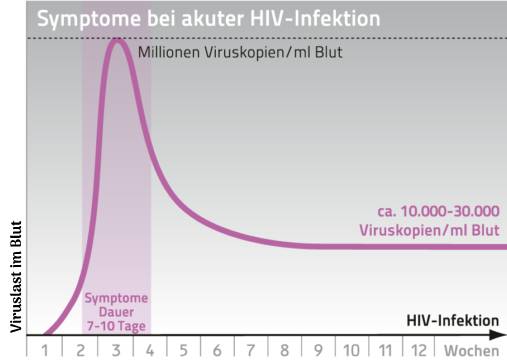
In dieser Phase, der akuten HIV-Infektion, können erste Symptome auftreten. Diese sind meist unspezifisch und werden leicht mit einer Erkältung oder Grippe verwechselt. Die Beschwerden können in Art und Intensität stark variieren. Besonders kritisch: In dieser Zeit ist die Viruslast im Körper sehr hoch und damit auch das Risiko, HIV an andere weiterzugeben.
Typical symptoms in the early phase of an HIV infection are
- Fever
- Fatigue and tiredness
- Night sweats
- Diarrhoea
- Swollen lymph nodes (especially in the neck)
- Muscle pain
- Sore throat or tonsillitis
- Skin rash, mostly reddish and on the upper body
These symptoms usually last for 7 to 10 days and disappear on their own. During this acute phase, the viral load in certain bodily fluids is particularly high - especially:
- in the blood
- in semen
- in mucosal secretions
This makes HIV particularly easy to transmit during this time Even if the immune system already reacts to the infection during the HIV incubation period, antibodies can only be reliably detected in the blood after around six weeks - for example with an HIV laboratory test. During this time, the virus already begins to damage parts of the immune system - especially the so-called helper cells.
The clinical course without treatment
Without treatment, HIV infection progresses in several stages.
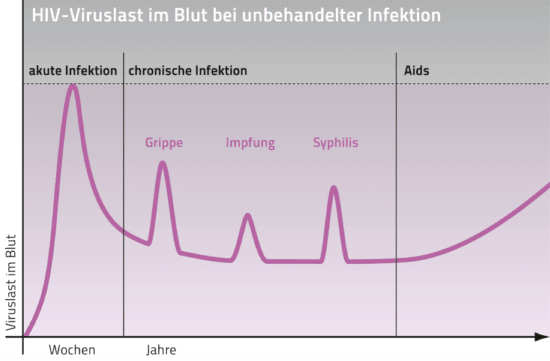
Die Grafik zeigt, wie sich die Viruslast im Blut im Laufe der Zeit verändert: vom plötzlichen Anstieg in der akuten Phase bis zum Übergang in das Aids-Stadium. Der Verlauf kann sich über viele Jahre hinziehen.
Akute Phase: schnelle Virusvermehrung
Kurz nach der Ansteckung steigt die Viruslast im Blut stark an, in der Grafik zu erkennen am steilen Anstieg ganz links. In dieser akuten Infektionsphase treten bei vielen Menschen grippeähnliche Symptome auf. Die Viruskonzentration in Blut, Sperma und anderen Körperflüssigkeiten ist zu diesem Zeitpunkt besonders hoch, ebenso die Ansteckungsgefahr.
Chronische Infektion: Latenzphase ohne Beschwerden
Nach einigen Wochen sinkt die Viruslast deutlich ab, die Infektion geht in die im mittleren Grafikbereich dargestellte Latenzphase über. Diese Phase kann mehrere Jahre dauern. HIV bleibt zwar aktiv, vermehrt sich jedoch deutlich langsamer. Die meisten Menschen spüren in dieser Zeit keine Symptome, dennoch wird das Immunsystem langsam weiter geschwächt. Zusätzliche Infektionen oder Impfreaktionen, etwa durch Grippe oder Syphilis, zeigen sich in der Grafik als leichte Schwankungen der Viruslast.
Aids: schwere Immunschwäche
Ohne Behandlung schreitet die Infektion weiter fort, erkennbar an der wieder ansteigenden Viruslast in der rechten Grafikhälfte. In dieser Phase kommt es zum Übergang in das Aids-Stadium: Das Immunsystem ist dann so stark geschädigt, dass es sich nicht mehr gegen sogenannte opportunistische Infektionen oder bestimmte Krebsarten wehren kann.Z
The course with modern HIV therapy
Dank moderner Medikamente hat sich der Verlauf einer HIV-Infektion grundlegend verändert. Die antiretrovirale Therapie, kurz ART, unterdrückt die Vermehrung des Virus so stark, dass es im Blut oft nicht mehr nachweisbar ist. Das schützt nicht nur die eigene Gesundheit, sondern verhindert auch die Übertragung beim Sex, bekannt als U=U-Prinzip: Undetectable = Untransmittable, nicht nachweisbar heißt nicht übertragbar.
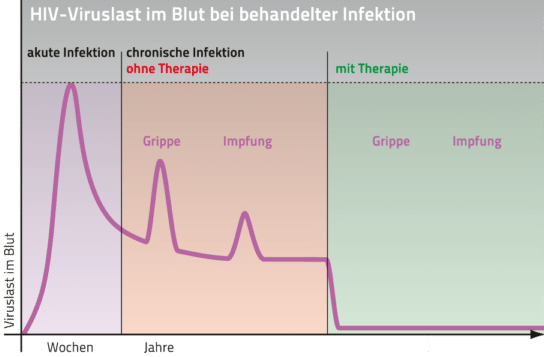
The graph above clearly shows the difference:
After the akuten Infektionsphase (linker Bereich) the viral load decreases under therapy (green area) dauerhaft auf ein sehr niedriges Niveau, meist unterhalb der Nachweisgrenze. Das bedeutet: Das Immunsystem bleibt stabil, die betroffene Person kann gesund leben.
Without therapy (medium range) bleibt die Viruslast deutlich höher. Belastungen wie eine Grippe, Impfreaktionen oder andere Erkrankungen können sie immer wieder ansteigen lassen. Erst mit Beginn der Behandlung mit HIV-Medikamenten sinkt die Virusmenge deutlich und bleibt anschließend dauerhaft stabil, auch wenn zusätzlich beispielsweise eine Grippe oder Impfung dazukommt.
Important: The medication must be taken daily and continuously. Regular medical check-ups ensure that the treatment remains successful and the viral load is low.
Fazit: HIV früh erkennen
HIV ist heute gut behandelbar. Entscheidend ist, dass die Infektion rechtzeitig erkannt wird. Wer sich regelmäßig testen lässt und früh mit der Behandlung beginnt, kann mit HIV ein langes, gesundes Leben führen, ohne Einschränkungen im Alltag oder beim Sex.
Die moderne Therapie schützt nicht nur das Immunsystem, sondern senkt die Viruslast im Blut so weit, dass HIV nicht mehr übertragbar ist (U=U: nicht nachweisbar heißt nicht übertragbar). Das stärkt die eigene Sicherheit und schützt andere.
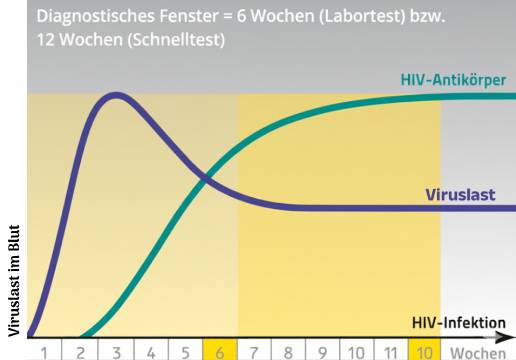
The graph shows how the amount of virus and antibody formation develop after an HIV infection:
- The viral load rises sharply immediately after infection.
- A few weeks later, the body begins to produce antibodies against the virus.
- An HIV laboratory test can usually reliably detect these antibodies from week 6.
- The so-called diagnostic window for rapid tests is 12 weeks.
Gerade in dieser Zeit fühlen sich viele Menschen gesund oder erleben unspezifische Symptome wie Fieber, Müdigkeit oder Hautausschlag, die sie nicht ernst nehmen. Typische Frühzeichen einer HIV-Infektion können so leicht übersehen oder fehlgedeutet werden.
Nimm mögliche Anzeichen ernst und lass einen HIV-Test machen, damit du schnell Klarheit hast und entsprechend handeln kannst.
Frequently asked questions
How can you reliably recognise an HIV infection?
An HIV infection can only be clearly determined by a test. Initial signs are often unspecific and are not sufficient for a reliable assessment. A laboratory test provides a reliable result from six weeks after a risk contact.
What symptoms can occur with an acute HIV infection?
Typical symptoms in the early stages can include fever, night sweats, fatigue, swollen lymph nodes, sore throat, diarrhoea or a rash on the upper body. These symptoms usually disappear after a few days.
How long does it take for symptoms to appear after infection?
The first symptoms usually appear two to four weeks after infection. This period is known as the acute phase. It is not the same for everyone affected.
What distinguishes HIV from AIDS?
HIV is the virus that causes a chronic infection. Aids is the advanced stage of the disease, which can occur years later without treatment. Aids can be prevented with today's therapy.
How often should I be tested for HIV?
If you have regular sex with changing partners, a test every three to six months is recommended.
Does HIV therapy also protect others?
Yes, anyone who is successfully treated and has a viral load below the detection limit can no longer transmit HIV during sex. This realisation is medically proven and is described as U=U (undetectable = not transmissible).