

Tag: HIV-positive

  • 5 questions for the Gay Health Chat

    5 questions for the Gay Health Chat

    Hello Klaus! Congratulations on five years Gay Health Chat! What exactly is the Gay Health Chat and who is it aimed at?

    Thank you very much!

    The Gay Health Chat is an internet counselling service. It works without registration and is free of charge. It is aimed at gay men and all men who have sex with men. This also includes trans* men, as well as non-binary and gender non-conforming people who feel they belong to the gay community.

    Why was the Gay Health Chat created?

    Small counselling centres and AIDS service organisations simply don't always have the money or resources to set up an online chat. With Gay Health Chat, Deutsche Aidshilfe provides the technology and ensures good quality. The counsellors then join in from 46 counselling centres: from Austria, Germany and Switzerland.

    Who advises at the Gay Health Chat and how are the counsellors trained?

    Everyone who works for us has been trained as an HIV/STI counsellor by Deutsche Aidshilfe. And we regularly train everyone in online communication, because it is much more difficult to assess how the other person is doing when typing and without visual contact. This year, we are also adding additional training to become first aiders for mental health problems. Our counsellors are all gay or queer themselves and work, for example, at gay checkpoints, in the IWWIT team or at AIDS service organisations - a very colourful mix.

    What kind of questions do people come to the Gay Health Chat with?

    Most of the questions have to do with sex. We're the AIDS service organisation and we know our way around that particularly well. But since corona, more and more people have been chatting to us because they feel like shit, are lonely and can't cope. We can help them too.

    Which topics are people perhaps not yet so aware of, but which you can still advise on?

    We talk a lot and have learnt a lot about drugs during sex in recent years: why is it particularly hot and what steps are necessary when it's no longer fun - we can now offer good help. In addition, every counsellor has experienced coming out as a gay man and can therefore understand everyone else who is currently dealing with this issue. How can I become a self-confident, courageous person in this world? That is our goal.

    Klaus, thank you very much for the interview!

    You can reach the Gay Health Chat at gayhealthchat.com.
    You can find everything about gay life at iwwit.de/gay-life!
  • Even today, people with HIV are still marginalised in the scene

    Even today, people with HIV are still marginalised in the scene

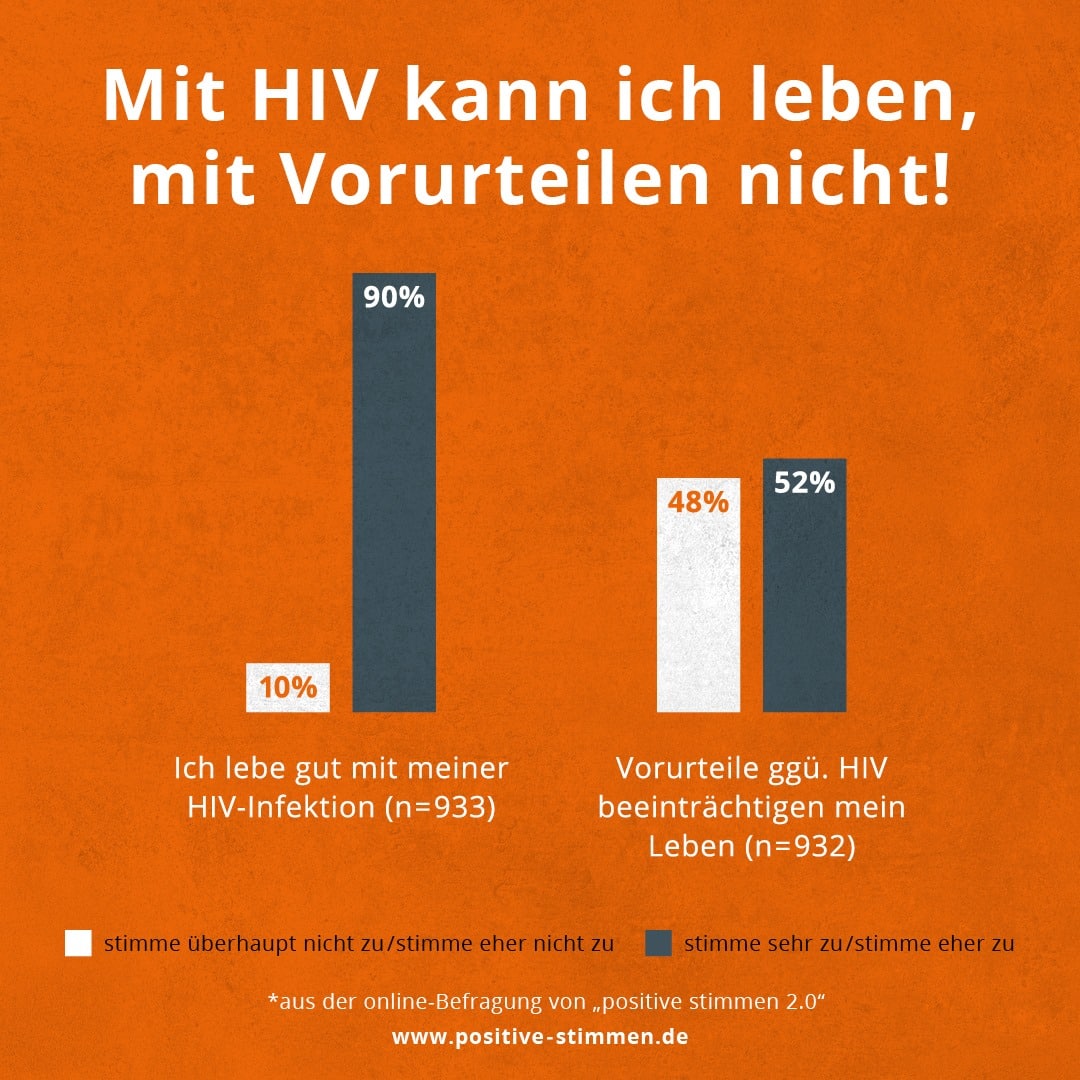
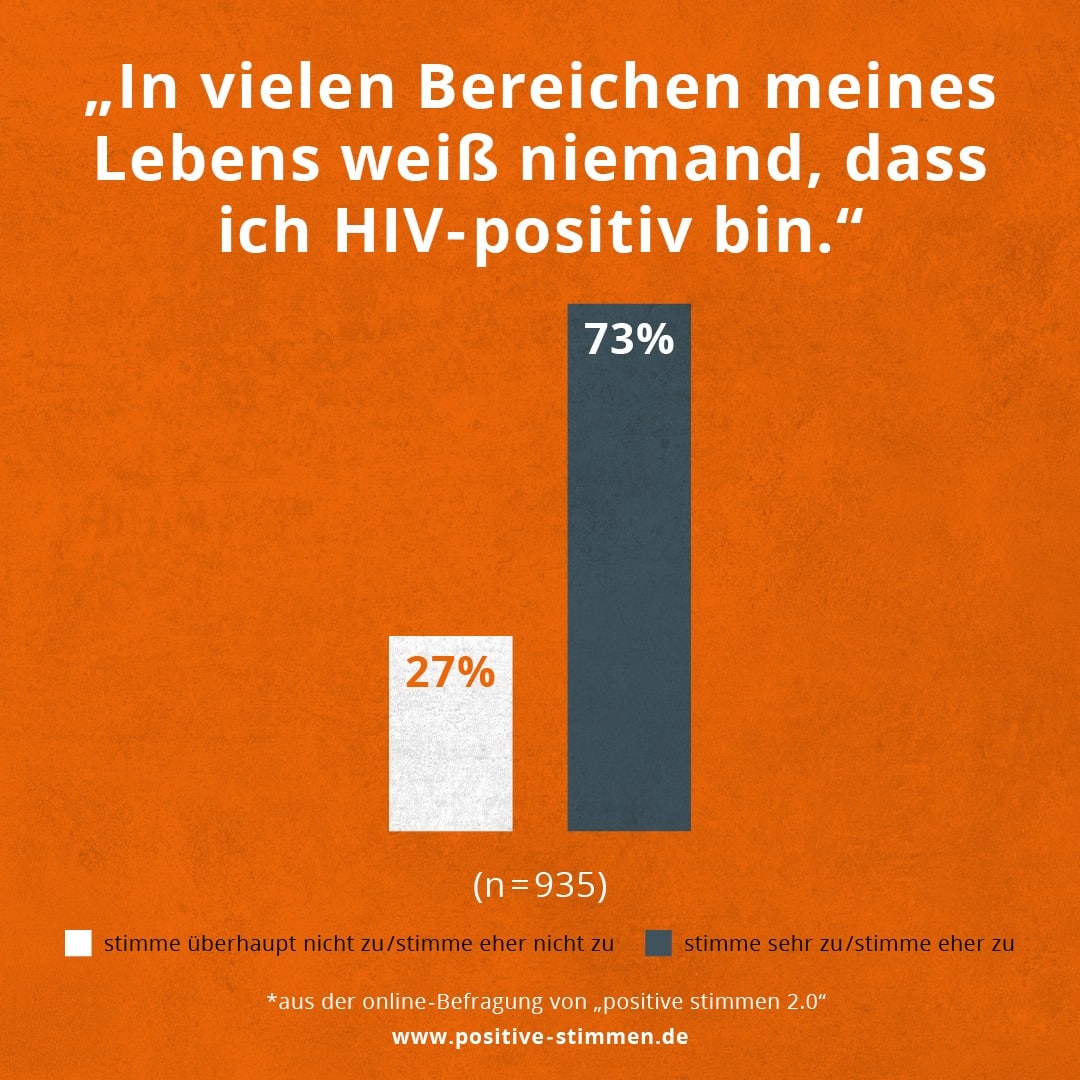
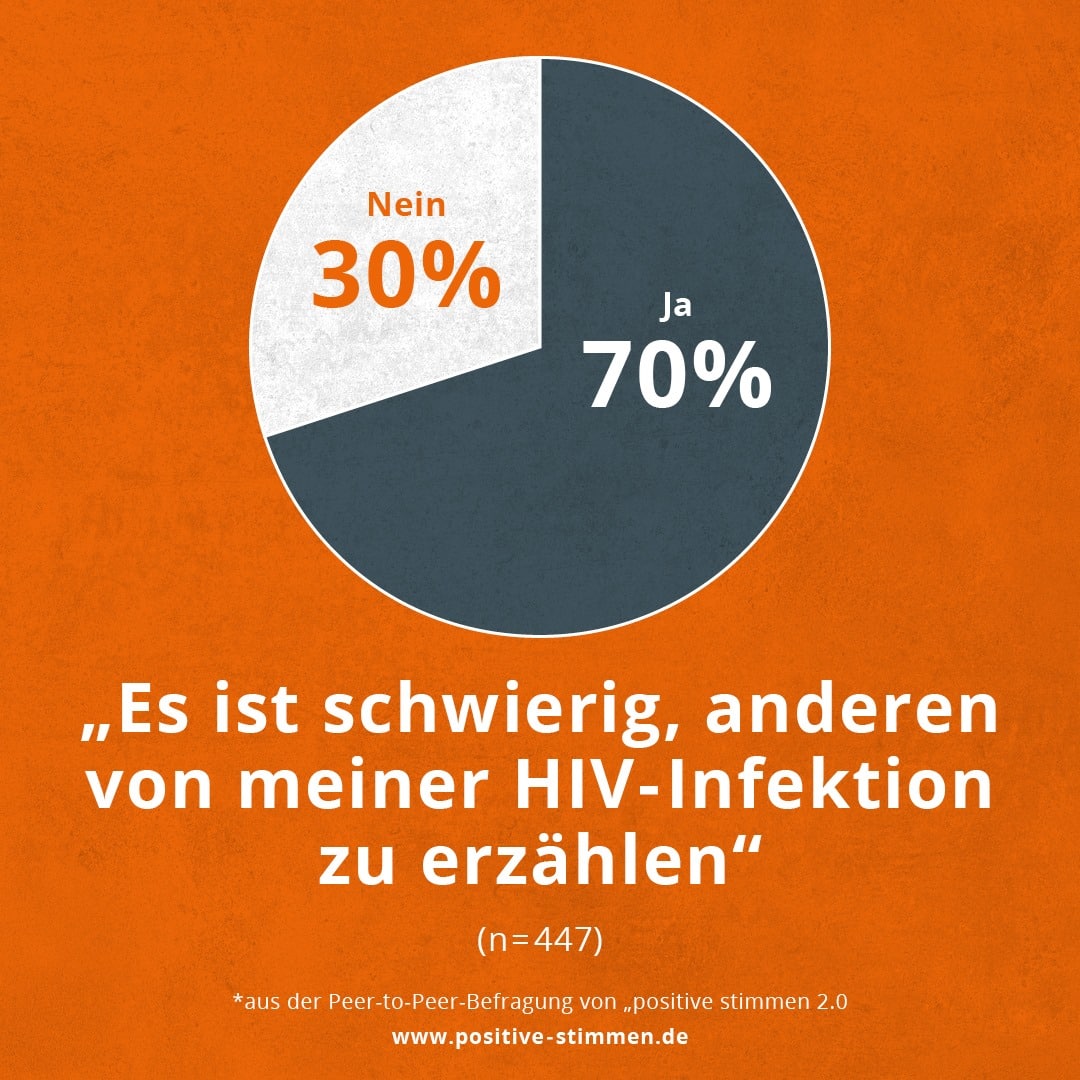
    The "positive voices 2.0" study was published in September 2021. It shows: As a rule, people with HIV can live very well with their infection. This was confirmed by almost 90% of respondents. However, the problem with living with HIV is discrimination and stigmatisation - even in the gay community.

    This was reason enough for us to make the results of the study one of our main topics this year! People living with HIV were involved in this survey from the very beginning. People with HIV interviewed other people with HIV. This created an important situation of trust so that the interviewees could share their authentic experiences.

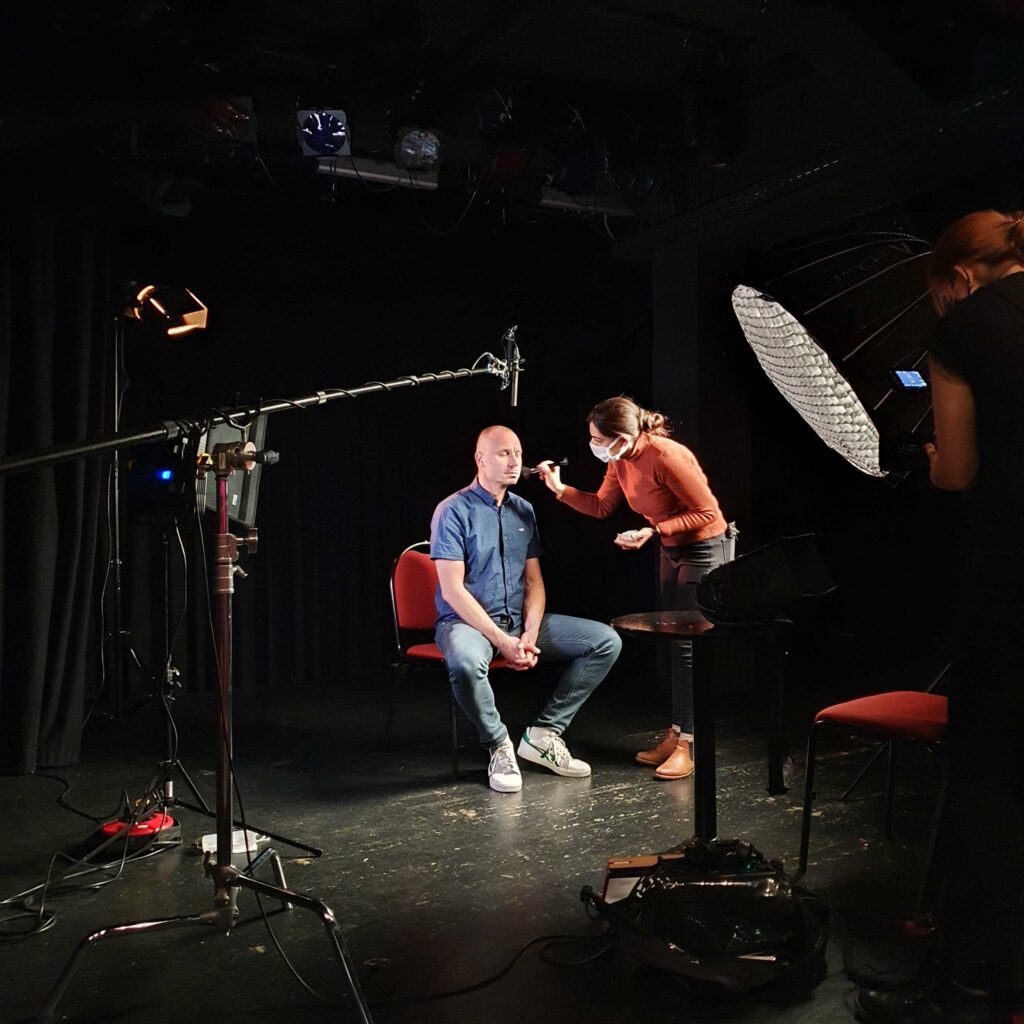
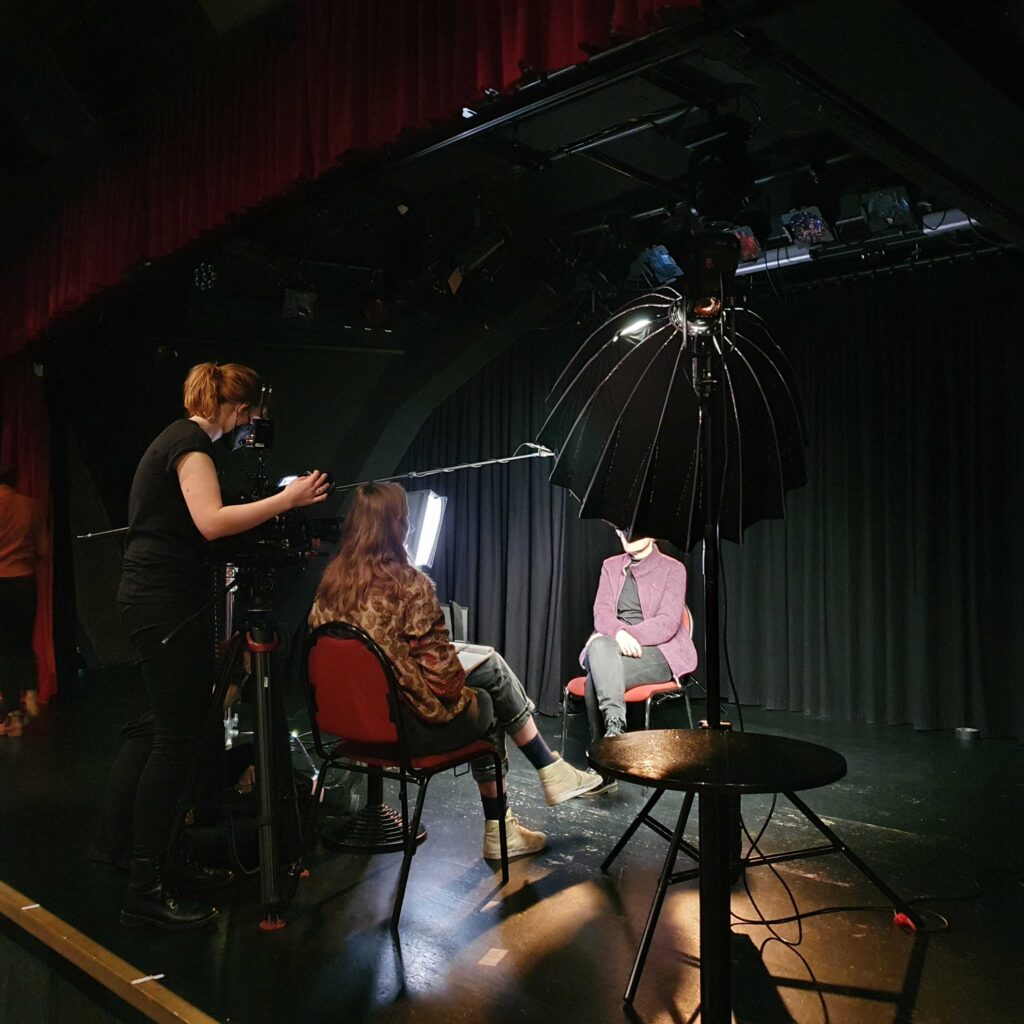
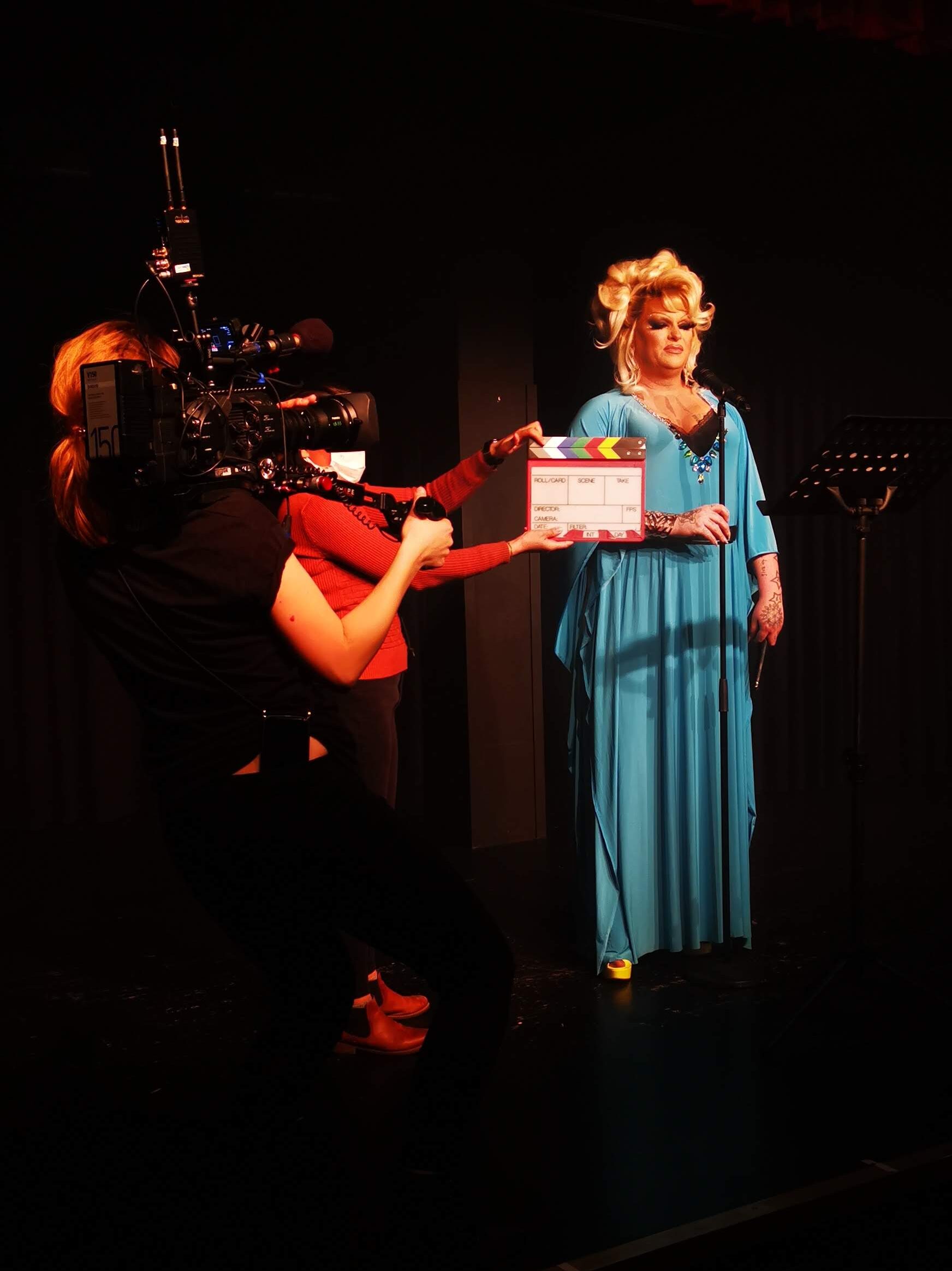
    Some people with HIV also have their say in our new video! Watch it here:

    At ICH WEISS WAS ICH TU (IWWIT), people with HIV have been an important part of our campaign from the very beginning. Just like authentic images of life with HIV. They prevent stigmatisation and discrimination.

    If you would like to support us in our work, then share this video! And tell people about a very special piece of good news: HIV is not transmissible under therapy. Because that's what the study also showed: This news has greatly relieved those affected.

    Show solidarity wherever people with HIV are marginalised or discriminated against! And find out more at iwwit.de! Here you will find lots more information about living with HIV. And you will find information on how you or others can defend yourself against discrimination and marginalisation.

  • Prejudices make you ill. HIV under therapy does not.

    Prejudices make you ill. HIV under therapy does not.

    The "positive voices 2.0" study has shown: The majority of people with HIV surveyed can now live well with the infection. But at the same time, many experience discrimination and marginalisation on a daily basis!

    All of this has a significant negative impact on health, well-being and sexual satisfaction. Added to this are feelings of shame and guilt.

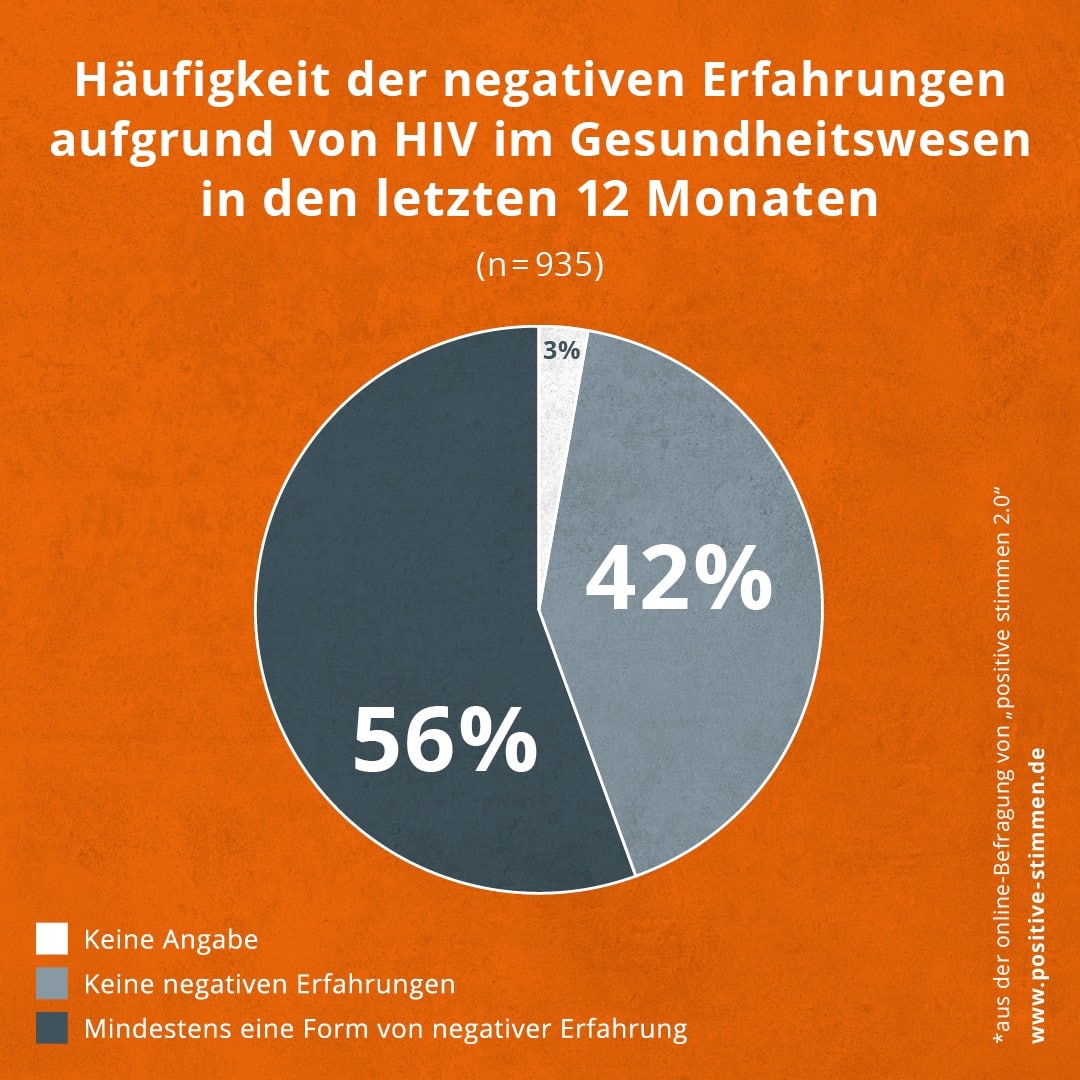
    The study also shows that more than 50% of respondents have been rejected at least once during sex in the past 12 months. And this despite the fact that there is protection through therapy.

    Watch our video now:

    The good news is that since Protection through therapy 40 per cent of those surveyed experience less discrimination. The HIV medication suppresses the multiplication of HIV in the body. HIV can then no longer be transmitted during sex.

    So if you have already asked yourself what you can do to combat discrimination against people with HIV, then this would be the first step. Pass it on: HIV is not transmissible under therapy. Tell your friends, family or work colleagues.

    And there's more you can do. Show solidarity wherever people with HIV are marginalised or discriminated against! And find out more at iwwit.de! Here you will find lots more information about living with HIV. And you will find information on how you or others can defend yourself against discrimination and marginalisation.

    We also show in our Campaign authentic images of people with HIV, because they are an indispensable part of our community.

    You want more? Then get in touch with IWWIT - and tell us what you think! Or tell us about your ideas or wishes on the topic of living with HIV: On Facebook, Instagram or classically by e-mail. We look forward to seeing you!

  • Max (21): "I'm no different to other gay boys"

    Max (21) about his life with HIV infection
    Photo: Private

    Max is 21 years old, studies in Jena and came out as HIV-positive more than a year ago. He is happy about this decision and would like more positive guys to say that they have HIV. A conversation about unfounded worries, the point at which internet dating becomes unsexy and what a report about the "Testhelden" campaign by ICH WEISS WAS ICH TU triggered in him

    How openly do you live with HIV in the gay scene?
    Quite openly. This isn't the first interview I've given about it and the vast majority of people in my immediate environment know about it. If dating portals offer the option of declaring your HIV status, then I do that too. Or I bring it up when it becomes necessary. But it's also not the first thing I tell people about myself. Although it's strange now when people don't know.

    What do you mean by that?
    Being open about the fact that I am positive simply makes things, conversations and general dealings with others less complicated. The hurdle is removed, everyone knows and that's good. If someone comes along who doesn't know, there is often a need for explanation. This complicates the situation again and the issue comes to the fore. And that triggers unease, which is not really necessary.

    "If I can help others to protect themselves, that's great."

    Was it easy for you to come out publicly?
    My public outing came about like this: I read a report on a website about this "Testhelden" campaign that impressed me. I then contacted the author to tell him about it. He then said: "Could you imagine talking publicly about your infection yourself?" And I could. I wasn't that scared of it. There are far too few people who do that. And that's why many other people don't realise that the lives of most positive people are not much different from those of negative people. And I'm still glad I did it. If I can help others to protect themselves, that's great.

    "I then have to explain that protection through therapy works and that I am not infectious."

    How do other people react when you tell them that you are positive?
    Especially today, when my HIV status has become quite normal for me, I am always surprised by how much some people worry. Not about being infected by me. Most people are well aware of that. But many people still think that I'll get ill at some point and then die far too early or something. And it's not always easy to make them realise that I'm doing really well and that I'm not actually affected by HIV at all. It's annoying from time to time. When dating on the Internet, the matter also comes up at some point and many people react with great naturalness. But some don't either. I then have to explain that protection through therapy works and that I'm not infectious. Unfortunately, that quickly makes things unsexy.

    Fear of stigmatisation among young positives

    Do you know other young positives? How do they deal with their infection?
    I study in a smaller town, the scene here isn't huge. After I came out publicly, some of my friends came out to me. And what I generally notice is that there are now some young positives who are very open. But many others don't want it to be publicised and only talk about it with a few other people.

    "After coming out, you definitely become a topic of conversation."

    Why do you think that is?
    Well, they're afraid of being stigmatised. And that's not entirely unjustified. After coming out, you definitely become a topic of conversation. The general level of information about the lives of HIV-positive people is not great and prejudices and rumours can easily arise that make life more difficult. Many people are also afraid of jeopardising their professional future if it becomes known that they are positive.


    Max (21), student in Jena, Thuringia
    Photo: Private

    "And some negative people could relax when dealing with positive people."

    And what can we all do about it together?
    Good question. If positives are open about their infection, negatives have a chance to learn first-hand that living with HIV in 2017 no longer means being ill. We live completely normal lives and there are no longer any visible differences between positives and negatives. And some negatives could relax when dealing with positives. (laughs) And inform themselves better so that stigma is prevented before it happens.

    How does HIV affect your life today?
    I take two tablets every day, that's it. But that's now also automated, like brushing my teeth, and nothing I think about anymore. Apart from that, I'm probably no different to many 21-year-old gay boys all over the world.


    You can find out more about living with HIV at iwwit.de!

  • Reference person and confidant

    Reference person and confidant

    Volunteering: reference person and confidant
    © SP-PIC - Fotolia.com

    Theo (name changed) is 42 years old. He has been a volunteer at the Berlin AIDS service organisation Aids-Hilfe for nine years, providing emotional support for people with HIV. A portrait of Moritz Krehl

    In 1998, Theo was diagnosed as HIV-positive - a shock.

    Five years later, he voluntarily resigned from the church and moved to Berlin to find happiness. However, the separation from his former boyfriend, professional turbulence and few social contacts initially lead him into loneliness. Theo had not imagined the start would be so difficult. But instead of resigning himself and sitting at home until he becomes depressed, he joins the Berlin AIDS service organisation, BAH for short, to do voluntary work - a way out of isolation for him.

    BAH has ten to fifteen areas in which voluntary work is possible.

    Theo decides in favour of the "escort". There are three groups there: The volunteers from "Freunde im Krankenhaus" (Friends in Hospital), or FRIKS for short, accompany Aids patients who have to stay in hospital long-term. Those involved in "emotional support in prison" meet regularly with prisoners infected with HIV or suffering from AIDS. Theo works in the third group, "emotional support". Here too, the aim is to accompany people with HIV on their way out of the crisis, to give them back some of their quality of life and to be a carer and confidant.

    The "accompaniment" was launched in the 1980s, during the worst times of the AIDS crisis.

    Even back then, the volunteers accompanied HIV-positive people, but above all AIDS patients - until they died. In those days, it was often end-of-life care; the end of the accompanied path was predetermined from the outset.

    Even today, companions like Theo take HIV-positive and AIDS patients by the hand and give them a sense of security and familiarity. Unlike in the past, however, the end is no longer predetermined, thanks to modern medication. Today, intensive discussions between the counsellor, the person being accompanied and the AIDS service worker, as well as supervision, determine when it makes sense to end the support. In most cases, this is when the crisis has been overcome or when it becomes clear that the counselling cannot achieve the desired goals. The journey together can be short, but it can also extend over many years.

    What has not changed, however, is that AIDS often leads to social marginalisation.

    The disease isolates the patients, they become lonely. Resignation, depression and lethargy are frequent consequences, although Theo is convinced that an HIV diagnosis rarely creates new problems, but rather reinforces psychological predispositions - as can happen in critical life situations.

    To counteract isolation, the counsellors have contact with their clients at least once a week; preferably in person, but sometimes just on the phone. And although Theo, like most of the counsellors, works and has little time, he even spends the whole Saturday with his current client Benjamin (name changed) every fortnight to take him on an outing, go for a coffee or simply talk to him and listen to him.

    The man with Aids is about the same age as Theo himself - and only his second client in nine years. Theo has been accompanying Benjamin for four years now. You can tell that Theo cares about Benjamin's fate, but also that he doesn't care where he comes from or how he got into this situation. Theo doesn't pass judgement, he is concerned with the person and the path that lies ahead of him. "I want to help him experience his life."

    What did Theo gain from his involvement in the Berlin AIDS service organisation, and why is he still involved?

    He sought and found connections, he says. The supervision group gave him support. And he has found friends at BAH, a good network that he no longer wants to do without. The work also offers him "a social alternative to the cerebral desk life" and gives him the feeling that he is doing something good. And last but not least, he learns a lot about himself. In joint supervision sessions, Theo talks to the others about his personal problems and difficult moments during counselling. "I often get feedback that makes me think and helps me to develop personally."

  • positive voices 2.0

    positive voices 2.0

    "Prejudices against people with #HIV affect my life"

    This statement applies to half of the people with HIV who were surveyed in the "positive voices 2.0" study. Today, we presented the results of the participatory research project. It is clear that the lives and everyday lives of people with HIV are much more restricted by experiences of discrimination than by the health aspects of the infection. Conclusion: A good life with HIV is medically possible - the way society deals with it is lagging behind.

    💡 Further information, the results and recommendations for action based on them can be found at

    www.positive-stimmen.de

    ➡ You can find the press release at https://www.aidshilfe.de/…/leben-hiv-heute-vorurteile…
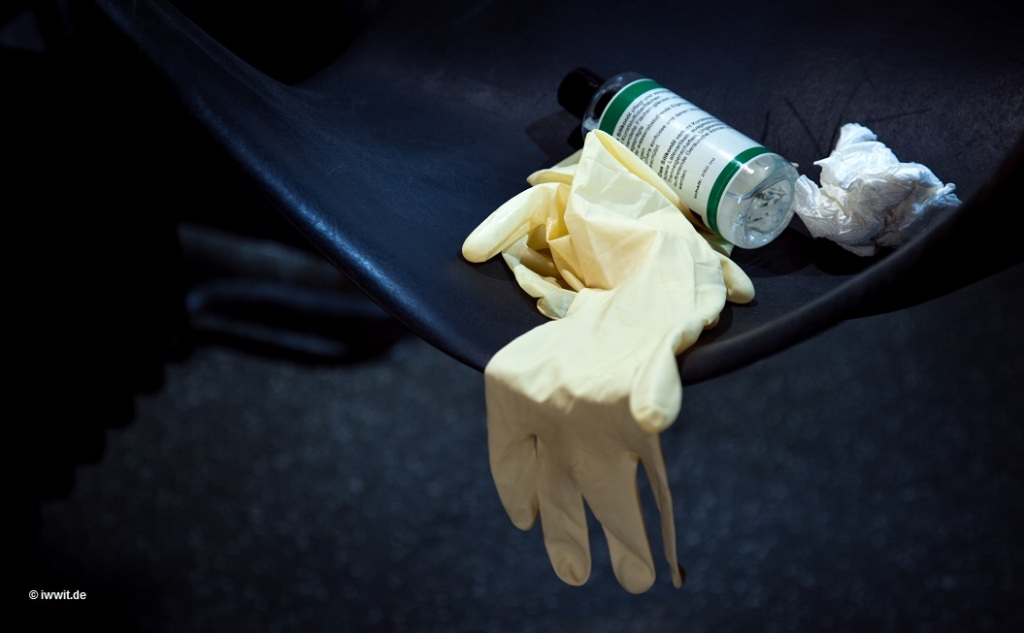
    People with HIV are often affected by stigmatisation and discrimination.

    For them, the perceived and internalised stigmatisation and the discrimination they experience can have a significant impact on their quality of life and health - the results of "positive voices 2.0" underline this.

    Stigmatisation and discrimination

    At the same time, stigmatisation is the biggest obstacle to HIV prevention. This is because (feared) marginalisation and stigma-based disease theories (e.g. assumptions about so-called risk groups
    and transmission routes) have an impact on the willingness to be tested for HIV and, on the other hand, HIV testing is not recommended for people who are not considered to be at risk - especially women.
    over the age of 40 - are not actively offered. Stigmatisation and discrimination therefore contribute to the fact that even today in Germany around 1/3 of HIV infections are only diagnosed at a late stage and people have to accept significant health disadvantages as a result, as they cannot benefit from timely HIV treatment.

    Intersectional aspects

    Intersectional aspects also play a major role in relation to HIV. From the very beginning, HIV has been made into an infection of the "others". For example, HIV - regardless of statistical facts - is primarily attributed to groups that were already stigmatised even before the start of the HIV pandemic, such as "promiscuous" gay men, sex workers, drug users and black people. In addition, many people with HIV experience stigmatisation.
    not only because of their HIV infection, but also because of other stigmatisation characteristics, e.g. as a gay man, as a trans* person, as a Black or person of colour, as a woman, as a drug user, as a woman, as a woman or as a woman of colour.
    Person or sex worker.

    These stigmas not only overlap, leading to "more" stigma, but also to "more" stigma.
    tisation and discrimination, but they are interwoven and lead to specific experiences of stigmatisation and disadvantage. For example, the life of an HIV-positive young gay cis man who comes from a middle-class background and has a university degree may be less different from that of an HIV-positive gay man who comes from a middle-class background and has a university degree.
    HIV-negative man, while an HIV-positive Black woman without a residence permit and health insurance is likely to have difficulties obtaining vital medication and caring for her health.

    www.positive-stimmen.de

  • Hepatitis C in the (sex party) scene

    Hepatitis C in the (sex party) scene

    Franz and Manuel like fisting. If their hand is up their arse, they often have hepatitis C in their head. This is because being HIV-positive makes it easier for them to get a co-infection. Here they explain how they enjoy their sex sessions with caution.

    Franz doesn't like it when it's completely dark during sex. "I want to have enough light to see if there's a noticeable trace of blood on my glove." Franz is 56 years old, HIV-positive, a leather fan and Franz likes to fist. "I've become a few per cent more careful recently," says the man from Augsburg. Within three months, he learnt from four good friends that they had contracted hepatitis C. "After that, I also went for a check-up as a precaution - out of turn." Franz has himself tested for sexually transmitted diseases twice a year anyway, including a hepatitis C test. "But it was nothing," says Franz with relief.

    Gay men with HIV are infected with hepatitis C more frequently than HIV-negative men. One possible transmission route: sex parties where the partners change frequently. Franz's impression: "It's a mixture of fist and fuck scene. If it goes on all night, it often doesn't stop at a fist. And minor injuries always happen during fisting."

    Safety belt during the fist session

    Manuel (30) from Berlin also likes to fist. He usually meets up with three fuckbuddies for a "session". He caught it in 2011: hepatitis C - a typical co-infection, as Manuel is also HIV-positive. The treatment lasted a year. It had severe side effects, but was effective: the viruses are gone, Manuel's doctor has just confirmed that he has "liver values to show off" again. But the intense experience remains in his mind. "Sex after hep is different to before," says the journalist. "When I start playing with new people now, I first see how they act," he reports.

    "Fisting is a sexual game where relaxation in the mind is important," says Manuel. "Fisting is about the deep penetration of your partner and being filled up inside," explains Manuel. "Whether the hand inside me is wearing a glove or not is not so important." The glove even creates a little extra moment of security - and helps you to relax.

    "Hardly anyone feels affected by hepatitis C"

    Manuel made no secret of his hepatitis C infection. The information was even written in his Gayromeo-profile. "The reactions were neutral," he recalls. "In the worst cases, my enquiries were kindly moderated." Only once was there a user who bombarded him with messages: "You are irresponsible! You're damaging the solidarity system! "But I wasn't the only victim," says Manuel. "There are always a few crazy people online."

    Overall, the gay fetish community reacts rather indifferently to the increased risk of hepatitis C, as Franz has also observed. "Hardly anyone feels affected by hepatitis C. People say to themselves: I've got nothing to do with fisting anyway," says Franz. And unlike HIV, hepatitis C can be cured. "You have to deal with HIV for the rest of your life," says Franz, who has been living with HIV for over 20 years. "As an HIV carrier, you're still more discriminated against in the scene."

    No open discrimination, but polite distancing - this is how most men react when they find out about hepatitis C. However, Manuel believes that retreating is a crucial mistake. "You never find out how the infection happened and how you can protect yourself." And the other person misses out on the chance to tell you what they are going through. "Hepatitis C treatment is no walk in the park," emphasises Manuel. "Everyone has moments when they're struggling and need a hug or a listener." That's why Manuel urges: "Relax! Talk to each other. Educate yourselves." The exchange can enrich both sides. "Knowing what's going on gives you a sense of security. And this good feeling also helps you to have better sex."

    If you want to know what else to look out for when fisting so that it stays "safer", you can find out more on the I KNOW WHAT I DO campaign website. Here you will also find information on BDSM, group sex and pissing: www.iwwit.de/fetisch

    Hep C Sexparty: Sling-Blog
    Gay men with HIV are infected with hepatitis C more frequently than HIV-negative men. One possible transmission route: sex parties where partners change frequently.

    More about Hepatitis C on ICH WEISS WAS ICH TU.