

Tag: History

  • Queer pride

    Queer pride

    The six-part documentary series "Pride" is more than just a journey through the history of the LGBTIQ* movement in the USA. It also points out little-known aspects and what can be learnt from them for today's fight for rights.
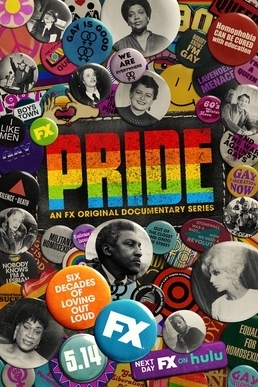
    New PRIDE series
    Series Pride © Disney+

    This series is simply entitled "Pride". But what is LGBTIQ* pride actually based on? And what paths had to be travelled, what battles had to be fought before waving the rainbow flag could become a sign of self-confidence and self-assertion?

    The six-part US documentary series, which can now also be seen in Germany on the Disney+ streaming service, explores these questions, among others. Each episode is around 45 minutes long and is dedicated to a decade, starting in the 1950s, when homosexual civil servants were dismissed en masse during the McCarthy era, and ending in the 2000s, when LGBTIQ* are experiencing growing acceptance and diverse representation in the media.

    But "Pride" is anything but a chronological history lesson on the history of the LGBTIQ* movement in the USA based on dates and events. The renowned and committed film producer Christine Vachon ("Carol", "Boys Don't Cry", "Dem Himmel so fern"), who has been making innovative queer films since the 1990s, has also focussed on new and individual forms here: Different filmmakers were responsible for the episodes, all of whom were also given full artistic freedom.

    A rousing tribute to the LGBTIQ* emancipation movement

    It was important to her to tell the story in a way that is just as chaotic and personal as the story was. When there is a lack of documentary material, you sometimes make do with animations, drawings, re-enacted scenes or, like Yance Ford in the episode about the 1990s, have queer people from today recite homophobic speeches by politicians.

    There were LGBTIQ* protests as early as 1965

    What is far more important, however, is that the directors set their own individual focal points and focus on aspects that have so far received less attention in general queer historiography. The legendary uprising on Christopher Street in 1969, for example, almost becomes a side note, as "Stonewall" was not the beginning of the LGBTIQ* movement in the USA.

    For example, there were similar protests in Philadelphia in 1965 and in San Francisco the following year, but these were not documented or reported in the media.

    The HIV and trans activist Felicia "Flames" Elizondo campaigned in particular for the rights of Black LGBTIQ people. © Disney+
    The HIV and trans-activist Felicia "Flames" Elizondo campaigned in particular for the rights of black LGBTIQ people. on. © Disney+

    "Stonewall" was not the beginning of the LGBTIQ* movement in the USA

    And "Pride" makes something else clear: this early phase of the LGBTIQ* civil rights movement was primarily a protest by Black activists, many of them trans* people who had been inspired by the Black Power movement. The slogan "Black is beautiful" quickly became "Gay is good".

    As different as the six episodes are, there is one thing that the makers have decided on: They tell history primarily through personal stories. In doing so, they draw on material from private archives, some of which is extraordinary, and allow contemporary witnesses to have their say.

    Telling history with personal stories

    In the episode on the 1950s, for example, directed by filmmaker Tom Kalin ("Wild Innocence", "Swoon"), the private photos and Super8 recordings of a gay couple's exuberant private parties and beach trips are juxtaposed with an exemplary case that shows how homosexuals were dismissed en masse from the civil service during the McCarthy era. Photographer Arthur Tress tells the story of how his lesbian sister Madeleine fought back. (Image: Disney+)

    A seemingly endless treasure trove from an amateur filmmaker provides an authentic look at the club scene in New York in the 80s, including footage of RuPaul - long before he became a world-famous drag icon.

    The African-American actress and director Cheryl Dunye portrays her two personal heroines - the filmmaker Barbara Hammer and the poet Audre Lorde - in the episode about the 1970s. They are exemplary not only for the growing self-empowerment and visibility of LGBTIQ*, but also for the development of intersectional feminism.
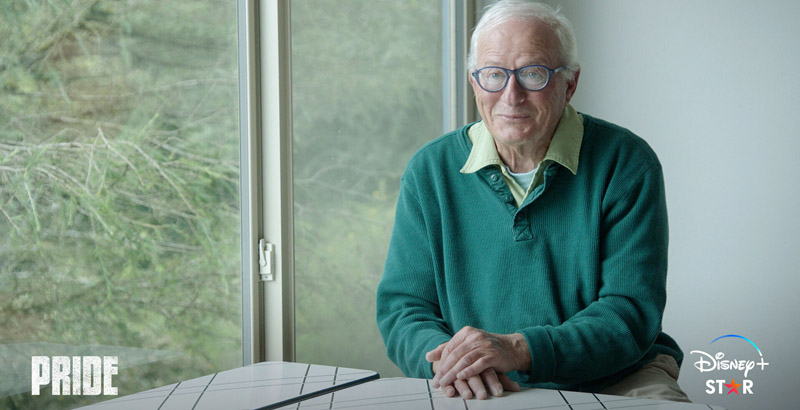
    The HIV and trans-activist Felicia "Flames" Elizondo campaigned in particular for the rights of black LGBTIQ people. on. © Disney+


    Political and social change is only possible through alliances

    In any case, "Pride" shows that it is only through the alliances of the various groups such as the Black and trans* communitythe women's movement or the Aids-activists and the solidarity between them made political and social change possible.

    Many of the conflicts mentioned in "Pride" may be very US-specific, such as the culture war against queer art in the mid-1990s, which was stylised by right-wing and Christian fundamentalists as a question of national survival. But if you look at developments in Poland and Hungary today, for example, or recall some of the statements made by the right-wing conservative camp in Germany, it becomes clear how this form of culture war has long since taken on threatening proportions in Europe too.

    Decades of new beginnings

    The last two episodes about the 1990s and 2000s depict decades of new beginnings. The portrait of the male couple Robert Compton and David Wilson, who fought for the right to marry and thus set an important milestone for equal rights, is touching.

    And of course, the growing media representation of LGBTIQ* in show business, films and TV series is not left unmentioned. However, the two young trans* and non-binary directors Yance Ford and Ro Haber take the opportunity to give a voice to the Black trans* community, which is still marginalised in the queer scene.

    With images of "Black Trans Lives Matter" demonstrations, "Pride" thematises one of the current debates and with the black actor Marquise Vilson we get to know a charismatic and impressive protagonist.

    Liberating and vital

    Among other things, he talks about how liberating and vital it was for him to have found not only a community but also a home in the New York ballroom scene. Only then was it possible for him to live his masculine identity and - now a successful TV and cinema star - to come out publicly as a trans* man. This required not only courage, but also queer pride.

    All six episodes of the documentary series "Pride" are available to stream on Disney+.

    Everything about the gay lifeon living with HIV and many other topics, you can also find iwwit.de!
    New PRIDE series
  • Against shame and sin

    Against shame and sin

    The TV series "It's a Sin" shows LOVE IN TIMES OF AIDS

    The counterpart to "Queer as Folk": the TV series "It's a Sin" looks back to London in the 1980s, when the gay scene there was also overrun by AIDS. A masterpiece that not only tells of the past, but also of the here and now.

    (Spoiler warning: This article contains spoilers for the series "It's a Sin")

    You don't need prophetic abilities to predict the future of this series: it will soon be part of the gay community's cultural memory, just like "Pose" or "Queer as Folk". In other words, TV series that also tell queer stories and history in such a way that they themselves create lasting memories.

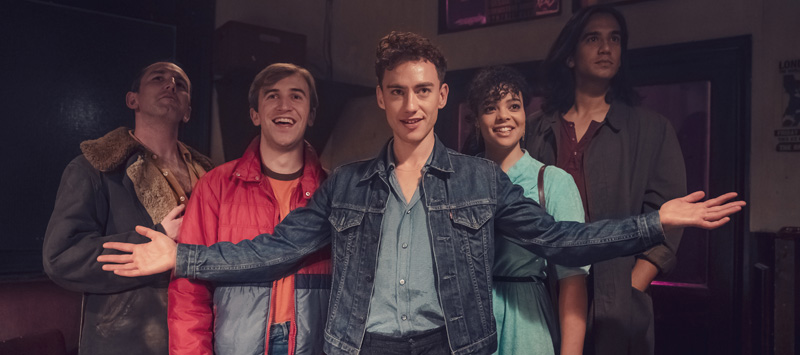
    Scene from episode 2 of the TV series Gregory, Colin, Richie, Jill and Ash (from left to right) (© RED Production Company & All3Media International)
    Scene from Episode 2 Gregory, Colin, Richie, Jill and Ash (from left to right) (© RED Production Company & All3Media International)

    Queer history as a TV series

    Because the characters in "It's a Sin" make you feel the excitement up close. With their departure into the adult world and the euphoria of sexual liberation and self-awareness. You get so close to them in the five episodes! We accompany them so intensively through the highs and lows that you almost inevitably feel part of this queer family of choice.

    And above all, Russel T Davies, the creator of this TV mini-series, repeatedly manages to create scenes and images that literally burn themselves into the viewer's memory and will stay with them for a long time to come.

    Enduring inner contradictions

    Also because the overlapping feelings of rebellion, happiness, despair, incomprehension and hope are often captured in a single image. For example, when the parents of party-loving ticket inspector Gregory build a funeral pyre in the garden after his death. They burn his bed and all of their son's personal belongings there, including his childhood photos and snapshots with his friends in faraway London. As if they could erase his gayness and his AIDS.

    Or Ritchie, who didn't dare to pick up his test result and ignored all the signs. Only now that the disease has broken out does he have the courage to reveal himself - in his very own way - to his closest friends: "I wanted you to be the first to know: I'm going to live!"

    "I wanted you to be the first to know: I will live!"

    Olly Alexander (who many will know as the frontman of the band Years & Years) puts everything his character has to endure in terms of inner contradictions into this short sentence. The relief of finally being able to confide in the most important people, the shame of having lied to them for so long and the fear that his future could be very short. And then there is also the defiance of not wanting to let them get him down and rob him of his zest for life.

    Gay television history for a broad audience

    And because this does not leave the audience untouched, this scene also becomes an unforgettable moment. Russel T Davies not only knows his craft, he also knows how to use it masterfully - and that means writing for a broad audience without compromising on content.

    Consciously not reducing gay life and love to HIV and Aids

    He had already achieved this with series such as "Cucumber", "A Very English Scandal" and "Years and Years" and above all, of course, with "Queer as Folk". With the latter series, the British director and screenwriter wrote gay television history over 20 years ago. It was so successful that an even more internationally successful US remake was made a few years later.

    At the time, Davies had deliberately refrained from addressing HIV and Aids, but instead wanted to gay life and love without defining it by the illness.

    A new world in London in the 80s

    For him, however, it was now time to remember those years and at the same time come to terms with his own story. Davies has obviously packed a lot of his own story into Ritchtie, the smart, good-looking 18-year-old who opens up a new world in the gay scene of London in 1981 and enjoys the sexual opportunities that present themselves to him to the full. And Jill (Lydia West), Ritchie's best friend who, like him, is also studying acting, also has a real-life counterpart.

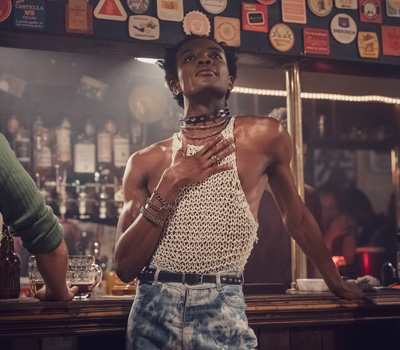
    Scene from episode 2 of the TV series Roscoe © RED Production Company & All3Media International
    Scene from Episode 2 Roscoe © RED Production Company & All3Media International

    Jill becomes a flatmate in the otherwise completely gay shared flat, which everyone affectionately calls the "Pink Palace". It's a small, conspiratorial, colourful bunch. Besides Ritchie, Roscoe (Omar Douglas) is also part of it. He turned his back on his strict religious family from Nigeria when they made plans to "cure" him of his homosexuality.

    Davies shows how to deal with the fear of AIDS, homosexuality and homophobia

    The pale Welshman Collin (Callum Scott Howells) starts an apprenticeship as a men's tailor in London, is considered uptight and shy, but, as time goes on, has experienced more than his friends realise.

    Russel T Davies also brings together a whole host of supporting characters around the clique. Among others, the prominent cast includes Stephen Fry and Neil Patrick Harris ("How I Met Your Mother"). This gives Davies plenty of opportunities to show how people deal with the fear of Aids, an infection, their own homosexuality and the homophobia of others - as well as their reactions to it.

    More than just a historical panorama of the AIDS era

    This TV series may seem far too short for that - after all, there are "only" five episodes of 45 minutes each - but Russel T Davies uses this time to create an incredibly broad panorama that is by no means limited to contemporary history. Because "It's a Sin" (named after the Pet Shop Boys' hit) does not focus exclusively on the devastating impact of the AIDS pandemic in London between 1981 and 1991.

    "I didn't want to write a drama about deathbeds"

    "I didn't want to write a drama about deathbeds," Davies explained in an interview, "but I wanted to recapture that era for myself and remember those lives with joy."

    For example, "It's a Sin" is about the justified fear of being ostracised - even by colleagues and family or the fear of dying. However, the series also tells the story of how homophobia functions and works on many different levels. But also how people can unite and strengthen each other. It shows what it takes to accept and live one's own sexuality in a positive way. And the value of friendship and humanity. And all this with plenty of empathy and humour.

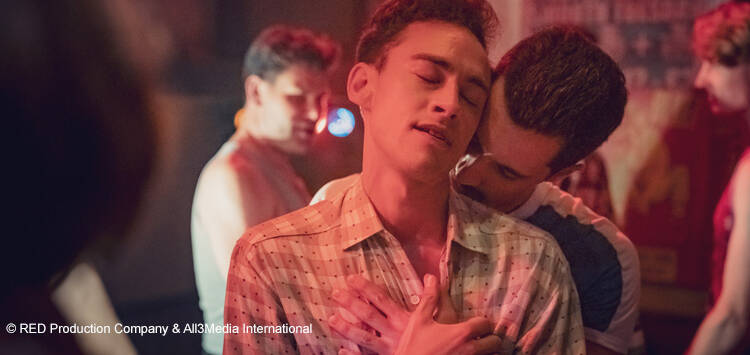
    Scene from episode 1 of the TV series "It's a Sin"
    Scene from episode 1 of the TV series "Richie"

    TV series brings topics such as coming out, HIV and PrEP to the media

    And so "It's a Sin" is a series set in a decade long past. But because it deals with timeless themes, the series can still dock into the here and now. This is helped by the fact that the series makers have refrained from placing typical everyday objects from that era in an obtrusive and overly obvious way.

    Great success among young viewers

    Wide shoulder pads, new wave outfits and walkmans are almost nowhere to be found here. This also makes it easier for today's young audience to identify with their peers from the 80s and 90s.

    In the UK, the series was an enormous success, especially among young viewers. And it had a side effect that should not be underestimated: topics such as Coming out, HIVThe film, today's treatment options and PrEP were widely discussed in the media - and the HIV test figures rose by more than 400 per cent after the broadcast.

    Incidentally, Davies has saved one of the most impressive and unforgettable scenes in the entire TV series for the end. Jill meets up with Ritchie's mother on a harbour promenade on the Isle of Wight. The friends had previously been denied the chance to see their friend again.

    Life-affirming celebration of queer self-confidence

    Now Jill learns that Ritchie has already died - lonely and isolated in the bosom of the family. Russel T Davies has written a monologue for Jill that packs a punch. It is tantamount to a general reckoning. Above all, however, it formulates one of the central messages that Davies wants to convey with this TV series. It is a plea against shame and at the same time an indictment of all those who make people feel ashamed of their sexuality or HIV infection.

    A plea against shame

    Because only "shame makes you feel like you deserve it", says Jill. Without the shame, a freer approach to sexual identity and infection would be possible. However, shame may even be compounded by guilt because you may have passed the virus on to others.

    This makes "It's a Sin" an equal counterpart to "Queer as Folk". But "It's a Sin" is also an incredibly life-affirming celebration of self-empowerment and queer self-confidence.


    "It's a Sin" (Starzplay), video-on-demand on Amazon Prime Video

    You can find everything you need to know about living with HIV at iwwit.de/living-with-hiv!