

Tag: CSD

  • From Protests to Profits: Is Pride Back at Square One?

    From Protests to Profits: Is Pride Back at Square One?

    Illustration: Harjyot Khalsa, www.harjyotkhalsa.com

    As Pride celebrations grow and proliferate, they often become sites of controversy: What is being celebrated-the diversity of the community or just the visibility of a select few? Who gets to take part in this celebration, and who is left out or sidelined? From corporate sponsorships to grassroots protests, author Ahmed Awadalla examines the ever-evolving landscape of LGBTIQ+ Pride in Germany.

    Berlin stands apart. If you ask someone in the city about attending a Pride event, they'll likely respond with another question: "Which one?" This is the essence of Berlin-a metropolis that hosts a multitude of queer marches and initiatives, each with its own distinct priorities and vision of the LGBTIQ+ experience. In a city this vast, with its diverse communities and subcultures, there's always a space where one can feel seen-or at least, it seems that way.

    Having lived in Berlin for years, I've witnessed the Pride landscape shift and evolve, with each event embodying a different interpretation of queerness. What first stood out to me during my early summers in the city was the name "Christopher Street Day" (CSD)-a direct reference to the American Stonewall Riots. These riots erupted in response to persistent police harassment following a raid on a New York bar. Although a pivotal moment in queer history, the choice felt curious, if not a little dissonant, considering Germany's deep history of advocacy for queer rights.

    Naturally, when I first arrived in Berlin, I was eager to join a queer march in the hope of finding community and connection. My first march wasn't a typical Pride event but a protest organised by Nasser Al-Ahmad, a young Lebanese man who faced brutal violence from his family after coming out. The march began outside a mosque in Neukölln to challenge the role of religious institutions in promoting homophobia. Despite Nasser's efforts to emphasise that homophobia wasn't just "a Muslim problem," media coverage framed the issue as a clash between queer and migrant communities, pitting them against each other.

    As I marched, I quickly noticed how out of place I felt in the predominantly white crowd. At one point, a woman asked me to move aside, assuming I wasn't part of the protest, likely because of my appearance. This made me question my own belonging in a space that was supposed to be about solidarity and plurality. It highlighted the uncomfortable reality that even within queer spaces, not everyone feels welcomed or understood. Different people I spoke to had their own take on what Pride means to them. For some, it feels like home, while for others, it remains a space where their struggles are made invisible.

    Between Celebration and Commercialisation

    The first German CSD took place in Berlin in 1979, inspired by American Pride events but soon adapted to local politics. What began as passionate protests for LGBTQ+ rights has, over time, turned into something much more mainstream and commercialised. Big companies and political parties now play a more significant role. This trend is part of a larger pattern called "rainbow capitalism," where businesses use LGBTQ+ symbols and slogans for profit, while urgent issues facing the community, especially those on its margins, are pushed aside.

    "Honestly, I couldn't stand it," said Mahdi, a community member who left CSD Berlin this year after just 10 minutes. "Pharma companies, banks, and internet giants-what do they have to do with our struggle?" Mahdi's frustration is palpable. For him, the sight of straight people occupying corporate floats felt like another layer of erasure. "I get that allies are important, but they need to be mindful of the space they take up," Mahdi added, reflecting a common sentiment among those who feel mainstream Pride has lost its way.

    But not everyone shares this sense of alienation. "For me, my reasons for going to CSD are two-fold," said Cameron, a regular CSD attendee. "The principles of Pride are still very worthy. It's a day where we can celebrate our LGBTQ+ identities and reflect on how we're not just tolerated but accepted and even celebrated by wider society." Cameron acknowledges the criticisms about corporate influence but admits that, for him, it doesn't overshadow the event's value. "Yes, the parade has been hijacked by corporate interests, but the party atmosphere-dancing in the rain to Spice Girls with queer folks from all over the world-is still magical. It's just fun!"

    Cameron recognises his own privilege within these spaces. "I haven't felt excluded because I fit the classic stereotype of a white gay male. I can see why others might feel less represented," he admitted. Hassan, a gay man of colour, shares Cameron's sentiment: "My birthday aligns with CSD Berlin, so my friends visit me from other cities, and we get to experience this collective joy, dressing however we want. It's a time to truly celebrate together."

    Tensions Under the Rainbow

    While some are disillusioned by Pride's shift away from its radical roots, others appreciate it as a space for self-acceptance. But this raises a fundamental question: Should Pride be about identity or action? Is it enough to reclaim our identities as a response to the shame society imposes, or should Pride be about taking meaningful steps towards change? And if so, what kind of action?

    These debates aren't new. In the 1990s, the group Gay Shame emerged in the U.S. to challenge the focus on identity and visibility over activism. They argued that simply transforming shame into pride wasn't enough without confronting systemic oppression through tangible actions like supporting trans rights and fighting against economic inequality. Their stance echoed the message: "None of us is free until all of us are free."

    In Berlin, I found a similar spirit at Alternative CSD (Kreuzberg Pride), which rejected corporate sponsorship and focused on grassroots activism, taking on issues like poverty and gentrification. But internal conflicts eventually led to its end, showing that even in activist spaces, disagreements can break down solidarity. After a hiatus, Internationalist Queer Pride emerged in 2021 with a bold political stance that demands revolutionary action to dismantle all forms of oppression. They advocate for environmental justice, decriminalising sex work, supporting indigenous and migrant rights, and abolishing border regimes

    "It's empowering to see so many diverse groups coming together for a bigger cause," says Andreas, a cis white queer man who attended this year's Internationalist Queer Pride (IQP). However, he adds, "This year's event was traumatic for many participants due to the police's excessive use of violence." For Andreas, this repression is reminiscent of the early days of queer activism, like the Stonewall riots, when police were viewed as a threat, not allies. This controversy around the police's role is also present on a global scale. For example, Pride Toronto banned police participation following concerns about police brutality and racial profiling raised by the Black Lives Matter movement.

    Dozens of arrests were reported during Internationalist Queer Pride (IQP) this year, directly linked to one of the most contentious issues in Germany: the ongoing atrocities in Palestine. Demonstrations in solidarity with Palestinian communities have frequently faced severe police crackdowns, viewed as an unprecedented restriction of free speech. Germany's stance is often framed through the concept of Reason of statewhich reflects the country's commitment to protecting Israel's security due to historical responsibility for the Holocaust. Critics argue that this has translated into unconditional support for Israeli violations of international law.

    The Dyke* March and The Persistence of Patriarchy

    The Dyke* March, which began in the 1990s to promote lesbian visibility, has since expanded to include women, trans, and non-binary individuals. Cisgender men are asked not to participate, creating a space where these voices and experiences are centered without being overshadowed. Like Kreuzberg Pride, the Dyke* March remains focused on activism and intersectionality, resisting the trend towards commercialisation. However, police violence was also reported at this year's Dyke* March, on the backdrop of Palestinian solidarity.

    Two people I talked to have been regularly attending the Dyke* March. Sarah thinks that patriarchy is still a problem within the queer community and that it manifests in how many queer spaces cater primarily to the male experience. "Yes, there are more FLINTA* spaces and events now, but it's still not enough," she said. "We need to keep pushing for real change, not just more visibility." Mar, who identifies as non-binary, also finds it important to attend: "I can be read as a cis male because of my appearance, but I think building a shared understanding shouldn't be based solely on appearance. The experiences of not feeling safe in our bodies and in public spaces are significant things we should come together based on."

    Right-Wing Return and the Full Circle

    While the tensions between police and demonstrators in Berlin may seem like a historical throwback to the early days of activism, another issue warrants serious attention. In 2024, right-wing groups in Germany have increasingly targeted Pride events, particularly in East Germany. These anti-CSD marches are part of a broader trend of rising nationalism and xenophobia in the country. Although images of neo-Nazis in places like Bautzen have generated significant concern on social media, a persistent narrative in German politics portrays homophobia, transphobia, and anti-Semitism as problems imported from elsewhere. This downplays the actual threat posed by right-wing groups that have demonstrated their presence both on the streets and within the German parliament.

    There is no better lesson than the one we are learning now: we must understand issues of xenophobia and injustices related to gender and sexuality as inseparable. With the current existential threats, Pride seems to have come full circle, and we must confront the question of what it means to gather collectively and for what purpose.

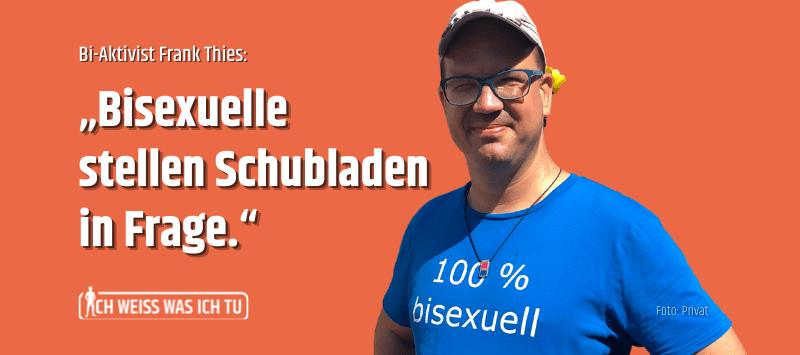
  • "Bisexuals question pigeonholes"

    "Bisexuals question pigeonholes"

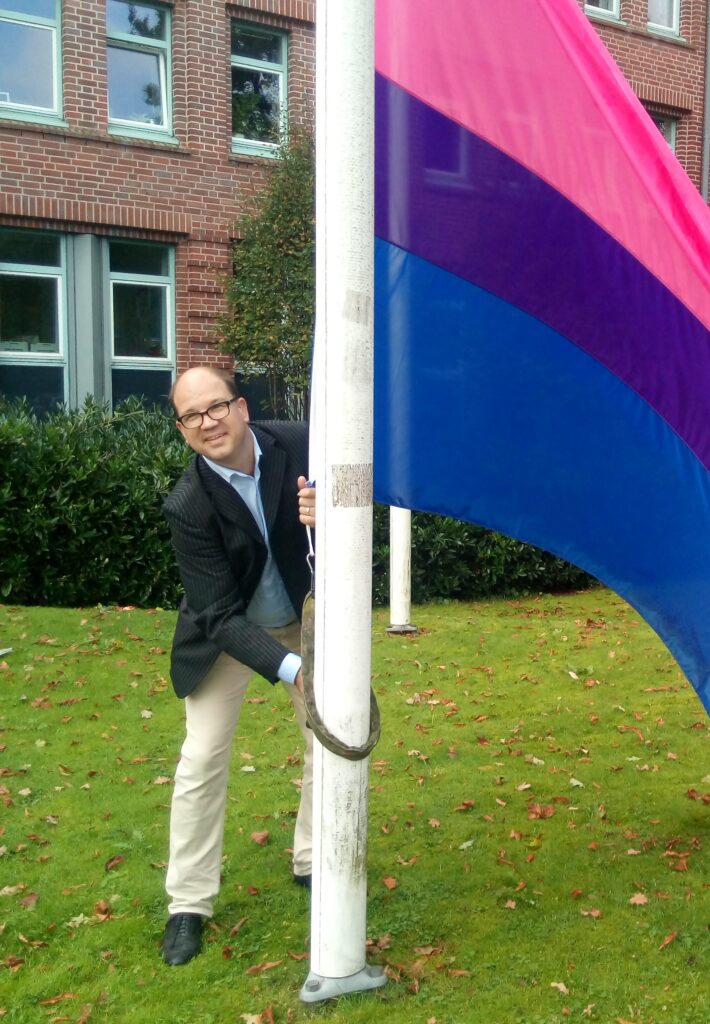
    In September, there will be a separate Pride for bi+sexual people in Hamburg for the first time. Co-inventor Frank Thies tells us in an interview why the demo is important - and why he often feels invisible as a bisexual.

    Frank, bisexuals like you should take centre stage at Bi+Pride. Why?

    Because bisexuality is often invisible. When you see two men holding hands in the street, you think: "Oh, they're gay." When two women kiss, you think: "Ah, they're lesbians." When you see a man and a woman like that, you don't think anything at first. But maybe: "They're straight, of course!" But all six of the people we saw could be bisexual. You often don't realise that.

    Why is that the case?

    This is how our society works: we like to pigeonhole people. And if someone loves someone of the same sex, we pigeonhole them as "gay" or "lesbian". That's like straight - just a bit different. Then it fits again. But if someone changes the pigeonholes, it knocks this nice order around your ears, and you don't want that. Bisexuals question pigeonholes!

    What do you demand from the Bi+Pride?

    Many of our demands coincide with those of the CSDs. For example, we are demonstrating for a reform of the Transsexuals Act and for the lifting of the ban on blood donations for men who have sex with men. One specific demand is for more visibility and for bi- and pansexuality to be taught in schools. Other important points: Bisexuality should be better researched scientifically and projects for bisexuals should be promoted.

    What do you want from your allies in the queer community?

    It would be great if the "B" in LGBTIQ was always taken into consideration. It often falls by the wayside. For example, on the International Day against Homo-, Bi-, Trans*, Inter* and Asexual Hostility, which was initially called IDAHO, then IDAHOT, and later IDAHOBIT. But then suddenly a term like IDAHIT appears - and the B is dropped again. Many organisations react very constructively when you point this out to them. But this year I've also heard: "We're not going to change that now!"

    Maybe homos think you're almost heteros who are less discriminated against...

    Yes, I do often hear: "You're not really part of the community. When things get difficult, you'll flee back to the hetero island." There are always such and such. It's not a competition to see who is discriminated against the most, but bisexuals and pansexuals get it from two sides: Rejection from heterosexuals, but also from their own queer community. It is not without reason that statistics show that bisexuals have even more health problems. Many are afraid to come out of the closet.

    You yourself are not only out privately, but also as a teacher at your school. How did that come about?

    A few years ago, a Year 6 pupil asked me directly on a school trip: "Are you gay?" When I asked her where she got the information from, she replied: "Everyone says that behind your back." In that situation, I said no at first. That was true, but it was only half the truth. After consulting with a few people, I officially came out as bisexual to this class a few weeks later.

    How did you put that into words?

    "I've heard that people are whispering behind my back. That's not okay. I can fall in love with different genders - but it has nothing to do with you. That's the end of the matter for me."

    How did your class deal with the information?

    One pupil reacted very harshly. She shouted: "That's disgusting!" and wanted to leave the class. That was good, because it meant I could react directly and show everyone where the boundaries were. I told her that I didn't want to experience anything like that again. The good thing about this scandal was that I've had a better relationship with the pupil than ever before since the clear discussion.

    What do you base that on?

    Just one example: half a year after I came out, there were vicious insults against me in the grievance box. When I made this public, this pupil came to me with some friends to distance herself. They wanted to tell me of their own accord that they were on my side.

    Do your colleagues at the school also stand by you?

    I didn't realise it for a long time because I didn't come out to everyone at a conference. I don't know if the news spread like wildfire from my class at the time. As I was eventually married to my wife and had two children with her, I wasn't recognised as queer for a long time. But after I came out in a Contribution for The time when I came out as bisexual, various colleagues told me how great they thought it was that I had taken this step. The school management is also behind me and has promoted me to Diversity Officer.

    The #teachout campaign wants to encourage teachers to come out too. You are also involved in this. Why are you doing this?

    The more teachers are confidently out, the easier it will be for all those who are still very afraid of coming out. Everyone has to decide for themselves - that's quite clear. But teachers also have a role model function and an educational mission. That's why it's important that they are out. It has also been proven that people who are out - in a safe environment - are healthier and happier because they no longer have to hide.

    How did #teachout come about?

    It all started with the #actout campaign, in which many actors* came out of the closet. A primary school teacher reacted to this and took to Instagram with the hashtag #teachout came out as gay. Two teachers took up the word. When I read about it, I wrote to them asking whether we should make something bigger out of it. The lesbian teachers Gun and Annika and the asexual, non-binary, bisexual teacher Julia joined us. That's how the four of us became the founding team. The inventor of the hashtag agrees, but no longer wants to be in the front row. A group of over 20 people is now active.

    How has the response been so far? 

    After #actout, the media response was naturally great. Well-known actors and actresses attract the media. NDR, ZDF and Time have reported on us. Of course, it would be great if this could continue in the coming school years. After all, we are only at the beginning.

    Back to you: was it good that you came out?

    Yes, definitely. A lot has happened at our school since then. We have set up a "Diversity" working group and organise "Respect Weeks". It's not just about LGBTIQ rights, but also against racism and hostility towards women and people with disabilities. On 17 May, I was at the Rainbowflash in front of Hamburg City Hall with students from the Diversity Working Group. The queer education projects soorum and Team Plietsch have offered workshops in several years. The demand is now greater than the supply. And I myself organise workshops and training courses on the topic of LGBTIQ for other teachers.

    Impressive. Did you experience school as a queer-hostile place in the past?

    Yes, of course. School is a place of crisis for LGBTIQ people because that's where many prejudices first emerge. Fortunately, people find themselves in the upper school and become more tolerant. But in the lower grades, children often bring prejudices into the classroom without thinking about them, for example those of their parents.

    Don't the teachers oppose this? For example, in sex education lessons?

    Yes, of course. But traditional sex education is mainly about hormones, reproduction and heteronormative lifestyles. And even that goes too far for some well-organised opponents of sex education. They are campaigning against sex education in schools and claim that it sexualises children. What rubbish! It's not about forcing children and young people to do something, on the contrary! It's about informing them, making them self-determined and strong so that they can also say no! Some watch unfiltered hardcore porn on their mobile phones from Year 6 onwards. And the school should keep quiet about this? I see it differently! We need to educate young people in an age-appropriate way. This also includes how they respect boundaries - their own, but also those of others! But there is already good, inclusive education, some of it interdisciplinary.

    Finally, a personal question: do you have any sexual experience with men? Or is that just theory? What does your wife say?

    My wife fully accepts me for who I am - from the very beginning, because I told her straight away. Trust and honesty are very important to me. Basically, I personally think that you're missing out if you only have experiences with one gender in your entire life. But everyone has to know that for themselves. I myself also like diversity when it comes to sex.


    Frank Thies is a bi activist, co-initiator of the #teachout campaign and spokesperson for the first Bi+Pride, which will take place from 23-25 September 2021 - with workshops and a demonstration in Hamburg and bi flag-raising ceremonies throughout Germany. The 46-year-old teaches maths, physics and theatre at a district school in Hamburg. He lives with his wife and two children in the neighbourhood of the Hanseatic city. You can find out more about Frank on his Website.

  • "It's best to keep a low profile!"

    "It's best to keep a low profile!"

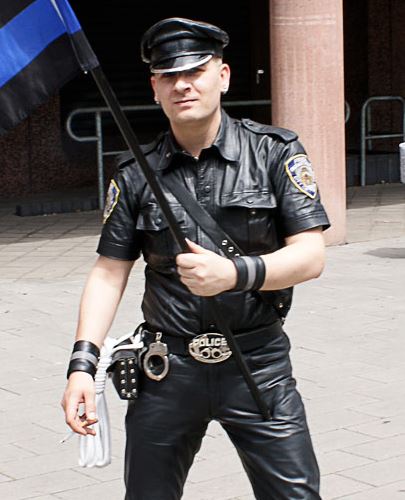
    For many years, the leather guy characterised the image of the gay man. The works of artist Tom of Finland still bear witness to this today. But the leather scene has become outdated and the community is turning up its nose at it. Manuel Izdebski, Managing Director of Aidshilfe im Kreis Unna, spoke to Dirk Killing, who has been involved in the "MSC Rote Erde Dortmund e.V." for years and cultivates his fetish in the club. This is not always possible without reservations.

    Dirk Killing 2
    Dirk Killing: 'As a fetish guy, you're out of the ordinary. (Photo: private)

    Dirk, you are known as a leather and fetish man far beyond our region. A few years ago, you were "Mr Fetish NRW". That doesn't meet with undivided approval in the community, does it?

    No, many members of the community are simply convinced that we will only get equal rights by adapting. As a fetish guy, you're out of line.

    What do you mean?

    A CSD organiser once told me that I should keep a low profile, as that would help the fight for equality more. He got to the heart of the matter. Many in the community take offence at our visibility because they fear the reactions of straight people and don't want to be lumped together with us. Yet everyone always talks about diversity.

    There is always sex in public at gay events. This is often criticised.

    Is leading a slave on a lead already a sexual act? How are we supposed to demonstrate for our world if we are not allowed to show it? No, our mere participation in fetish clothing is enough to make some people gasp. In one city, this once caused a scandal before a CSD. Another group had problems with our presence. We were publicly labelled as freeloaders on the web, saying that the CSD was a family celebration. At the same time, we were urgently warned by the organiser that we should please pull ourselves together as we were about to get married. It was important to make a good impression.

    That's a bit crazy, because it was mainly leather guys and trannies who took to the streets on Christopher Street.

    Yes, but such reactions are unfortunately not an isolated case. At another CSD, we were interviewed on stage and asked to talk about our organisation. In the preliminary talk, the presenter seriously explained to us that we wouldn't be given a sling on stage. I have no idea what he had in mind. And when it came to the conception of a youth centre, where many different groups were involved, our involvement was not asked for, even though we have a social pedagogue in our ranks who could have made a professional contribution. When it comes to youth work, however, we should not be involved in any way, not even professionally.

    How do you deal with such experiences of marginalisation within your scene?

    To be honest, we're not really bothered about it now. None of us want a "straight wedding" or to adopt children. But we have always declared our solidarity with the demands of the community. And at CSD, we only march in the parade in Cologne. In Dortmund, we organised our "Lederpott" parallel to the CSD, but we didn't have much to do with the street festival. We also left the umbrella organisation SLADO at the beginning of the year.

    And why?

    Because we simply no longer felt represented. For the "decent gays", we belong in the darkroom. But that doesn't really exist in Dortmund anymore since the sex tax. Within a few years, it has ruined one shop after another, although it was only intended to curb prostitution. In fact, all businesses that offered the opportunity to have sex were hit with it, including gay bars and saunas. I assume that was the intention in terms of public policy to make the city smut-free. Now it's dull here. No gay man would travel from the Sauerland to Dortmund for three gay bars. Even the CSD is a dead zone. We used to be the main centre for the whole region.

    For Dirk, the fetish is part of his identity. (Photo: private)What about marginalisation within the fetish scene?

    We don't really ostracise people. On the contrary, we are very welcoming, regardless of whether you are old or young, fat or thin. We don't stress about such things, the fetish takes centre stage for us. However, the organised leather scene is getting on in years.

    Don't younger people have a fetish?

    Yes, but they're more into sportswear or something like that. And you can live out your fetish more discreetly on the internet, where you can look for a suitable sex partner for your dirty deeds and nobody will find out. You no longer have to do it in an organised way in a club. Sexual activity takes place within your own four walls. That suits many people who want to declare sexuality a private matter.

    Then it doesn't matter whether you're straight or gay. The fetish clubs were founded in completely different times. Back then, it was all about the visibility of gay sexuality. They wanted to provoke homophobia in society. We still see this as our contribution to the movement today, but it is no longer in demand. The goals have become more conservative.

    You yourself are very open about it. Why is that so important to you?

    Yes, I do it quite openly. By being open, I make myself unassailable. I want everyone to know! For me, this is my identity and I need the clothes to feel myself. I feel uncomfortable and disguised in normal clothes. For me, it's a form of self-affirmation. I lived a heterosexual life for many years and I'm the father of a son. Very bourgeois! Coming out as a gay man and as a BDSM'er was an incredible liberation for me.

    After all, you've been in a steady relationship for 13 years now.

    That's right, we are two SM men in a registered civil partnership, but we have an open relationship. That is also more likely to be condemned today. Marital monogamy is the order of the day, preferably in your own home and with an adopted child. Anyone who wants that should be able to do so. But I'm not in the mood for such a "Knorr family".

    Knorr-Family....?

    Yes, the ideal family world in adverts, where mum is at home with dinner waiting for her loved ones. Is there a gay counterpart to this? Surely there will be!

    Dirk, thank you very much for the interview and for your openness.

  • Marsha who?! - Well, Marsha P. Johnson!

    Marsha who?! - Well, Marsha P. Johnson!

    One of the most important pioneers of the queer movement Marsha P. Johnson would have been 75 years old in August 2020. We celebrate her and explain why this is important. And necessary.

    (more…)