

Tag: Community

  • Age difference in a relationship: When love knows no age

    Age difference in a relationship: When love knows no age

    The "gay generation" is getting on in years. The over-60s are confidently taking advantage of what the gay scene has to offer - as long as their health plays along. A mood report from Hamburg.

    Age difference relationship: Growing older in the gay scene

    "I'm not going to do that scene to myself when I'm 70," Karl-Heinz realises. He no longer wants to wait in a bar for his prince charming. "You just have to realise that: For the scene is You feel old, even if you have a completely different impression," explains the retired vocational school teacher. "If you look at yourself in the mirror every day, you don't realise how you're ageing."

    Avoiding bars is easy for the single man. He prefers to look for sex outdoors, for example in the city park. "I enjoy the chase," says Karl-Heinz and laughs. "The guys I get there wouldn't look at my arse in a bar."

    New ways of meeting in old age

    Cruising can also be very sociable. Almost 20 years ago, Karl-Heinz met a man almost 20 years his junior while cruising the dunes of Ibiza. They didn't have sex, but when they met again in the beach supermarket, they arranged to meet for dinner. This is how Karl-Heinz met a gay trekking group. Since then, he has hiked with them at least once a year through the low mountain ranges and knows the Harz Mountains almost by heart.

    Karl-Heinz no longer goes to gay bars - but is still well connected with other gays. Together with a fellow volunteer from the gay information shop, he is currently organising Hein & Fiete a "Gay History Tour" through St Pauli. Like Karl-Heinz, many older men are present in the community - they are used to it. "There is a lot of interest in specific counselling and leisure activities for gay and bisexual men over 50," says Heiko Gerlach. Together with Christian Szillat, the qualified nurse surveyed gay men in Hamburg and analysed the answers on behalf of the AIDS-Hilfe Hamburg analysed. "Männerliebende Männer 50 plus in Hamburg" is the name of her study, which she published on Radio Pink Channel have introduced themselves. A special generation, according to the two experts: they were the first to live their homosexuality relatively openly. It is not surprising that they are now openly demanding that their circumstances be taken into account in old age.

    When health determines everyday life

    So as long as the body keeps up, gay life continues happily beyond the age of fifty. Eckhard also used to go to the sauna regularly a few years ago. He still knows what's on offer: Partner discount on Fridays, wellness on Sundays and "40up" on Wednesdays with a discount for over-40s. "She could do a '70up' day for me," says Eckhard and smiles. In recent years, the trained electrician has spent more time in hospital than in the sauna. Following a heart operation, Eckhard moved into a retirement home in St. Georg in 2013, in the "Regenbogen" ward. "That doesn't mean anything," says Eckhard, "I'm the only gay person here for miles around."

    For a long time, Eckhard could not imagine that he would ever need help. He even put his HIV infection behind him. Eckhard was diagnosed in 1990 and persevered until the first combination therapies were available. "Now I've been below the detection limit for over twelve years," he says proudly. "HIV doesn't cause me any problems - they only came as I got older." In the meantime, a few have come together. Eckhard's table in the 20 square metre room is neatly lined up: a wristband for measuring blood pressure, a device for measuring blood sugar, an insulin syringe. There is also an asthma spray and a cardboard box of cough sweets. "This variety of complaints is driving me crazy," says Karl-Heinz. "It's always in the back of my mind: what's next?"
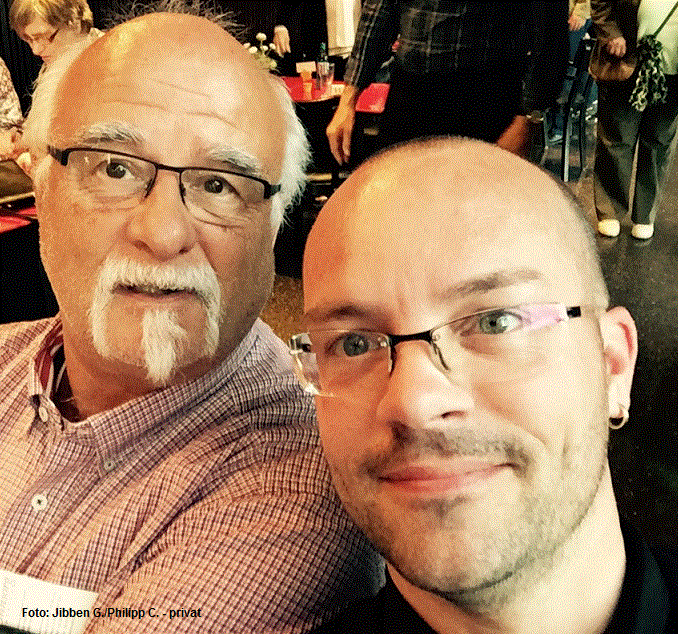
    Gay couple with an age difference: Jibben (68) and Philipp (41) in Hamburg
    Jibben (68) has been together with Philipp (41) for 15 years and they got married in 2006. "Philipp is of course also a reason why I stay fit," says Jibben.

    Age difference relationship: Two generations, one everyday life

    Jibben also sometimes worries "that his bones aren't cooperating as well". But he doesn't let that get him down. His antidote: do a lot. The 68-year-old manages three websites, including the gay and lesbian portal hamburg.gay-web.info. „I hope that's one reason why I'm still fit upstairs,“ says the broad-shouldered man with the white goatee, tapping his head. „Philipp is also a reason, of course,“ adds Jibben gently, „as a young husband, that sometimes keeps you on your toes.“

    Partnership across age boundaries

    Jibben has been together with Philipp (41; seen together in the photo) for 15 years and they got married in 2006. Every year at the Hamburg Pride street festival, the two of them sit in the organisation container, take in lost property and use radios to ensure that every stand has electricity and water. Jibben hasn't had enough of the scene yet. „That's also because I went to a gay bar for the first time when I was 50,“ Jibben surmises. „In hindsight, I wish I'd started earlier,“ says Jibben, „because I definitely missed out on a lot.“

    FAQ: Age difference relationship in the gay community

    Relationships with an age difference raise many questions - especially in the gay community. In this FAQ, we answer key questions about partnership, acceptance, challenges and social perception.

    What does a big age difference mean in a relationship?

    A large age difference in the relationship describes partnerships in which there are several decades between the partners. In the gay community, this constellation is comparatively common and often more socially visible than in heterosexual relationships.

    Are relationships with an age difference stable in the long term?

    Yes, many relationships with an age difference are stable and long-term. It is not the years of life that are decisive, but shared values, mutual respect and similar ideas about living together. The article shows that such partnerships can work for many years.

    Why are age differences more visible in the gay scene?

    For historical reasons, many gay men were only able to live their sexuality openly later. As a result, encounters between generations occur more frequently - for example in the scene, in voluntary work or through shared interests. The age difference in the relationship is often consciously accepted.

    What challenges does a relationship with an age difference entail?

    Different life phases, health issues or social expectations can present challenges. At the same time, many couples report that openness and communication help to constructively bridge these differences.

    Does age still play a big role in the gay community today?

    Age continues to play a role, for example in access to the scene or physical expectations. However, it is becoming increasingly apparent that rigid age limits are becoming less important - especially in relationships where closeness and trust are more important than numbers.

    How is the age difference in the relationship perceived from the outside?

    The perception is different. While some couples are confronted with prejudice, others experience a great deal of acceptance. Social discourse has opened up and relationships with an age difference are now viewed in a more differentiated way than in the past.

    Voices from the community

    Reports, experiences and perspectives on love, ageing, health and cohesion in the community.

    Need someone to talk to?

    Whether acute or simply for orientation - sometimes it helps to talk to someone in confidence.
    Use the Gay Health Chat - the button at the bottom right will accompany you on the page. There you can chat anonymously and free of charge:

    - Personal live advice in the chat
    - Help by e-mail or telephone
    - Information on health, law, everyday life and more

  • Zuher: There is not THE one queer community...

    Zuher: There is not THE one queer community...

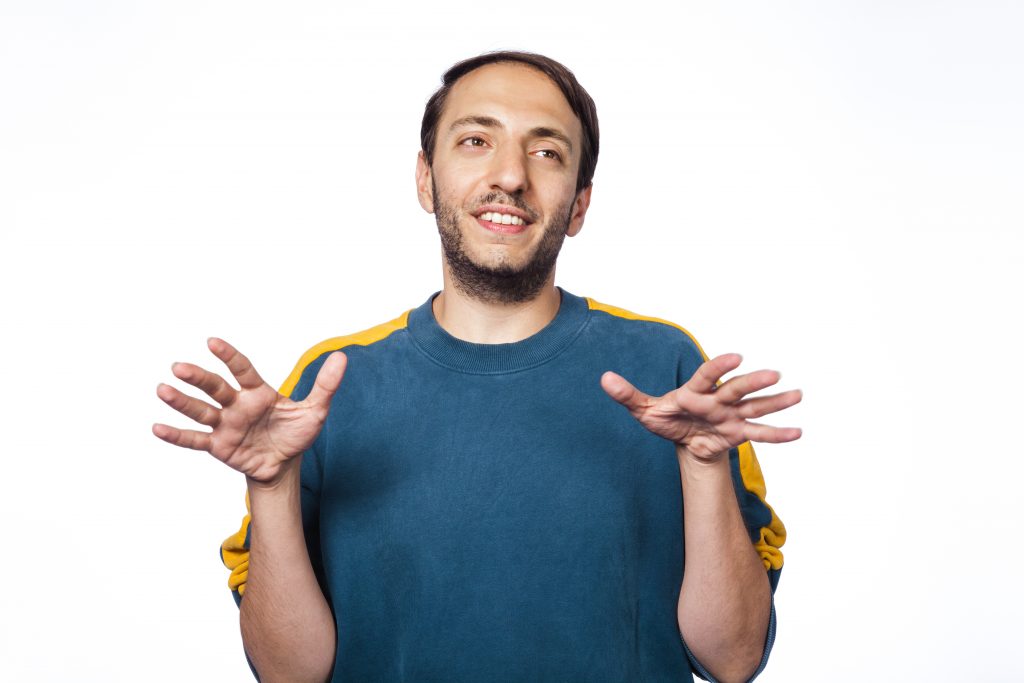
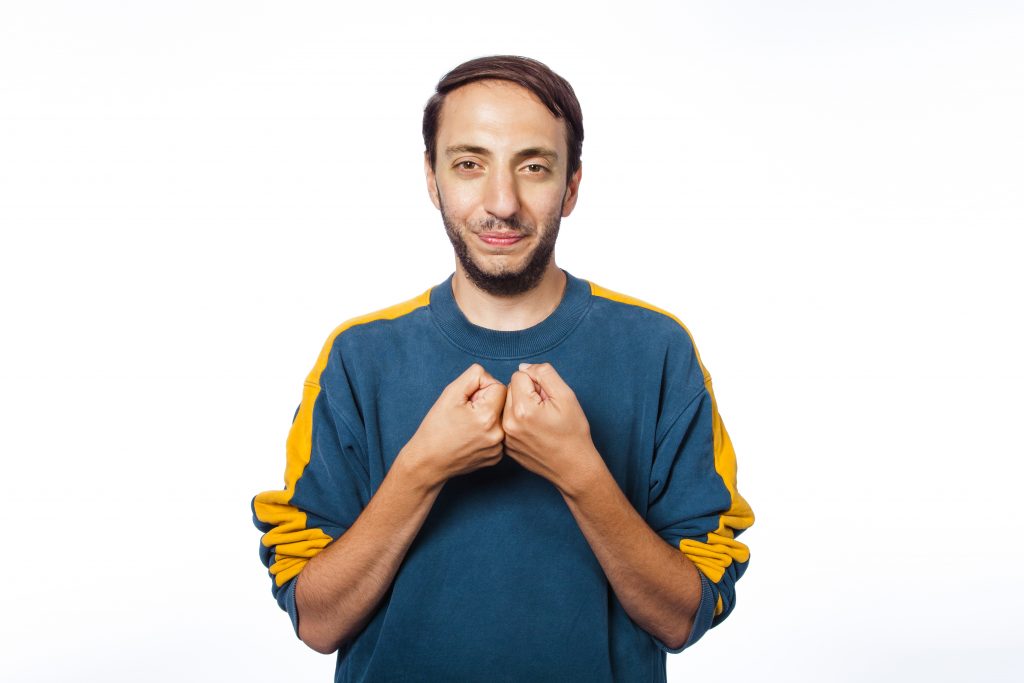
    Zuher Jazmati is 30 years old, sign Scorpio and lives in Berlin. In addition to his day job, he works as a podcaster, DJ and campaigner and does political education work, where he aims to raise awareness of the various effects of discrimination from an anti-racist, intersectional perspective.

    Zuher Jazmati

    Zuher, how did you experience the corona period?

    Different! I have a complex perspective on it: not everything was great, not everything was mega bad... As I'm very active and invest a lot of energy in my projects, I'm often pretty exhausted and tired. So the lockdown came in handy as an enforced break. At the same time, the situation was also stressful for me because people were dying as a result. Nevertheless, I found it positive and necessary that I could take time for myself, time to unwind. I think that applies to many freelancers and people in the events sector. - Gigs as a DJ and workshops were cancelled, which was also painful. That's what I miss most: partying, DJing, making people happy through music. I don't think there is a simple answer to this question, it was and is a cut in everyone's life.

    And what was it like for you when the lockdown was eased again in the summer?

    I also thought about the people from at-risk groups who can't enjoy it. That also applies to people I have contact with, like my grandmother and my father. Or people with disabilities, for whom corona is really much more dangerous. People who are not as young, not as sporty or not as healthy as me. I am constantly confronted with the fear of the virus and the thought of what an infection would mean for my family, for example.

    It's also getting colder now, so people are perhaps cycling less and using public transport more. I'm also seeing more and more reckless people who don't wear their masks and don't follow the rules. That makes me more afraid of the virus. Because what does this risk mean for my grandmother or my father, for example? That I can see them even less? The contact restrictions that were in place were really painful. When I observe negligent behaviour, my fears become even stronger.

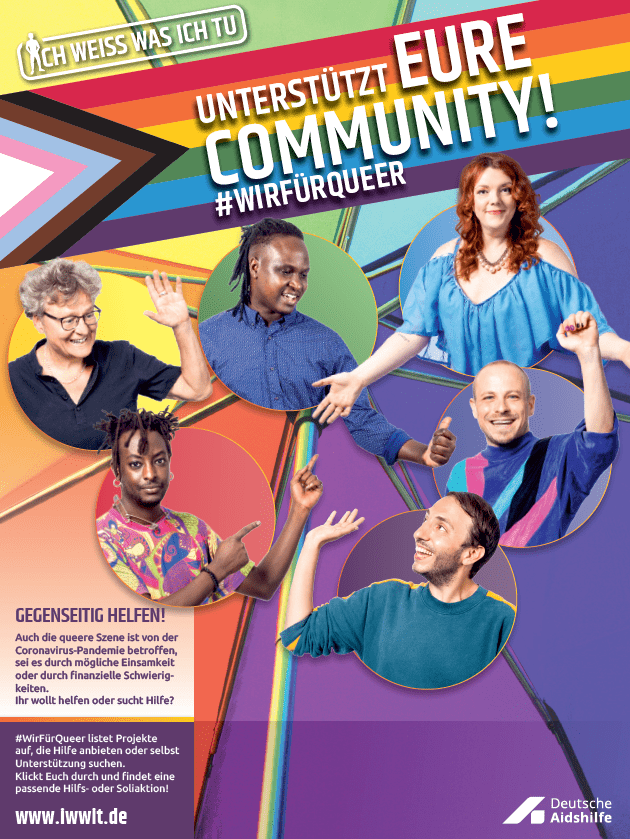
    Print advert IWWIT We For Queer
    Zuher (below, centre) is part of our print ad on the topic of queer solidarity and #WirFürQueer.

    What are important topics for you in the queer scene at the moment?

    I see the queer scene in a more differentiated way: in other words, that the so-called 'queer scene' includes many different people who are all confronted with different life realities and forms of discrimination. For example, many people have major problems getting money. For example, if they work as artists or sex workers. Or because performances are made more difficult or banned or they are generally illegalised. Queer places that were created before corona have problems continuing to exist. As an example, I can cite the Queer Arab Party which took place every two months. People with an Arab background used to meet there to celebrate. But partying is no longer possible. If these and other safer spaces disappear, there will also be a lack of opportunities for mutual support and networking. For younger people in particular, this can mean that they have to remain in a queer-hostile environment, such as possibly intolerant families, and are unable to develop.

    And on an individual level?

    Above all, I see the psychological burden of isolation and loneliness. In addition to the problems of living under difficult conditions, queer people experience this even more. I imagine that being alone is terrible! Especially then, you actually need the closeness that you can have in a community. People in marginalised communities in particular need the closeness, the coming together, the networking, the exchange. It's a big problem that a lot of things can no longer take place.

    What does (queer) solidarity mean to you?

    That people stand up for each other, are there for each other when problems arise. For me, solidarity starts above all with working on yourself. I mean empathy with and sensitisation to forms of marginalisation that don't affect me. That if I am straight, I show solidarity with people who are not straight. That when I am white I stand in solidarity with people who are not white are. Or that I, as a non-impaired person, am in solidarity with people who are not abled. For me, it's about empathising with the lives of others in order to be able to show solidarity. To scrutinise your knowledge and ideas about people and to expand them from time to time. I would like everyone to reflect on themselves and to check our privileges, to stand up for solidary behaviour.

    What do you wish for the queer co-community in the future?

    For me, there is not THE queer community, singular. Rather, there are queer communities in the plural, because we are not all the same. It is important to me to recognise the diversity of the groups that are summarised in the term 'queer community' and, above all, to recognise the different power relations that exist in reality. We are not all in the same boat as a queer person from Moria or someone who is threatened with deportation. I would like to have this differentiated from the generic term "queer" so that we can do justice to the existing differences.

    Zuher Jazmati

    Is there a project that you think needs special support at the moment - and if so, why?

    Yes, the queer projects in Nigeria that campaign against police violence. When I lived in London, I was in contact with the large Nigerian community there. And here in the black community, many tweets on the topic go viral, but you don't see any of it on the news! Nigeria is the most populous country on the African continent and there are a lot of protests there right now - the media here are paying zero attention to it! That's why my colleague Dominik and I are doing the Black Brown Queer Podcast (BBQ). Black lives matter also applies to African countries!

    Is there anything else you would like to say?

    (Laughs) Yes: Wear your mask, check your privileges!


    The queer scene has also been affected by the coronavirus pandemic, whether through possible loneliness or financial difficulties. Do you want to help or are you looking for help? #WeForQueer lists projects that offer help or are looking for support themselves. Click through and find a suitable aid or solidarity campaign!